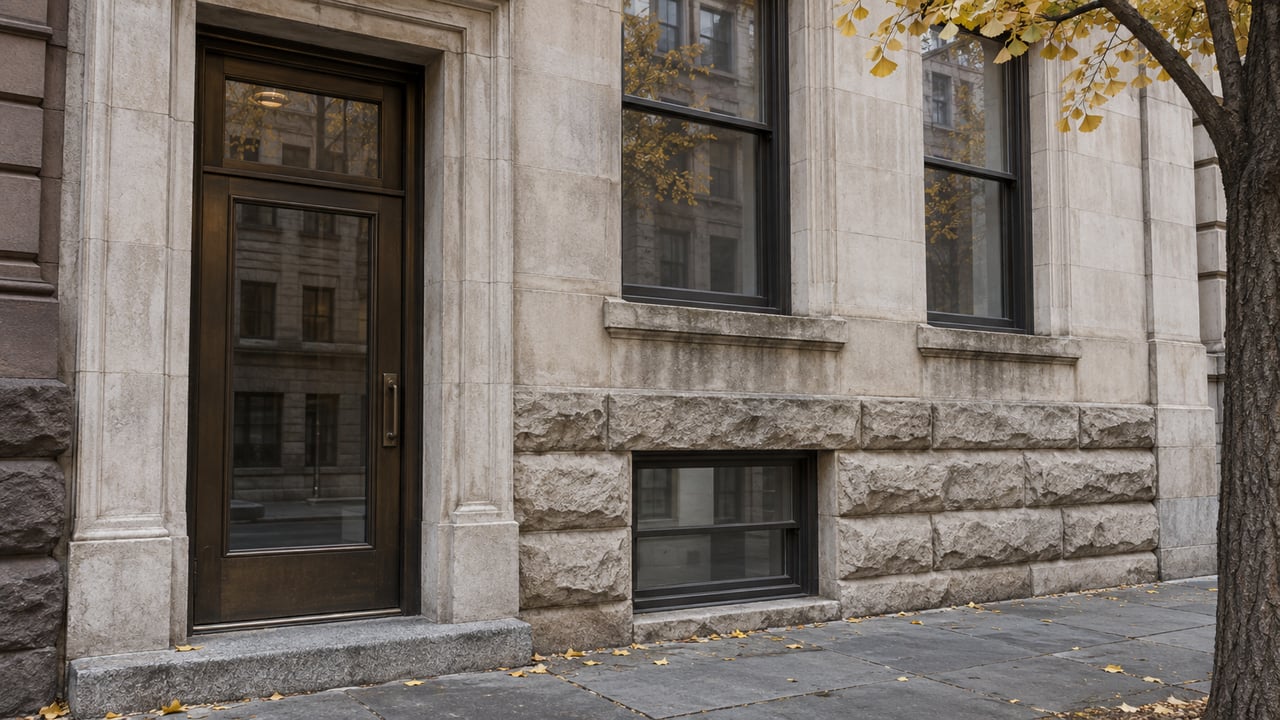
Walk up York Avenue past 78th Street this month and you'll pass a storefront mid-transition: the awning for Yefsi Estiatorio, the Greek restaurant that closed there earlier this year, is coming down, and the paint is going up for Jean Claude, a second location for an operator who already runs a spot at 1076 First Avenue near East 59th Street. That single block tells you more about what's actually happening on the Upper East Side this fall than any list of new menus could.
Two different things are going on at once, and they look identical from the sidewalk. One is old ground getting a new tenant. The other is new ground getting restaurants for the first time. Knowing which is which changes how you read every "new restaurant" headline you'll see about this neighborhood between now and Thanksgiving.
Two Different Booms, One Season
The first pattern is recycling. Wainwright's Tavern, praised in the New York Times for its roast chicken, didn't discover an empty storefront at 1278 Third Avenue at 73rd Street. It moved into the room that used to be Seamore's, keeping the tables and swapping the menu. A few blocks over, Zurutto Ramen took the space Sojourn's vacated. Up at 1007 Lexington, Kalo Greek settled into the old Ikinari Steak footprint, running a wood-fired menu out of 38 seats and an eight-seat bar. Meanwhile Medina, an existing operator, is opening a Spanish tapas room literally next door to his own restaurant, Soledad.
None of these are bets on unproven blocks. They're operators moving into rooms that had already trained the neighborhood to walk there for dinner. That's a low-risk kind of expansion, and it explains why so many openings this season feel less like discovery and more like a changing of the guard on streets that were already dining destinations.
The Corridor That Didn't Have This Before
York and First Avenues are a different story. Jean Claude's move to 1481 York isn't backfilling a proven address the way Wainwright's did on Third. Two blocks further north and one avenue over, Kaia, a South African restaurant serving peri-peri deviled eggs and Capetonian street food, was still under construction as of early August at 1446 First Avenue. Madame Bonté Cafe was preparing to open its fourth location at 450 East 81st Street, a corridor that hadn't previously supported that kind of density of full-service dining.
The reason keeps surfacing in the same sentence: the Second Avenue teardown. When buildings came down on Second Avenue, the restaurants that had occupied those spaces lost their leases, and York and First absorbed the overflow because that's where the vacancies were. But displacement alone doesn't explain why operators are willing to bet on unproven blocks rather than waiting for space to open up somewhere more established. The other half of the answer is what's two blocks east of York: the John Finley Walk, a quiet stretch of East River waterfront that runs directly behind the new Jean Claude address. The blocks between York and the water are dense enough with residents to support restaurants without leaning on tourist foot traffic the way Second Avenue or Lexington can.
Skipping the Logic That Used to Explain This Neighborhood
Here's what makes this fall's map genuinely strange if you know the neighborhood's history. A senior thesis published this year through Dartmouth's Quantitative Social Science program studied Upper East Side commercial land use back to 2003 and found that even as the neighborhood lost commercial space overall, the blocks closest to the Second Avenue Subway's Q stops at 72nd, 86th, and 96th Streets moved toward more commercial zoning, not less. For nearly a decade, that's been the operating logic: restaurants cluster where the subway brings people.
York and First don't have a Q stop. Neither address is close to one. The operators betting on this corridor this fall aren't following the logic that's explained UES commercial geography since the subway opened in 2017. They're betting on something else entirely, walkable residential density thick enough to fill tables without a train dropping people at the door. If that bet pays off, it says the neighborhood's dining geography no longer runs entirely on transit access, and that's a genuinely new fact about how this part of Manhattan works, not a continuation of the old pattern with new names attached.
A September Opening Timed to the School Calendar
There's a second detail in Jean Claude's timing worth sitting with. Most restaurants try to open in late spring or early summer to catch the outdoor dining season. Jean Claude is aiming for just after Labor Day instead, and the operator has said the back-to-school timing is deliberate, given how many schools sit in the surrounding blocks. That's a restaurant calendar built around drop-off and pickup schedules rather than sidewalk seating weather, which only makes sense in a neighborhood dense enough with school families that the September calendar matters more than the July one.
What Else Filled In This Season
The rest of the season's openings round out the picture without changing the thesis. Dear Margo, restaurateur Dean Pashalis's Eastern Mediterranean project at 961 Lexington Avenue, opened March 25 in a 1,800-square-foot space with accordion glass doors that expand the room to a hundred seats in warmer months. Sushi by M brought a three-tier omakase counter, running $35 to $100, to 1575 Second Avenue in Yorkville. Creola, chef Lana Lagomarsini's tasting menu built around the Black culinary diaspora, with dishes like Caribbean crudo and chickpea panisse with collard green aioli, opened September 9. Ob Uan, a Thai restaurant with a menu of tom kha and som tum, moved into the former Spice Thai space. And Mimi's, the Australian frozen yogurt chain known for lines that held through the January 2026 polar vortex, opened a third Upper East Side location.
Layer that against Restaurant Week's summer run, 34 Upper East Side restaurants offering three-course dinners at fixed $30, $45, and $60 tiers from July 20 through August 16, and the neighborhood's dining base reads as deep enough to support real competition rather than a single trend chasing itself.
The next time a new sign goes up on your block, the question worth asking isn't whether the Upper East Side is "having a moment." It's whether that address already had a restaurant in it last year, or whether it's the kind of block that never used to.
If you're weighing what a specific Upper East Side block, its restaurant turnover, its foot traffic, its walk to the water, actually means for a property you own or are considering, that's the kind of block-by-block read the Blatman Team works through with clients every week.