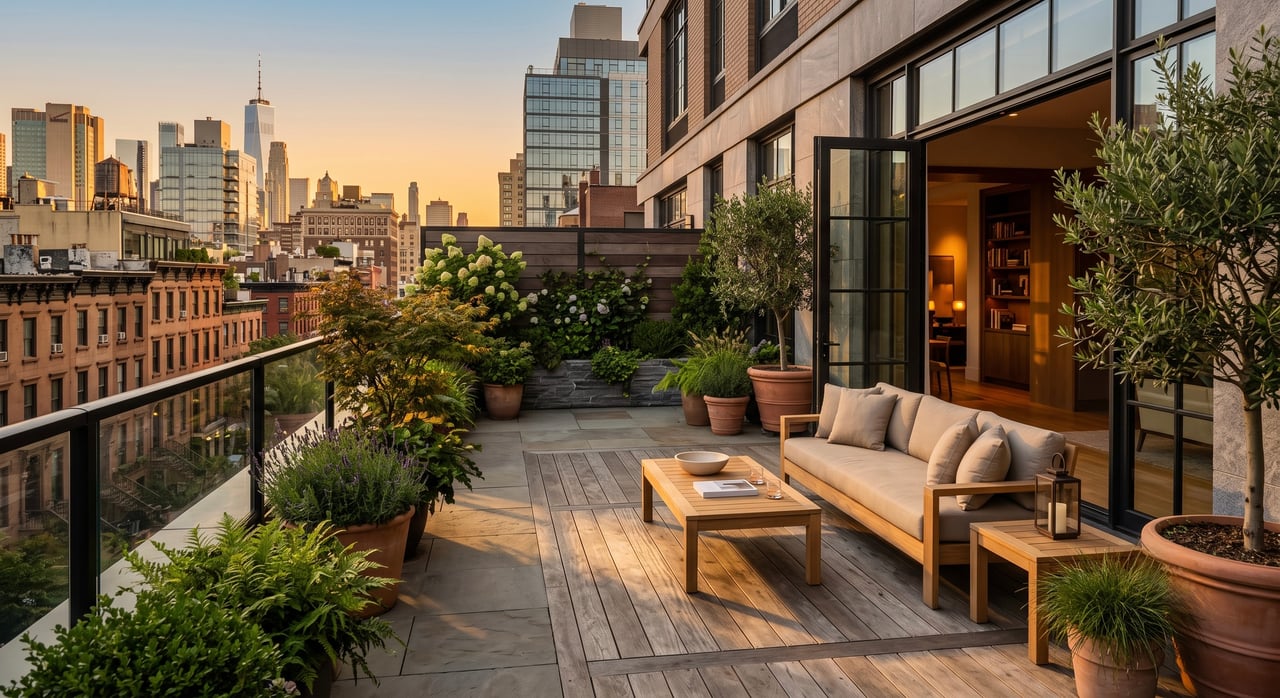
Best Manhattan Buildings for Buyers Who Want Outdoor Space
Quick Answer: Which Manhattan buildings are best for buyers who want outdoor space? In most cases, the strongest options are newer condominiums designed with private terraces and balconies, along with prewar buildings that offer setback terraces or ground-floor gardens, since outdoor space is scarce and typically commands a premium. The deciding factor, though, is rarely the view. It is whether the space is genuinely private and who is responsible for maintaining and waterproofing it, because that single detail determines both the real value and the risk you take on.
What Kinds of Outdoor Space Are You Actually Choosing Between?
Buyers often say they want outdoor space without distinguishing between forms that live very differently day to day. A private terrace, usually a usable, furnishable area on a setback or roof level, offers the most flexibility and the largest premium. A balcony provides fresh air and light but is often too shallow to use as a room, so it should be priced as an amenity rather than as living space. A ground-floor or garden apartment can offer generous private outdoor square footage at a lower price per foot, with trade-offs in light, privacy, and security worth weighing carefully. A loggia or recessed terrace stays partly covered, which extends its usable season. And a Juliet balcony, essentially a railing at a door, is a design feature rather than functional outdoor space.
Because these forms are priced and taxed differently, knowing which one you are buying matters more than the listing's photography suggests.
Does Outdoor Space Actually Add Value?
In most cycles, yes, and outdoor space has proven to be one of Manhattan's more durable premiums, particularly since buyers began weighting private air and light more heavily. That said, outdoor square footage is generally valued at less per foot than interior space, often a fraction of it, and it is typically not counted in a unit's interior square footage. The practical implication is that a listing quoting a large total footprint may be blending interior and exterior space in a way that overstates the comparison, so ask what the interior measurement alone is before you judge the price. Usable, well-proportioned, private terraces hold their premium best. A narrow balcony or an awkward setback adds far less than its square footage implies.
Who Maintains It, and Who Pays When It Leaks?
This is the question that separates a good outdoor-space purchase from an expensive mistake, and it is the one buyers most often skip. A private terrace is frequently designated as a limited common element, meaning it is reserved for your exclusive use but remains part of the building's structure. The critical detail is where responsibility sits for the waterproofing membrane beneath the surface, because a terrace sits directly on top of occupied apartments, and a failed membrane can cause leaks below that become expensive and contentious. In many buildings the owner is responsible for the finished surface while the building maintains the structure, but the line varies, and a poorly drafted or ambiguous allocation is a genuine risk.
Because this allocation lives in the governing documents rather than the listing, review the offering plan and its amendments, which sponsors file with the New York State Attorney General's real estate regulation division, and have your attorney confirm in writing who maintains the surface, who maintains the waterproofing, and who bears liability for water intrusion below.
Can You Build a Deck, Pergola, or Enclosure?
Buyers frequently plan to improve a terrace, and it is important to know that meaningful work is usually a permitted construction project rather than a decorating decision. Installing fixed decking, a pergola, an outdoor kitchen, or any enclosure typically requires both board approval under an alteration agreement and permits that the New York City Department of Buildings reviews and issues. Enclosing a terrace to create interior space is particularly consequential, since doing so without proper approvals can create a discrepancy with the building's certificate of occupancy that becomes your problem at resale. If an existing terrace already has a built structure, ask your attorney to confirm it was permitted, because an unpermitted build-out is a liability you would inherit.
It is also worth checking the house rules early, since many buildings restrict grills and open flames, limit planter weight and placement because of structural load, govern hours of use, and require protective measures under furniture and containers. These rules determine how you can actually use the space.
What About Buildings Where the Outdoor Space Is Shared?
Not all valuable outdoor space is private. A well-programmed common roof deck, courtyard, or garden adds real lifestyle value, though it rarely commands the per-foot premium of exclusive space because it is not yours alone. One Manhattan neighborhood makes the shared-versus-private distinction especially vivid: Gramercy Park is built around a private, key-access park reserved for residents of the surrounding buildings, a form of outdoor access that is exclusive to a group rather than to a single unit, and our Gramercy Park lifestyle guide is a useful way to understand how that kind of shared access shapes value. When you are ready to compare real options, browsing active and coming-soon Manhattan listings will show you how private and shared outdoor space is priced across the market right now, and our guidance for Manhattan buyers covers how to build an outdoor-space requirement into a search rather than treating it as a lucky find.
How Should You Evaluate a Specific Terrace?
Beyond the documents, judge the space in person on the factors photos hide. Consider exposure and how many hours of direct sun the terrace actually receives, since a north-facing setback behaves very differently from a southern one. Weigh privacy and sightlines from neighboring windows, ambient noise from the street or mechanical equipment, and wind, which can be significant at height. Check drainage and look for any signs of prior ponding or repair. A terrace that shows well on a clear afternoon can be far less usable once you account for shade, noise, and exposure, so the in-person assessment is where the real decision gets made.
Common Missteps
Watch for paying interior prices for exterior square footage, assuming a balcony is usable outdoor space when it is not, overlooking who owns the waterproofing responsibility, and planning a build-out the board or the city will not approve as drawn. Each is straightforward to catch before contract with the right agent and attorney, and costly to discover afterward.
Outdoor space is one of the more rewarding things to own in Manhattan, provided the space is genuinely private, well-built, and supported by clear rules about maintenance and liability. If you are weighing your options, you can see how we approach buying a condo in Manhattan, follow Manhattan real estate market trends to understand where outdoor-space premiums sit today, and learn more about Daniel Blatman's NYC real estate expertise and how it helps buyers evaluate exactly these trade-offs.