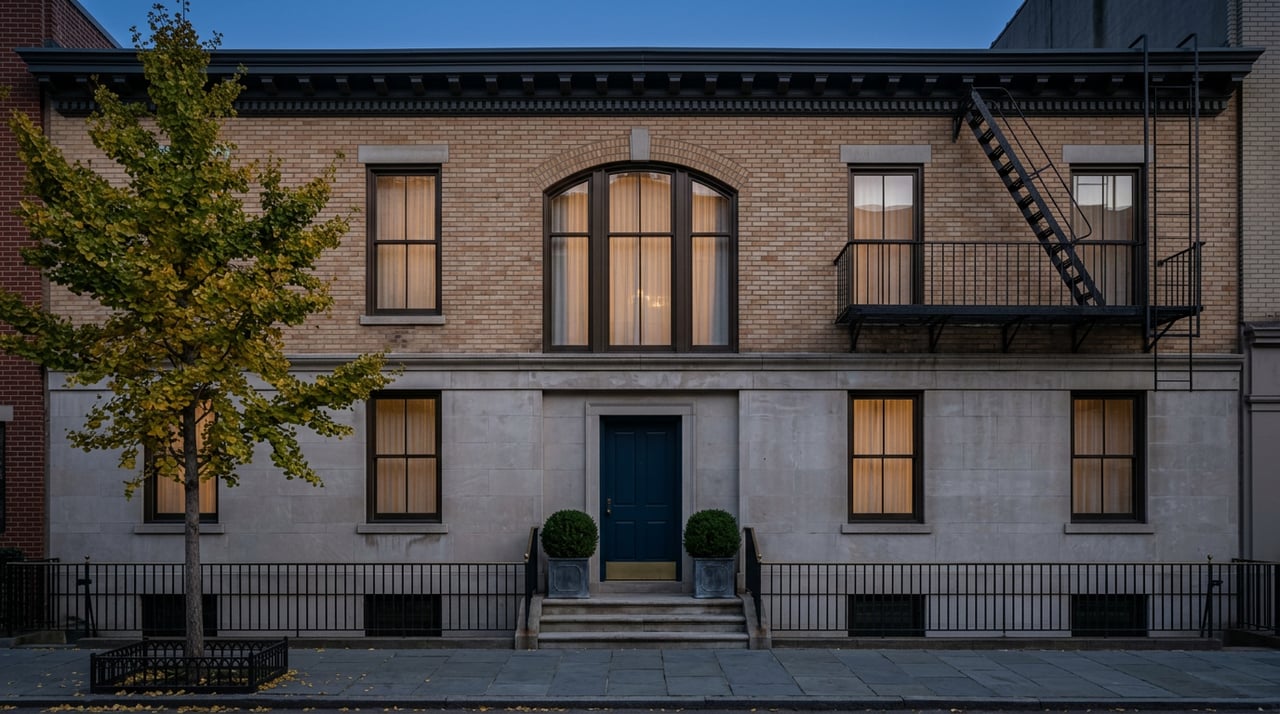
For fifteen months, the northeast corner of 64th and Broadway has been the quietest spot on an otherwise loud block: three dark storefronts where Boulud Sud, Bar Boulud, and Épicerie Boulud used to catch the pre-curtain crowd. That ends September 17, when Brasserie Boulud opens in the combined space, with reservations that went live on September 1, according to I Love the Upper West Side. The date on its own is just a date. What surrounds it is the story. The New York Philharmonic opens its season September 10. The Metropolitan Opera opens September 22 with soprano Lise Davidsen. New York City Ballet opens around the same stretch with a program built on Balanchine. A restaurant that sat empty for over a year is reopening inside a twelve-day run of season premieres at the three companies that define this corner of the neighborhood.
What Actually Grew While the Corner Sat Dark
When Boulud first announced the concept last September, the plan was a two-story, 7,500-square-foot restaurant seating roughly 170, aimed at opening in time for the 2025 holidays. The holidays came and went without it. What opens this month instead seats 320 across indoor and outdoor space combined, according to the New York Times, making it the largest restaurant in Boulud's New York portfolio. The seat count nearly doubled while the timeline slipped by nine months.
That combination is unusual. Here, the project grew in scope as well as taking longer. Architect David Rockwell, who designed the original concept, built the finished room around a large, dramatically lit oval bar and folded the retail épicerie directly into the floor plan instead of running it as a separate storefront, the way it operated for nearly two decades before.
Boulud told the New York Post the goal was a room that could serve guests from breakfast through late night, before and after whatever was playing across the street. In its report on the plans, I Love the Upper West Side quoted Sebastien Silvestri, CEO of The Dinex Group, calling it "the right time to bring back the energy and vibrancy to this most iconic cultural destination."
Twelve Days That Decide the Corner's Whole Year
Across Manhattan, September often brings a seasonal reset: school starts, offices fill back up, restaurants get busy again. This corner of the Upper West Side runs on a narrower and more specific clock.
- September 10 — New York Philharmonic opens its season at David Geffen Hall.
- September 17 — Brasserie Boulud opens, reservations already open since September 1.
- September 22 — The Metropolitan Opera opens with Lise Davidsen, and New York City Ballet opens its season with a Balanchine program.
Three institutions, one restaurant, and a twelve-day window. If you live within walking distance of Lincoln Center Plaza, this window is the actual start of your fall, not the first day of school and not the first cold morning. The restaurants and bars built to serve the pre- and post-performance crowd see predictable, bookable numbers of paying guests around this calendar, whether or not the weather has turned. A resident who plans a pre-opera dinner by memory from two years ago is going to find a different room, a longer wait, and a very different reservation calendar than the one they're used to.
The Neighborhood's Public Calendar Doesn't Stop at Labor Day Either
The same pattern shows up two miles north, in a system that has nothing to do with restaurants. Riverside Park Conservancy's Summer on the Hudson, now in its 24th year, runs from May through October rather than winding down over Labor Day weekend the way most people assume outdoor programming does. A few specifics worth putting on the calendar directly:
- September 18 — A new partnership with Uptown Film Center brings an outdoor movie screening near the Red Clay Tennis Courts, ahead of the company's planned five-screen cinema opening.
- Ongoing Saturdays — Story Hour debuts at 3 p.m. at the 102nd Street Field House, a new weekly addition with rotating books and guest readers.
- Through the fall — Nature Explorers workshops continue, organized around seasonal themes tied to birds, insects, and plants along the Hudson.
None of this is framed as a farewell to summer. It's framed as a continuation, with new programming layered on top of returning favorites like Sunset Yoga and the Pier I Picture Show. The park system, like the restaurant corner six blocks south, treats fall as an extension of its own calendar rather than a shutdown of the summer one.
What the Corner Actually Tells You
The lesson here isn't really about a restaurant. It's about how this specific stretch of the Upper West Side prices its own time. Across Manhattan, the school year often marks a seasonal reset. This one is marked by the Philharmonic, the Met, and City Ballet raising their curtains, alongside the businesses around Lincoln Center Plaza serving the audiences those seasons bring.
If you've lived here long enough to remember Bar Boulud's terrace on a warm September evening, the corner reopening on the 17th is worth building a dinner around, ideally before the reservation calendar catches up to what the seat count actually means for competition at 6:30 on a Thursday. If you're newer to the neighborhood, this is as good an introduction as any to how tightly its commercial rhythm is bound to what's happening on stage a few hundred feet away.
Understanding a block this closely, down to which twelve days actually matter and why, is the same instinct that goes into pricing and positioning a home here. If you're thinking about a move near Lincoln Center or anywhere else on the Upper West Side and want that level of specific, current read on the neighborhood rather than a generic one, the Blatman Team offers a personalized consultation built on exactly this kind of detail.