Clinton Hill vs Williamsburg: Which Brooklyn Neighborhood Fits Your Buyer Profile?
Quick Answer: Should you buy in Clinton Hill or Williamsburg? Clinton Hill generally suits buyers who want classic brownstone character, tree-lined streets, and a quieter residential pace, while Williamsburg suits buyers who want new-construction condos, waterfront energy, and a denser retail and nightlife scene. In most cases the choice comes down to whether you prioritize architectural character and space or amenities and walkable density, since both offer strong access to Manhattan.
Neighborhood context reflects Brooklyn market conditions as of June 2026.
At a Glance
• Clinton Hill: predominantly prewar brownstones and low-rise condo conversions, quieter residential streets, near Fort Greene Park • Williamsburg: predominantly new-construction condo towers, waterfront and near-waterfront buildings, dense retail and nightlife • Brooklyn context (June 2026): borough median sale price $1,150,000, up 15.6% year over year, with inventory down 10.1%, so both neighborhoods sit in a tight, competitive market
• Building stock difference: Clinton Hill favors character and outdoor space; Williamsburg favors amenities and contemporary construction
Building Stock and Architectural Character
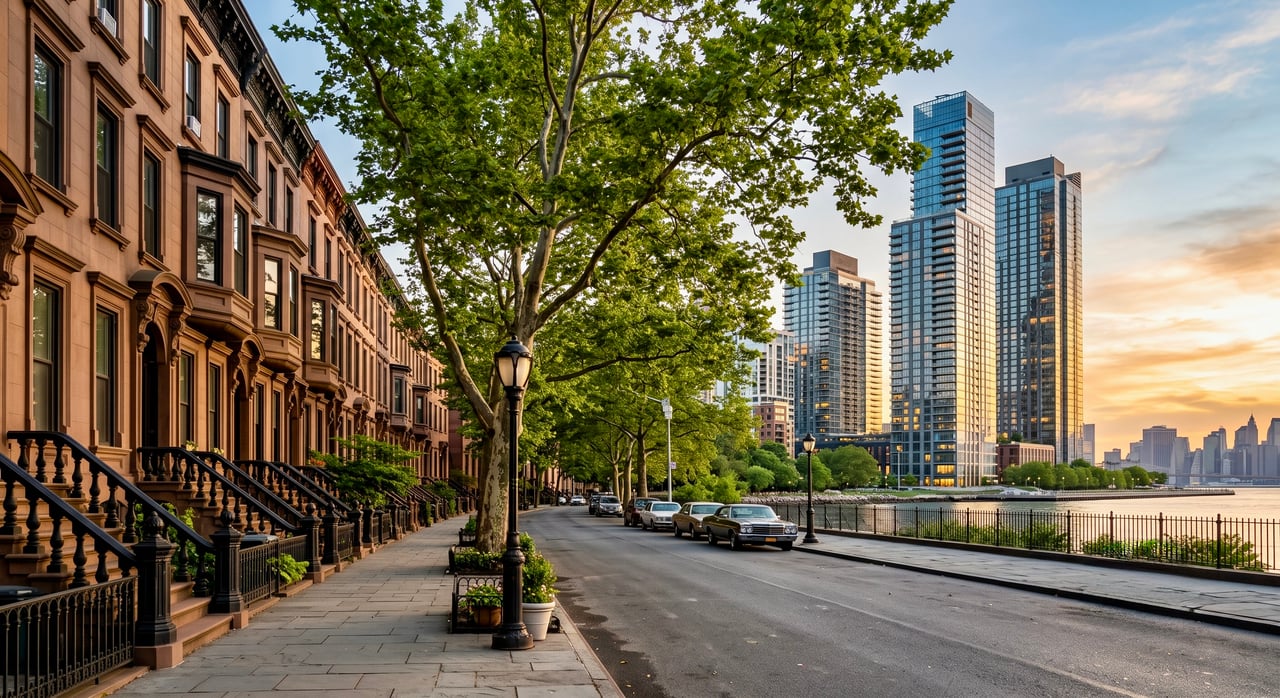
Clinton Hill's housing is dominated by 19th-century brownstones, many with owner's duplexes and garden access, alongside a smaller number of prewar and postwar condo conversions. Buyers drawn to exposed brick, high ceilings, original detail, and private outdoor space consistently gravitate here. Williamsburg's inventory, especially north and west of the neighborhood's core, is overwhelmingly newer construction: glass-and-steel condo towers built over the past fifteen years, many with full amenity packages including gyms, roof decks, and doorman service that older brownstone blocks rarely offer at the same density.
That difference shows up in the borough's June 2026 data, where Brooklyn condos carried a median sale price of $1,318,817 and commanded the highest price per square foot of any property type. Williamsburg's newer condo stock sits squarely in that segment, while Clinton Hill's brownstones and conversions often trade on character and space rather than amenity count.
Daily Life and Walkability
Clinton Hill's commercial strips along Myrtle and DeKalb Avenues have grown steadily but remain lower-key than Williamsburg's. Buyers who want a quieter walk to a coffee shop and a more residential feel after 8 p.m. tend to prefer this pace. Williamsburg's Bedford Avenue and waterfront offer significantly more restaurant density, nightlife, and weekend foot traffic, which suits buyers who want an active neighborhood immediately outside their door.
A Due-Diligence Note for Both Neighborhoods
Whichever neighborhood you choose, request the building's reserve fund balance and recent capital assessment history before signing a contract. Newer Williamsburg towers can carry higher common charges tied to full service amenities, while older Clinton Hill condo conversions may carry lower monthly charges but warrant closer scrutiny of the reserve for aging roofs, facades, and mechanical systems. Neither is automatically a red flag, but both deserve a documented review before you remove a financing or
inspection contingency.
Which One Fits You
If you're drawn to space, architectural character, and a slower residential pace near Fort Greene Park, Clinton Hill is generally the stronger fit. If you're drawn to newer buildings, full amenity packages, and a livelier waterfront environment, Williamsburg is generally the stronger fit. In a tight market like June 2026, where Brooklyn inventory is down sharply, buyers who are unsure often benefit from touring both in the same week to feel the contrast directly rather than relying on listing photos alone.
Buyers comparing these two neighborhoods can see how we guide a Brooklyn purchase, review current inventory through our active listings search filtered by neighborhood and price, follow ongoing NYC real estate market trends, and learn how Daniel Blatman's NYC real estate expertise helps narrow the search to the blocks and buildings that match your priorities.