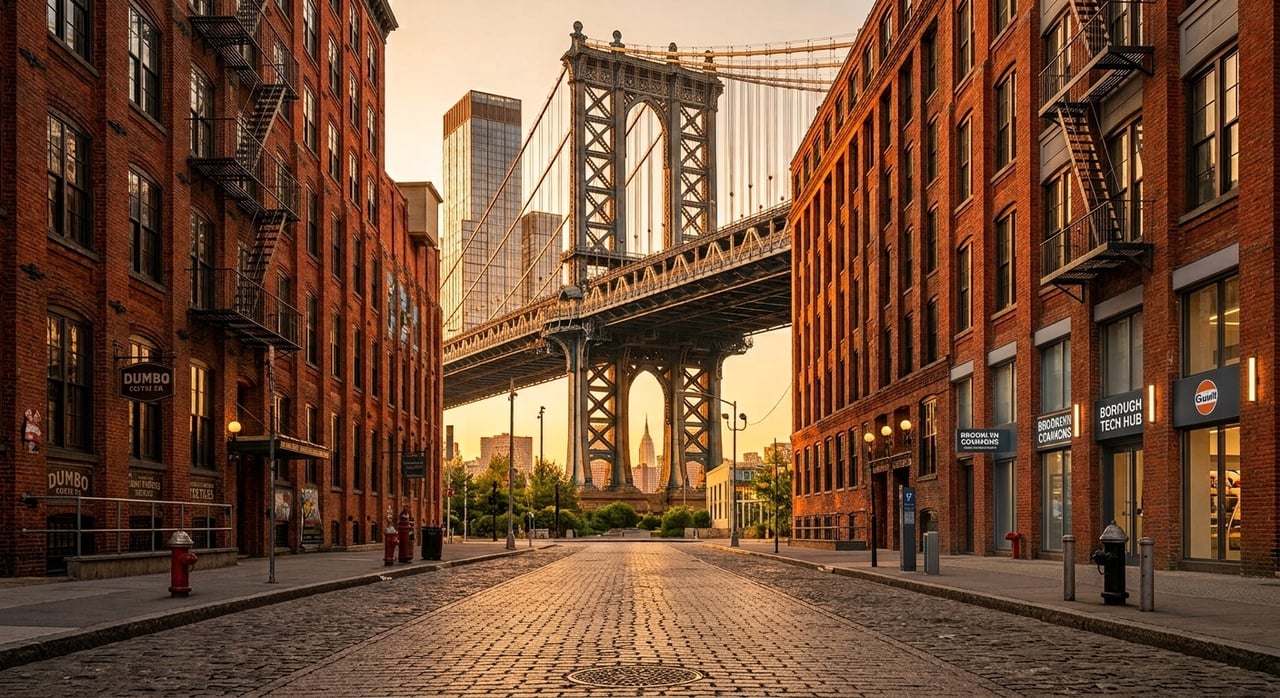
Downtown Brooklyn vs. DUMBO: Which Fits Your Buyer Profile?
The quick read: Should you buy in Downtown Brooklyn or DUMBO? DUMBO is the boutique, waterfront choice, converted lofts and high-rise condos with iconic bridge and skyline views at some of Brooklyn's highest prices, while Downtown Brooklyn is the new-construction, transit-hub choice, amenity-rich towers with more inventory and relative value. They sit side by side at the borough's northwestern edge but differ sharply on price, character, and pace, so the choice comes down to paying for views and loft exclusivity or getting more space and amenities for your money.
Where Are Downtown Brooklyn and DUMBO?
They are next-door neighbors just across the river from Lower Manhattan. DUMBO, short for Down Under the Manhattan Bridge Overpass, is a compact waterfront enclave between the Manhattan and Brooklyn Bridges, defined by cobblestone streets, converted warehouses, and Brooklyn Bridge Park along the East River. Downtown Brooklyn sits just inland, the borough's civic and commercial core, which has transformed over the past two decades into a dense cluster of new residential towers around a major transit hub, with Brooklyn Heights, Fort Greene, and Boerum Hill nearby. One reads as historic and scenic; the other reads as new, tall, and connected.
What Kind of Buildings Does Each Have?
DUMBO real estate falls into two camps: spacious loft conversions in former industrial buildings, with the high ceilings and big windows that define the neighborhood, and sleek new high-rise condominiums with skyline views. Either way, homes here are among Brooklyn's most expensive and most limited in supply. Downtown Brooklyn real estate is dominated by newer glass condominium and rental towers built during its residential boom, many with full amenity packages, which gives buyers more inventory, more new construction, and, in some buildings, long-term tax abatements that lower carrying costs. In short, DUMBO offers character and views at a premium, while Downtown Brooklyn offers modern amenities and relative value.
Which Is More Expensive, Downtown Brooklyn or DUMBO?
DUMBO, and by a clear margin. Its waterfront location, iconic views, and limited, characterful housing stock make it one of the priciest neighborhoods in Brooklyn, and homes there can take longer to sell precisely because they sit at the top of the market. Downtown Brooklyn, with its larger supply of new condos, generally offers more apartment and more amenity per dollar, which is a big part of its appeal to buyers priced out of the waterfront. Neither is inexpensive, but as a rule a budget stretches further in Downtown Brooklyn than in DUMBO.
Who Should Buy in Downtown Brooklyn vs DUMBO?
Fit comes down to what you are optimizing for. DUMBO rewards buyers who want waterfront living, dramatic bridge and skyline views, loft character, and the exclusivity of a low-turnover, high-demand enclave, along with families drawn to Brooklyn Bridge Park. Downtown Brooklyn rewards buyers who want new construction, building amenities, unbeatable transit access, and more value and choice, which appeals to first-time buyers, investors, and anyone who prizes convenience and a lock-and-leave modern condo. A rough test: if your priority is views and character and you will pay for them, DUMBO fits; if it is amenities, transit, and value, Downtown Brooklyn does.
How Does Each Affect Closing and Carrying Costs?
Both are largely condo markets, so financing tends to be flexible, but the price points shape your costs. Because DUMBO skews high, many purchases cross the tax thresholds that raise closing costs, including the additional tax commonly called the mansion tax at one million dollars and up, and a supplemental tax at two million and above, which the New York State Department of Taxation and Finance explains for transfer-related taxes. In Downtown Brooklyn, some newer towers carry long-term tax abatements that meaningfully lower ongoing property taxes for a set period, a genuine carrying-cost advantage worth confirming building by building. Weigh these alongside the asking price when comparing the two.
How Do You Choose Between Them?
Lead with your profile, then test it against real inventory. Rank what matters most, whether that is views, character, amenities, transit, or value, and let that ordering point you toward one neighborhood. When you are ready to compare options, browsing active and coming-soon listings will show you how your budget behaves in each, and our guidance for buyers covers how to translate a profile into a focused search.
Common Missteps
Watch for choosing a neighborhood on reputation rather than on how you actually live, comparing asking prices without accounting for the tax abatements and closing costs that differ between the two, and assuming DUMBO's premium always buys more when much of it buys views and character rather than space. Each is easy to avoid by leading with your own priorities and confirming the numbers with your agent and attorney.
There is no better neighborhood here, only the one that fits your budget, your priorities, and your stage of life. If you are weighing the two, see how we approach buying in New York, follow Manhattan real estate market trends to understand where the market sits today, and learn more about Daniel Blatman's NYC real estate expertise and how it helps buyers match a neighborhood to their profile.