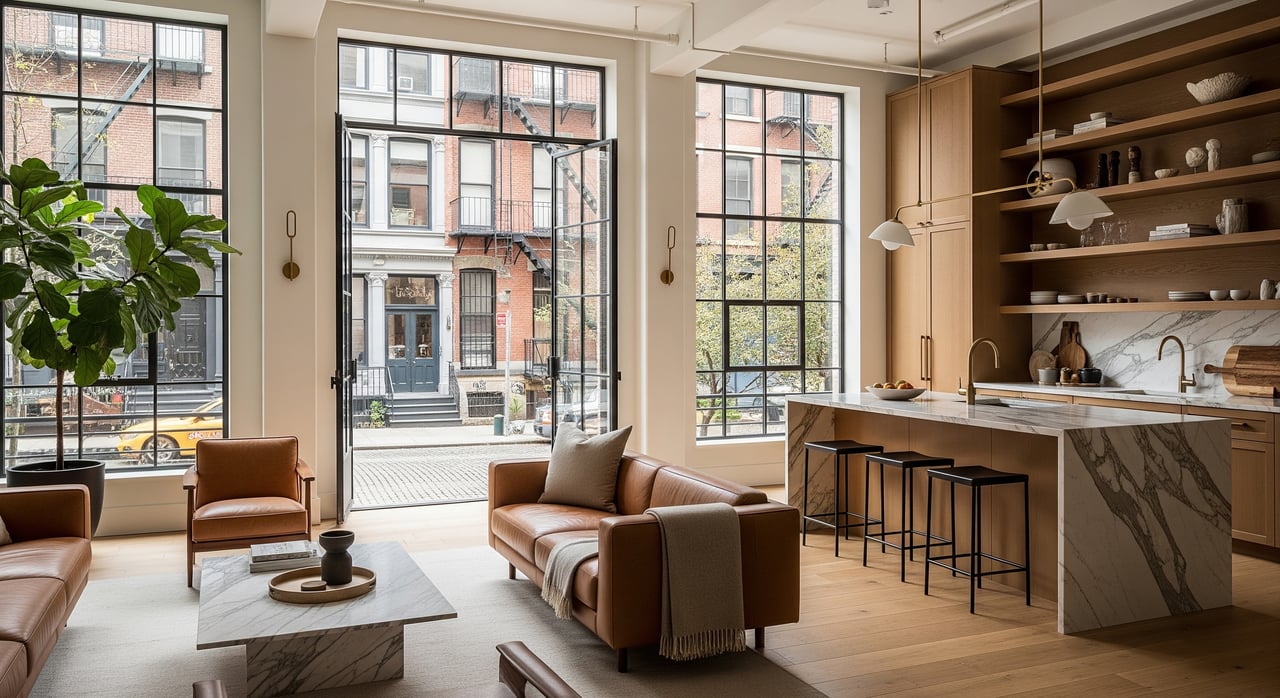
What does an ordinary Tuesday feel like in Tribeca? Think quiet, cobblestone blocks, light spilling through loft windows, and the Hudson River a short walk away for a quick reset. If you’re weighing a move, you want the real texture of daily life, not hype. In this snapshot, you’ll learn how housing works here, where you’ll run errands, how you’ll get around, and what to watch for as a buyer or renter. Let’s dive in.
Why Tribeca stands out
Tribeca, short for Triangle Below Canal Street, sits in Lower Manhattan. It’s commonly described as south of Canal Street and west of Broadway, reaching to the Hudson River and the World Trade Center area. For a simple visual reference, start with the official NYC Department of City Planning neighborhood maps.
The look and feel are distinctive. Many blocks are lined with 19th-century cast-iron and masonry warehouses that are now residential lofts. You’ll see tall windows, exposed brick, and open plans inside, plus cobblestone segments that slow the pace at street level. Newer boutique buildings and luxury towers, often near the river or southern edges, mix in with low- to mid-rise fabric.
Tribeca’s tempo is calmer than nightlife districts. Weekdays bring commuter flow to and from offices. Weekends often center on parks, the waterfront, markets, and meals out with friends. Seasonal events, including the Tribeca Film Festival, add a burst of energy and visitors.
Housing at a glance
Tribeca is one of Manhattan’s most expensive markets. That premium comes from scarce large apartments, the appeal of historic lofts, proximity to the water, and a reputation for a quieter, residential environment. Inventory tends to be limited and unique.
Lofts, condos, townhouses
- Converted industrial lofts are common. Expect high ceilings, big windows, and open layouts. Many are co-ops with individual quirks.
- Newer condos often provide full-service amenities like doormen, gyms, and sometimes parking.
- A small number of townhouses and boutique buildings round out the mix.
Co-op vs condo basics
- Co-ops remain prevalent in older conversions. They often have detailed board reviews and rules on renovations or subletting.
- Condos dominate in newer developments. They usually offer more flexibility for financing, subletting, and resale.
- Both building types vary widely. You should review house rules, financials, and recent building work early.
Costs and considerations
- Monthly costs: In older co-ops, maintenance and assessments can be significant, especially in buildings with recent upgrades. Condos typically carry common charges and property taxes that vary by unit and tax class.
- Parking: Street parking is scarce. Very few buildings have garages. If you need a car, budget for a monthly garage spot nearby and factor convenience into your search.
- Flood and resiliency: Some sections of Lower Manhattan are in FEMA flood zones. Confirm the building’s flood-zone designation, insurance needs, and any resiliency upgrades like raised mechanicals or flood barriers by checking the FEMA Flood Map Service Center and asking for building documentation.
Daily life essentials
What does your day-to-day look like once you’re here? It’s walkable, service-rich, and anchored by the riverfront.
Dining and shopping
Dining is a highlight. You’ll find upscale restaurants, neighborhood bistros, cafes, bakeries, and specialty food shops. Nightlife is lower-key than Midtown or the Lower East Side. Many places focus on dinner service and close earlier.
Grocery shopping is straightforward. Multiple full-service grocers and specialty markets are within walking distance in core parts of the neighborhood. Weekend routines often include a farmers market; check the current schedule on GrowNYC’s Greenmarket listings.
Parks and the waterfront
Tribeca’s backyard is the Hudson River. Hudson River Park offers long, car-free promenades, biking paths, and seasonal activities. Pier 25 is a local favorite for recreational amenities in warmer months, including mini-golf and volleyball. Inside the neighborhood, pocket parks provide green breaks and playgrounds. Washington Market Park is a community hub with lawns and play areas. Duane Park offers a small landscaped retreat for a quick coffee or a seated pause.
Culture and events
You can spend weekends exploring galleries and small art spaces, or plan around the annual Tribeca Film Festival, which transforms the neighborhood with screenings and events. Outside of festival season, the cultural scene is steady but not overwhelming, making it easy to enjoy without crowds most days.
Getting around
Tribeca sits at the nexus of several transit choices, making local and regional commuting straightforward.
Subway, PATH, and buses
Multiple subway lines frame the area and connect you quickly to Midtown, Uptown, and Brooklyn. For an overview, use the MTA subway map. If you work in New Jersey, PATH service at the World Trade Center is a convenient option. Check schedules and routes on the Port Authority’s PATH page. Local bus service fills in gaps and can be useful for crosstown trips.
Biking and driving
Cyclists benefit from the Hudson River Greenway and a growing bike-lane network, along with Citi Bike docks spaced throughout the neighborhood. If you drive, the West Side Highway provides quick north-south access. The Holland Tunnel connects to New Jersey, but local traffic and parking constraints are real factors. Many residents choose to live car-free.
Schools and family resources
Tribeca has multiple public, charter, and private-school options in and near the neighborhood. Public school assignments vary by address and can change over time. For authoritative details, use the NYC Department of Education school search and confirm directly with the DOE. You will also find a range of childcare centers, preschools, and after-school programs. For popular programs, it is helpful to plan ahead.
Practical tips for buyers and renters
A focused plan helps you move faster and avoid surprises. Use this quick checklist as you explore listings.
- Define must-haves vs nice-to-haves. Examples: elevator, doorman, in-unit laundry, outdoor space, storage, pet policies, or parking access.
- Align on building type. Decide whether a co-op, condo, or townhouse fits your timeline, financing, and flexibility needs.
- Review monthly numbers early. Compare maintenance or common charges, taxes, assessments, and utilities within your target budget.
- Check flood-risk details. Verify FEMA flood zones, building resiliency measures, and insurance requirements using the FEMA Flood Map Service Center.
- Map your commute. Test travel times using the MTA subway map and, if relevant, PATH schedules.
- Walk the blocks at different times. Visit early mornings, weekday evenings, and weekends to understand noise levels, foot traffic, and street activity.
- Confirm school details. Use the NYC DOE school search for zoning and performance data before you commit.
- Ask for building docs. Review financials, reserve levels, recent capital projects, alteration agreements, and any special assessments.
- Plan for board process. If you pursue a co-op, prepare for board review, documentation, and interview timing.
- Budget for conveniences. If you need parking, a storage unit, or a home gym, price those add-ons upfront.
Safety and preparedness
Buyers and renters should review official data for current trends. NYPD precinct statistics are publicly available on CompStat. Tribeca is a coastal neighborhood, and some buildings have added resiliency features after Hurricane Sandy. Ask about building-level plans and emergency procedures so you understand how services operate during storms or power interruptions.
Is Tribeca right for you?
If you value historic character, open loft layouts, and a quieter rhythm close to the water, Tribeca is compelling. Daily life is walkable, convenient, and anchored by strong transit and parks. The market rewards preparation. Inventory is limited, and each building is different, so it pays to have guidance that is both local and detailed.
Ready to explore homes and decide if Tribeca fits your lifestyle? Reach out to the Blatman Team for tailored advice, neighborhood-level insight, and a search plan that fits your goals.
FAQs
What is Tribeca known for in NYC?
- Tribeca is known for historic loft architecture, cobblestone segments, the Hudson River waterfront, and cultural moments like the Tribeca Film Festival.
How convenient is Tribeca for New Jersey commutes?
- Very convenient if you use PATH. The World Trade Center station provides direct access to New Jersey; check routes and frequency on the PATH schedules page.
Are there parks and playgrounds in Tribeca?
- Yes. Hudson River Park offers waterfront paths and seasonal recreation, and Washington Market Park provides playgrounds and a community lawn.
What housing types are common in Tribeca?
- You’ll see converted loft co-ops and condos, boutique condos, luxury towers, and a small number of townhouses. Each building type has different rules, costs, and amenities.
Is Tribeca in a flood zone?
- Portions of Lower Manhattan are in flood-risk zones. Review your exact address on the FEMA Flood Map Service Center and ask buildings about mitigation steps and insurance.
How do schools work for Tribeca addresses?
- School options include public, charter, and private institutions. Public school zoning varies by address; confirm details on the NYC DOE school search and verify with the DOE.
How safe is Tribeca compared with other areas?
- Safety levels can change over time and vary by block. Review current precinct-level crime data on NYPD CompStat and visit at different times of day to assess fit for your needs.