FINANCIAL DISTRICT: THE BEST LOFT-TO-CONDO CONVERSIONS
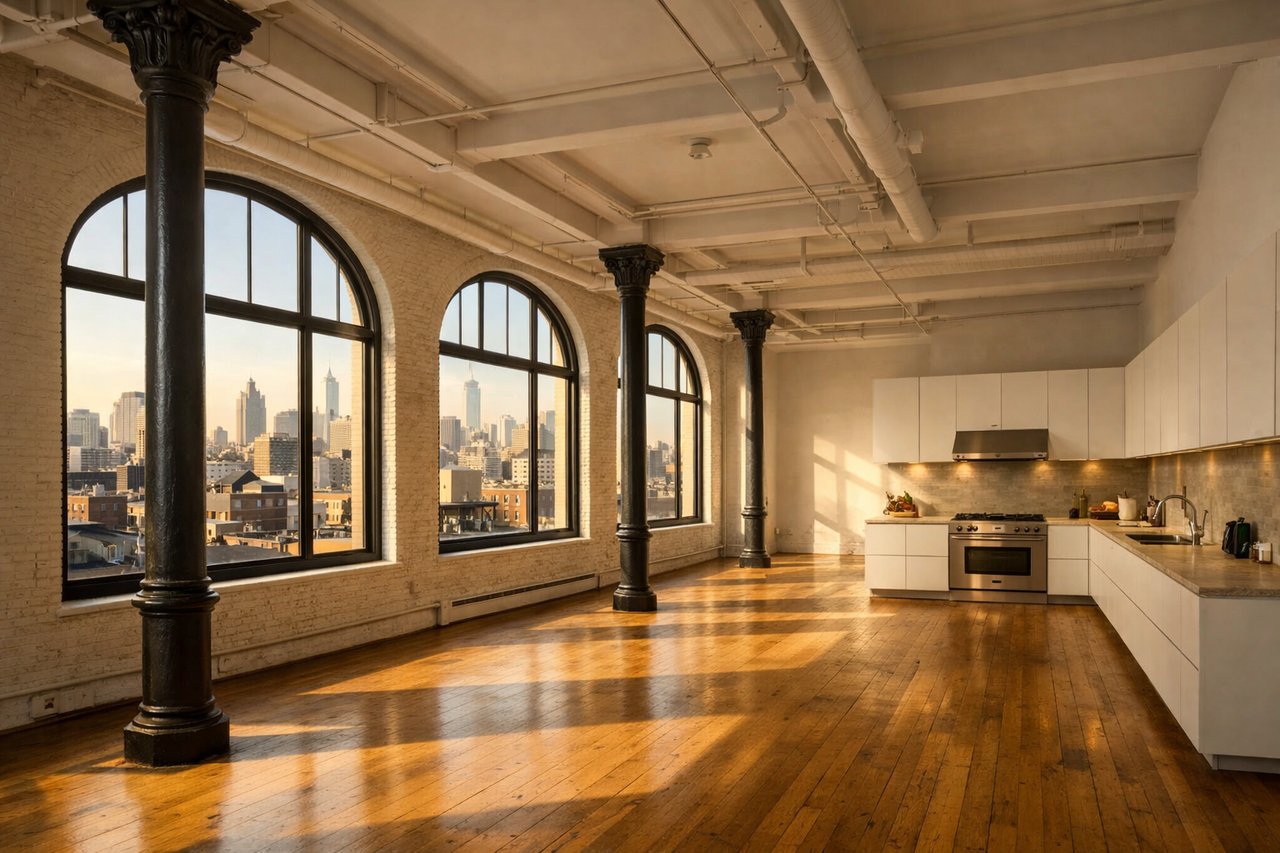
The Financial District's most compelling residential offering is not its new glass towers. It is the deep inventory of loft conversions—former commercial and office buildings, many dating to the late nineteenth and early twentieth centuries, that have been converted to residential use over the past three decades. These buildings offer a physical experience that is essentially impossible to replicate in new construction: cast-iron columns, exposed brick, timber ceilings, arched windows, and floor plates of genuine scale, converted to residential use with varying degrees of architectural ambition.
For buyers who have spent time in traditional Manhattan apartments and found them constraining—narrow rooms, low ceilings, compartmentalized layouts—a loft conversion in the Financial District offers a genuinely different way of living. Understanding which buildings represent the best combination of architectural integrity, mechanical soundness, financial structure, and location requires building-level knowledge that neighborhood-wide generalizations cannot provide.
THE HISTORY THAT PRODUCES THE PRODUCT
The Financial District's residential conversion wave began in earnest in the 1990s, accelerated after the events of September 2001, and has continued through successive waves of commercial-to-residential conversion driven by office market shifts and changing residential demand. The buildings that have been converted range from former bank headquarters and trading houses to commercial warehouses and light manufacturing facilities built to serve the port economy of lower Manhattan.
The physical legacy of that history is what makes these buildings distinctive as residential product. Pre-war commercial construction was built to carry heavy loads, which means structural systems of cast iron, concrete, and heavy timber that produce ceiling heights of 11 to 16 feet in many buildings—heights that residential construction of any era rarely achieves. The window openings, designed to bring natural light into commercial floors, are typically larger than residential windows and often feature the arched or industrial detailing that defines the aesthetic. The floor plates are wide and deep, producing square footage configurations that prewar residential buildings simply do not offer at comparable price points.
WHAT TO EVALUATE IN A LOFT CONVERSION
Not all conversions are equal, and the range between a well-executed loft conversion and a poorly executed one is significant. Buyers evaluating Financial District loft buildings should examine several variables beyond the physical space itself.
Building financial health is foundational. Loft conversions, particularly those completed in the 1990s and early 2000s, often carry the financial legacy of their conversion era—deferred maintenance, underfunded reserve accounts, or structural issues that were not fully addressed during conversion. The NYC Department of Buildings maintains a public record of open violations, stop-work orders, and permit history that provides a first filter for building condition. A comprehensive review of the building's financials—its current reserve fund, maintenance history, and pending capital projects—is essential before any offer.
Mechanical systems in converted buildings deserve particular scrutiny. Original commercial HVAC systems were not designed for residential use, and the conversion of those systems to residential heating and cooling varies enormously in quality. Buildings that completed comprehensive mechanical upgrades during conversion will have lower carrying costs and fewer reliability issues than those that grafted residential systems onto commercial infrastructure. An experienced attorney and a thorough review of the offering plan and amendments—filed with the New York State Attorney General's office—will surface the history of capital improvements and any outstanding issues.
NOTABLE CONVERSION BUILDINGS
Among the Financial District's most respected loft conversion buildings, several have established sustained track records as residential addresses. 20 Pine Street, the former Chase Manhattan Bank building designed by Shreve, Lamb & Harmon, was converted to condominiums with a renovation by Armani/Casa that produced some of the most finished residential product in the district. The building's amenity package—pool, spa, fitness center, and attended lobbies—reflects the full-service standard of its conversion era.
110 Wall Street, 99 John Street, and 75 Wall Street represent the range of conversion approaches available in the district: from buildings that preserved the original architectural character with minimal intervention, to those that underwent more thorough gut renovations that traded period authenticity for modern mechanicals and finishes. Buyers who value original details—exposed brick, timber beams, original columns—should tour buildings with those features intact, as many conversions covered or removed the historic fabric during renovation. Transaction data for individual buildings and units is searchable through the ACRIS system, which provides complete sales history and mortgage records.
PRICING IN THE CONVERSION MARKET
Financial District loft conversions trade at price points that reflect both the scale of the spaces and the age of the conversion. A one-bedroom loft in a well-maintained conversion building typically ranges from $900,000 to $1.6 million. Two-bedroom configurations with meaningful square footage and ceiling heights can reach $2.5 million and beyond. The premium for original architectural character—intact columns, exposed brick, original floors—is real and measurable, though it varies by buyer preference.
One significant financial consideration for Financial District buyers is the 421-a tax abatement, which was attached to many conversion projects completed in the 1990s and early 2000s. Buyers should confirm the current status and remaining term of any abatement—as these expire, monthly carrying costs increase materially. Buildings whose abatements have already expired are priced to reflect full taxes, while buildings with active abatements may appear attractively priced until the abatement rolls off. This distinction is among the most important financial variables in the Financial District condo market.
THE NEIGHBORHOOD CONTEXT
The Financial District has transformed from a nine-to-five commercial district into a functioning residential neighborhood with a range of services, restaurants, and cultural institutions that would have been absent twenty years ago. The Fulton Center transit hub provides access to the A, C, E, J, Z, 2, 3, 4, and 5 trains, making the Financial District among the most transit-connected addresses in the borough. The neighborhood's proximity to the Brooklyn Bridge Park and Hudson River Park adds public open space that the district's density does not generate internally.
Buyers with children should note that the Financial District falls within NYC DOE District 2, and school zoning for specific buildings can be confirmed using the DOE's Find a School tool. The neighborhood's school infrastructure has developed alongside its residential base, but families should verify current zoning carefully before making location decisions driven by school access.
THE BOTTOM LINE
Financial District loft conversions represent one of Manhattan's most distinctive residential product types—buildings that offer architectural scale, historic character, and spatial generosity unavailable in any other configuration at comparable price points. The range of quality within this category is significant, and the financial variables—abatement status, reserve fund health, mechanical condition—require careful due diligence. For buyers who understand those variables and have done the work to evaluate individual buildings, the rewards are apartments that are genuinely singular.
For buyers navigating this market, Daniel Blatman provides the building-level intelligence and financial modeling that Financial District loft purchases demand. The buyer's guide at danielblatman.com is a starting point for understanding the full framework of downtown Manhattan due diligence.