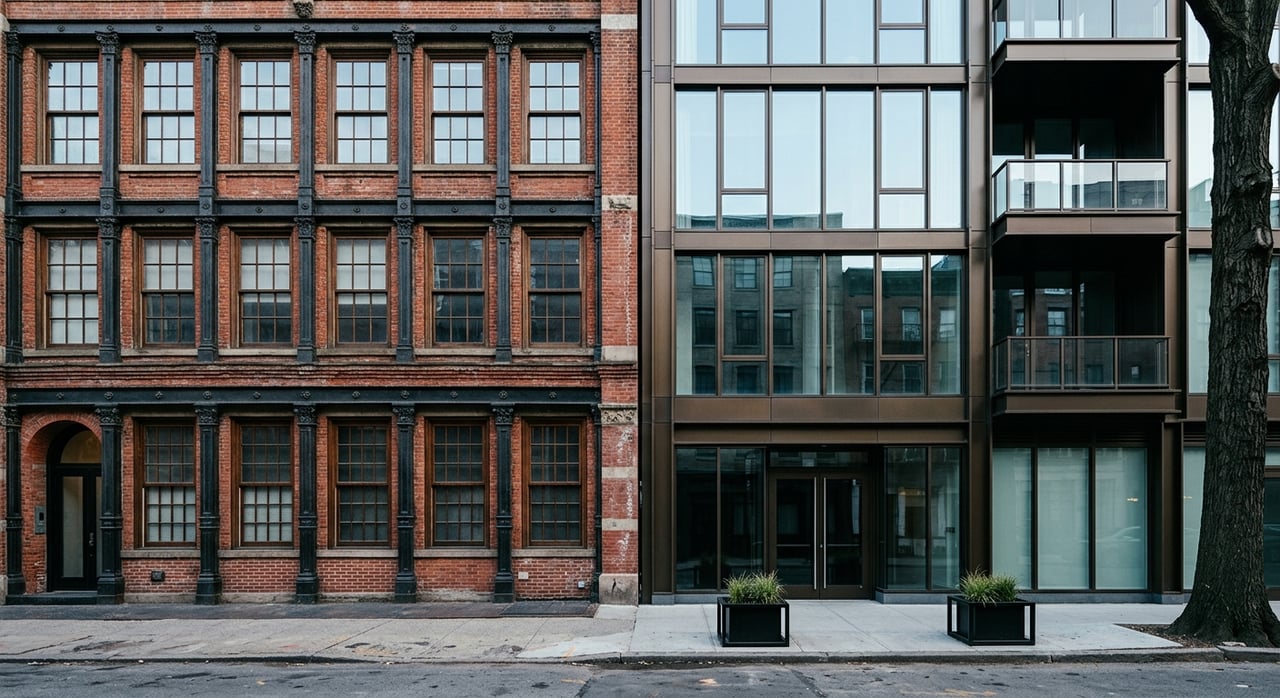
If you are investing in Flatiron, the biggest question may not be whether to buy, but what kind of asset fits your strategy best. In a small, high-cost neighborhood with low turnover, the gap between a sleek new-development condo and a classic historic loft can be dramatic. This guide breaks down pricing, rentability, carrying-cost considerations, and investor fit across Flatiron and nearby Gramercy so you can compare the trade-offs with more clarity. Let’s dive in.
Flatiron Investment Snapshot
Flatiron is a compact Manhattan neighborhood with a residential market shaped by both luxury new development and converted loft inventory. According to StreetEasy’s Flatiron neighborhood data, the area currently shows a $1.7 million median sale price, $6,000 median base rent, and 62 median days on market.
Nearby Gramercy offers a useful comparison point if you are screening Downtown-adjacent investments. The same StreetEasy area snapshot notes a $1.0 million median sale price, $4,995 median base rent, and 61 median days on market for Gramercy Park.
That context matters because both neighborhoods sit within a Manhattan rental market that has remained expensive. StreetEasy also reported that Manhattan’s median asking rent hit $4,750 in March 2026, the highest on record, which helps explain why well-located rental product still draws steady interest.
New Development Basics
For many investors, new-development condos are appealing because they offer a more standardized product. In Flatiron and Gramercy, that often means newer finishes, full-service staffing, and amenity packages that are easy for tenants and future buyers to understand.
At the submarket level, MNS’s 2Q24 new-development report places the Gramercy/Flatiron median price per square foot at $1,526. The same report shows $1,730 per square foot for studios and one-bedrooms, with larger units generally ranging from $1,489 to $1,693 per square foot.
At the very high end, sponsor inventory can price far above the submarket median. For example, The Flatiron Building sponsor listings are currently marketed from $10.95 million to $19.5 million, or roughly $3,513 to $4,648 per square foot based on listed units.
Why New Development Appeals
The main draw of new development is operational simplicity. If your priority is easier leasing, broad tenant appeal, and a cleaner future resale story, a full-service condo often checks those boxes.
The rental data supports that argument. According to the MNS Manhattan rental market report, average Manhattan doorman one-bedroom rents are $5,705 versus $4,212 for non-doorman one-bedrooms, while doorman two-bedrooms average $7,304 versus $5,469 for non-doorman two-bedrooms.
That does not guarantee stronger performance for every individual condo, but it does show why amenity-rich product tends to attract attention. In a neighborhood like Flatiron, where much of the newer inventory is modern and full-service, that can support leasing velocity and wider tenant appeal.
New Development Trade-Offs
The trade-off is usually the entry basis. Even at the broader submarket median, new-development pricing is substantial, and trophy product can sit in an entirely different range.
That higher basis can affect your flexibility on both rents and resale timing. You may gain ease and polish, but you also take on more exposure to premium pricing and competition from other luxury inventory in a neighborhood known for low turnover.
Carrying costs can also become more noticeable when the purchase price is high. The real issue is not just that a home is new development, but how the building’s taxes, common charges, and ownership structure affect the total monthly picture.
Historic Loft Basics
Historic lofts offer a very different investment case. In Flatiron and nearby pockets of Gramercy, these properties are often found in boutique conversions and co-op buildings rather than large condo towers.
A strong example is 26 East 22nd Street, a 1903 co-op conversion from a loft and warehouse building with eight units and full-floor lofts. Recent off-market sales there ranged from $3.1 million for 2,400 square feet to $4.95 million for 4,500 square feet, or roughly $1,100 to $1,292 per square foot.
Another nearby example, 21 East 22nd Street, is identified in the research as a 1911-built historic full-service co-op with features such as 11-foot ceilings and private outdoor space in a sold loft unit. While every property is unique, these examples show why loft buyers often focus on volume, ceiling height, and scarcity.
Why Historic Lofts Appeal
The biggest advantage of a historic loft is differentiation. Instead of competing on polished finishes and amenity packages, a loft can offer features that are simply harder to replicate, such as scale, architectural character, and a lower price per square foot.
This is where the numbers become especially interesting. The current sponsor units at The Flatiron Building are roughly three times or more the per-foot basis of the 26 East 22nd Street loft example.
For investors who are comfortable underwriting uniqueness, that gap can create a different type of opportunity. You may be buying more space and more scarcity for each dollar, even if the product takes more work to analyze and manage.
Historic Loft Trade-Offs
Historic lofts are rarely the simpler path. Many of these opportunities are in co-ops or older conversions, which means the ownership structure itself can add friction.
That can affect financing, building rules, approval process, and eventually resale. The point is not that every loft is harder, but that building-specific review matters more when the asset is idiosyncratic.
You also need to be realistic about capital needs. A lower basis on paper may be offset by renovation work, ongoing maintenance, or time spent navigating a more nuanced ownership process.
New Development vs Historic Loft
Here is the clearest side-by-side comparison for investors evaluating Flatiron product types:
| Factor | New Development Condo | Historic Loft |
|---|---|---|
| Typical appeal | Ease, amenities, standardized finishes | Scarcity, volume, architectural character |
| Ownership structure | Often condo | Often co-op or boutique conversion |
| Price per square foot | Gramercy/Flatiron median new-dev: $1,526; trophy examples can run $3,513 to $4,648 | Example loft trades around $1,100 to $1,292 |
| Tenant draw | Broad appeal, especially with doorman and amenities | More niche appeal tied to layout and character |
| Renovation risk | Typically lower near term | Often higher or more variable |
| Resale story | Cleaner and easier for many buyers to understand | More building-specific and less standardized |
For many investors, this comparison comes down to friction versus scarcity. New development may offer a smoother path, while a historic loft may offer more character and a better entry basis per square foot.
Carrying Costs Matter Most
No matter which direction you lean, your underwriting should go beyond the purchase price. In New York City, closing and carrying costs can materially change the math.
The NYC Department of Finance states that the city’s residential real property transfer tax is 1% up to $500,000 and 1.425% above that amount. New York State also imposes a transfer tax, and residential purchases of $1 million or more are subject to the mansion tax.
If you finance the purchase, mortgage recording tax adds another layer. The city also notes that eligible condo and co-op buildings can apply annually for the co-op/condo abatement, which is another reason building-level review matters.
In practice, that means a high-end new-development condo may be easier to lease but more expensive to carry because the basis is so high. A historic loft may look attractive on a per-foot basis but still require more capital, patience, or both.
A Quick Rent-to-Price Screen
As a rough market screen, Flatiron’s $6,000 median base rent against its $1.7 million median sale price implies about a 4.2% rent-to-price ratio. Gramercy’s $4,995 median base rent against its $1.0 million median sale price implies roughly 6.0% based on the same StreetEasy neighborhood data.
This is not a cap rate, and it does not include taxes, common charges, maintenance, concessions, or vacancy. Still, it is a useful reminder that neighborhood-level ratios can differ meaningfully even within adjacent Manhattan submarkets.
For investors, that makes property selection even more important. The spread between a premium condo and a quirky loft is too large to rely on neighborhood averages alone.
Which Investment Fits You?
If you want broad tenant appeal, lower near-term renovation risk, and a more straightforward resale path, a new-development condo may be the better fit. This is especially true if you value amenities, full-service operations, and a product that is easier for future buyers to compare.
If you are comfortable with more complexity and want scarcity, larger volumes, and potential value-add upside, a historic loft may deserve a closer look. The lower per-square-foot basis in the examples above is compelling, but only if you are prepared for building-specific diligence.
Either way, short-term flips can be hard to justify once transfer taxes, mansion tax exposure, and financing costs are added in. In this part of Manhattan, the stronger cases tend to come from a clear hold strategy rather than a quick resale plan.
When you are comparing product types in a market as nuanced as Flatiron and Gramercy, the right answer is usually less about headlines and more about fit. The Blatman Team helps buyers and investors evaluate condos, co-ops, lofts, and neighborhood-level trade-offs with a practical, data-driven lens.
FAQs
What is the main difference between new development and historic loft investing in Flatiron?
- New-development condos generally offer easier leasing, modern amenities, and a cleaner resale story, while historic lofts usually offer more character, scarcity, and a lower example price per square foot but with more complexity.
How expensive is new development in Flatiron compared with historic lofts?
- Based on the research examples, sponsor units at The Flatiron Building are marketed around $3,513 to $4,648 per square foot, while a historic loft example at 26 East 22nd Street traded around $1,100 to $1,292 per square foot.
Are historic lofts in Flatiron usually condos or co-ops?
- Many historic loft opportunities in this area are found in co-ops or boutique conversions rather than standard condo towers, which can make the ownership process more building-specific.
How should investors compare Flatiron and Gramercy rental economics?
- A rough neighborhood screen from the research shows Flatiron at about a 4.2% rent-to-price ratio and Gramercy at about 6.0%, though those figures are not cap rates and exclude ownership costs.
What closing costs should investors consider when buying in New York City?
- Investors should account for NYC transfer tax, New York State transfer tax, the mansion tax on purchases of $1 million or more, and mortgage recording tax if the purchase is financed.
Who should consider a new-development condo in Flatiron?
- A new-development condo may fit investors who want lower operational friction, strong amenity-driven tenant appeal, and a more standardized asset for future resale.
Who should consider a historic loft in Flatiron or Gramercy?
- A historic loft may fit investors who value architectural character, ceiling height, and scarcity, and who are comfortable with more detailed diligence and possible renovation or co-op process complexity.