GRAMERCY PARK: WHAT BUYERS NEED TO KNOW
Gramercy Park occupies a position in Manhattan real estate that no other neighborhood can replicate. Built around the city's only remaining private park—a two-acre garden locked since 1844 and accessible exclusively to residents of the 39 surrounding buildings—this enclave between roughly 18th and 23rd Streets, from Park Avenue South to Third Avenue, offers a combination of architectural heritage, residential exclusivity, and neighborhood permanence that has sustained buyer demand across every market cycle for nearly two centuries.
For buyers considering Gramercy Park, the appeal is obvious. The complexity is less so. The private park's key system, the historic district regulations, the co-op-heavy inventory, and the neighborhood's particular pricing dynamics all require a level of understanding that casual browsing cannot provide. This guide addresses what informed buyers actually need to know before pursuing a purchase in one of Manhattan's most distinctive residential markets.
THE PRIVATE PARK: ACCESS, KEYS, AND WHAT THEY MEAN FOR BUYERS
The defining feature of Gramercy Park is the park itself—and the fact that most of Manhattan cannot enter it. Only residents of the buildings directly abutting the park hold keys, distributed by the Gramercy Park Trust, which manages access, maintenance, and rule enforcement. Approximately 383 keys are in circulation at any given time. Each is coded, numbered, and replaced annually when the locks are changed.
Buyers frequently ask: Does every apartment in the neighborhood come with park access? No. Only buildings whose lots are deeded as part of the original 1831 covenant—the parcels Samuel B. Ruggles designated when he created the park—hold key rights. Buildings on Irving Place, East 19th Street, or Third Avenue that are near the park but not part of the deeded perimeter do not qualify. The distinction between a Gramercy Park address and a Gramercy Park key is one of the most consequential details in any purchase decision in this neighborhood.
For buildings that do hold key rights, access is typically governed by the co-op or condo board, which manages distribution and collects the annual assessment charged by the Trust. Buyers should confirm during due diligence whether key access is active, whether the building is current on its assessments, and whether the key transfers automatically at closing or requires a separate application. Properties with confirmed, transferable park key access consistently command premiums of 20 to 40 percent over comparable units in adjacent neighborhoods—a differential that has held through decades of market fluctuation.
THE HISTORIC DISTRICT: WHAT IT PROTECTS AND WHAT IT REQUIRES
The Gramercy Park Historic District was designated by the NYC Landmarks Preservation Commission in 1966, making it one of the earliest historic districts in the city. A subsequent extension was designated in 1988, expanding protections to additional blocks surrounding the original perimeter. The LPC's historic district map for Gramercy Park delineates the boundaries and identifies every contributing structure.
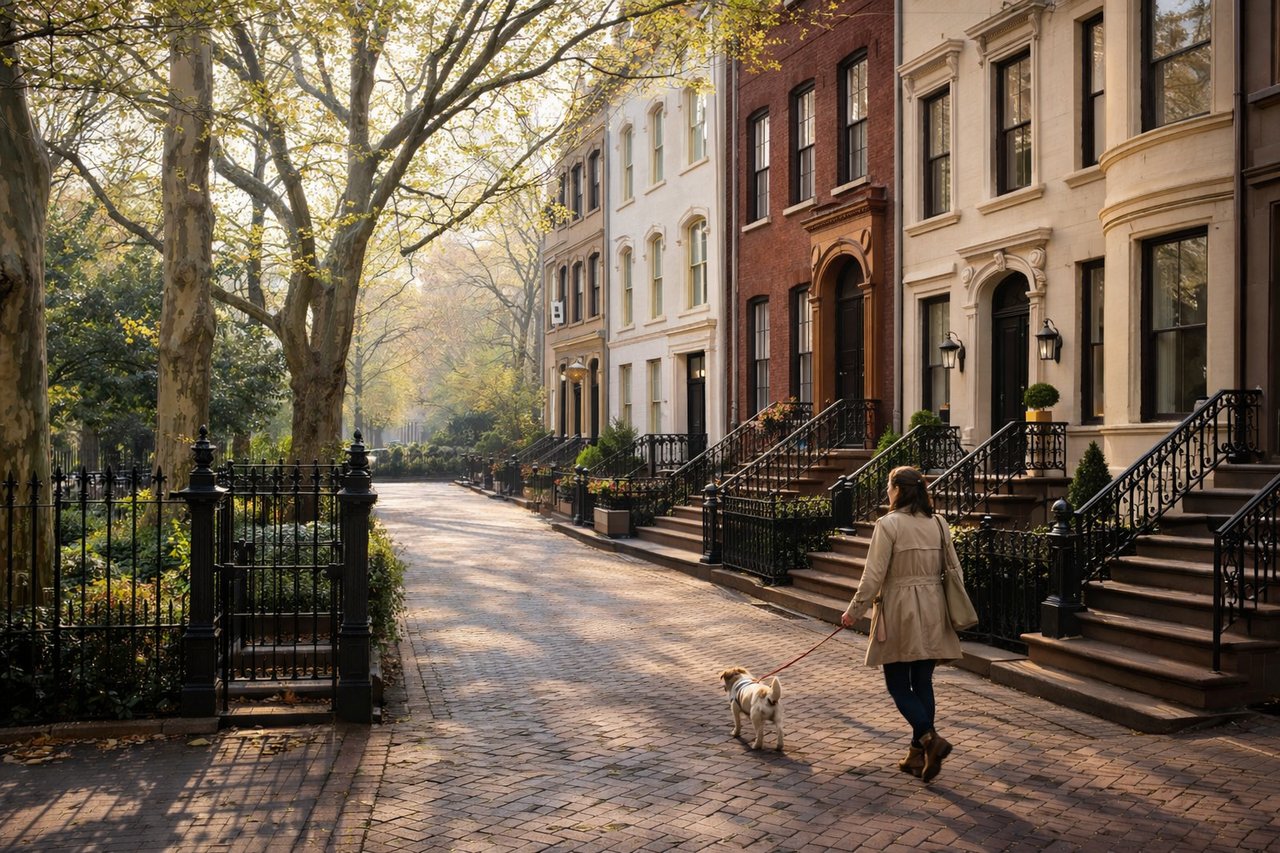
The architectural inventory within the district is remarkable. Greek Revival and Italianate townhouses from the 1840s and 1850s line the park's perimeter, many featuring the ornamental wrought-iron work that has become synonymous with the neighborhood's visual identity. Gothic Revival and Renaissance Revival apartment buildings from the late nineteenth century occupy the surrounding blocks. Together, they form one of the most architecturally cohesive residential streetscapes in Manhattan.
For buyers, the historic district designation carries both value and obligation. It preserves the neighborhood's character, prevents incompatible development, and ensures that the streetscape that makes Gramercy Park distinctive will endure. It also means that any exterior work—window replacement, facade restoration, rooftop additions, or storefront alterations—requires approval from the Landmarks Preservation Commission. Buyers considering renovation should factor LPC review timelines and requirements into their planning, particularly for properties where exterior improvements are part of the investment thesis.
Buyers sometimes ask: Does landmark status limit what I can do inside my apartment? No. Interior renovations do not require LPC approval. The Commission's jurisdiction extends to exterior work that is visible from a public thoroughfare. Interior layouts, finishes, and systems are governed by the building's rules and the NYC Department of Buildings, not by the LPC.
CO-OPS DOMINATE THE INVENTORY
Gramercy Park's residential stock is overwhelmingly cooperative. The prewar buildings that define the neighborhood were almost universally converted to co-op ownership during the mid-twentieth century, and co-ops continue to account for the large majority of available inventory.
This has direct implications for buyers. Co-op purchases require board approval—a process that involves submitting a detailed financial package including tax returns, bank statements, employment verification, personal and professional references, and a narrative letter. Boards in Gramercy Park tend to be conservative, often requiring down payments of 25 to 30 percent or more, post-closing liquidity equivalent to one to two years of carrying costs, and a debt-to-income ratio that leaves significant margin.
Buyers often wonder: Are Gramercy Park co-op boards stricter than average? Many are. The neighborhood's emphasis on residential stability, its historic character, and the park key system all contribute to a culture of careful vetting. Buyers who are well prepared—with strong financials, a clean application, and a broker who understands the specific expectations of the building—navigate the process successfully. Those who treat the board package as an afterthought frequently encounter delays or rejections that could have been avoided.
The New York State Attorney General's guidance on co-op and condo purchases outlines the legal framework governing these transactions, including disclosure requirements and offering plan review. The buyer's guide at danielblatman.com provides strategic context for assembling a board package that reflects the standards Gramercy Park buildings expect.
CONDOS AND NEWER DEVELOPMENT
While co-ops dominate, Gramercy Park does offer a smaller selection of condominiums—both in converted buildings and in newer ground-up developments. These properties appeal to buyers who want the neighborhood's character without the co-op board process, or who need ownership flexibility that co-ops typically restrict, including subletting, pied-à-terre use, or trust and corporate ownership structures.
Condo inventory in and around Gramercy Park trades at a higher price per square foot than comparable co-ops, reflecting the structural advantages of condo ownership: easier resale, broader buyer eligibility, and fewer restrictions on use. For buyers evaluating both options, the comparison should be made on total cost of ownership—including monthly common charges, property taxes (adjusted for any applicable Cooperative and Condominium Property Tax Abatement), closing costs, and the financial implications of the building's specific rules and assessments.
PRICING AND WHAT DRIVES VALUE
Gramercy Park pricing reflects a layered set of variables that extend beyond square footage and bedroom count. The factors that carry the most weight in this market include park key access, floor height and exposure, building condition and financial health, proximity to the park itself, and the quality and extent of any renovation.
A park-facing apartment with direct views of the garden will consistently trade at a significant premium to a comparable unit on a side street without park access. A renovated two-bedroom in a well-run co-op with park keys may trade above $2,000 per square foot, while an unrenovated unit in the same building might sit closer to $1,400. The spread is wide, and it rewards buyers who understand the specific characteristics that command premiums.
Transaction history for individual properties is publicly searchable through the NYC Department of Finance's ACRIS system, which provides access to deeds, prior sale prices, and mortgage records. An agent who reviews this data before advising on an offer—and who understands how to interpret the neighborhood's pricing patterns—provides a material advantage in a market where mispricing in either direction has real consequences.
CLOSING COSTS AND TAX CONSIDERATIONS
Gramercy Park's price points place most transactions in ranges where buyer closing costs are meaningful. Purchases above $1 million—which includes the majority of Gramercy transactions—are subject to the New York State mansion tax, beginning at 1 percent and scaling upward. Financed buyers must also account for the NYC Mortgage Recording Tax, which adds 1.8 percent for loans below $500,000 and 1.925 percent for loans at or above $500,000.
Buyers should also confirm whether the building has filed for the Cooperative and Condominium Property Tax Abatement, which can reduce annual property taxes by up to 28 percent for eligible primary-residence owners. This abatement directly affects monthly carrying costs and should be factored into any comparison between buildings or between Gramercy Park and competing neighborhoods.
The NYC Department of Finance's Property Tax Benefits page provides an overview of all available exemptions and abatements, including STAR, veterans' benefits, and senior citizen homeowner programs. An agent who reviews these programs as part of the buying process—not as an afterthought—is providing the level of financial diligence this market requires.
THE NEIGHBORHOOD BEYOND THE PARK
Gramercy Park's appeal extends beyond the wrought-iron fence. The surrounding blocks include some of Manhattan's most attractive residential streets, particularly East 19th Street between Irving Place and Third Avenue—known locally as the "Block Beautiful" for its diverse and meticulously maintained architectural row. Irving Place, running south from the park to 14th Street, offers a mix of dining, independent retail, and cultural landmarks that gives the neighborhood a character distinct from the commercial energy of nearby Union Square or the Flatiron District.
Transit access is strong. The 6 train at 23rd Street and the Union Square hub—serving the 4, 5, 6, N, Q, R, W, and L lines—are both within a short walk, providing connectivity across the city. The neighborhood's central location between Midtown and Downtown means that most of Manhattan is reachable in under 20 minutes by subway.
For buyers who value residential quiet without sacrificing urban access, Gramercy Park delivers a balance that is difficult to replicate elsewhere in Manhattan. The neighborhood profiles at danielblatman.com provide current context on how Gramercy compares to adjacent markets.
THE BOTTOM LINE
Gramercy Park is not a neighborhood that reveals its value to casual observers. Its appeal is structural—rooted in a private park that has been maintained continuously since 1831, protected by a historic district designation that has preserved its character for nearly six decades, and sustained by a residential community that values permanence over novelty.
For buyers who understand what they are purchasing—not just an apartment but a position within one of Manhattan's most exclusive residential frameworks—Gramercy Park offers a combination of architectural beauty, lifestyle quality, and long-term value that few neighborhoods can match.
For strategic guidance on purchasing in Gramercy Park, Daniel Blatman provides the neighborhood expertise, financial modeling, and negotiation discipline that this market rewards.