GREENWICH VILLAGE: PRESERVATION MEETS PREMIUM PRICING
Greenwich Village is the neighborhood where Manhattan's preservation movement began — and where the market has most decisively proved that protecting architectural heritage does not suppress real estate value. It elevates it. The Village's combination of landmarked streetscapes, irreplaceable building stock, cultural significance, and constrained supply has produced one of the most expensive residential markets per square foot in the city, attracting buyers who understand that what they are purchasing is not just an apartment but a position within one of Manhattan's most architecturally protected environments.
This guide examines how the Village's preservation framework shapes the buying experience and why the premium it commands is structurally supported.
THE HISTORIC DISTRICT: MANHATTAN'S MOST COMPREHENSIVE PROTECTION
The Greenwich Village Historic District, designated by the NYC Landmarks Preservation Commission in 1969, was among the city's earliest and remains one of its largest, encompassing thousands of buildings across dozens of blocks from roughly 14th Street to Houston Street, from the Hudson River to Broadway. Two subsequent extensions — in 2006 and 2010 — expanded protections into the South Village, creating a contiguous zone of landmarked residential architecture that is unmatched in scope anywhere in the city.
The practical effect of this designation is profound. New development within the district is subject to LPC review and approval, which ensures that new construction is compatible with the existing streetscape. Demolition of contributing buildings is effectively prohibited. Exterior alterations — windows, facades, stoops, cornices — must meet preservation standards. The result is a neighborhood whose physical character has been maintained with extraordinary fidelity across more than five decades of designation.
For buyers, this means that the streetscape you purchase into today will remain substantially intact for the foreseeable future. This is not an abstract benefit. It is a measurable driver of long-term value in a city where unprotected neighborhoods can be transformed by a single development cycle.
THE BUILDING STOCK: FEDERAL TO PREWAR
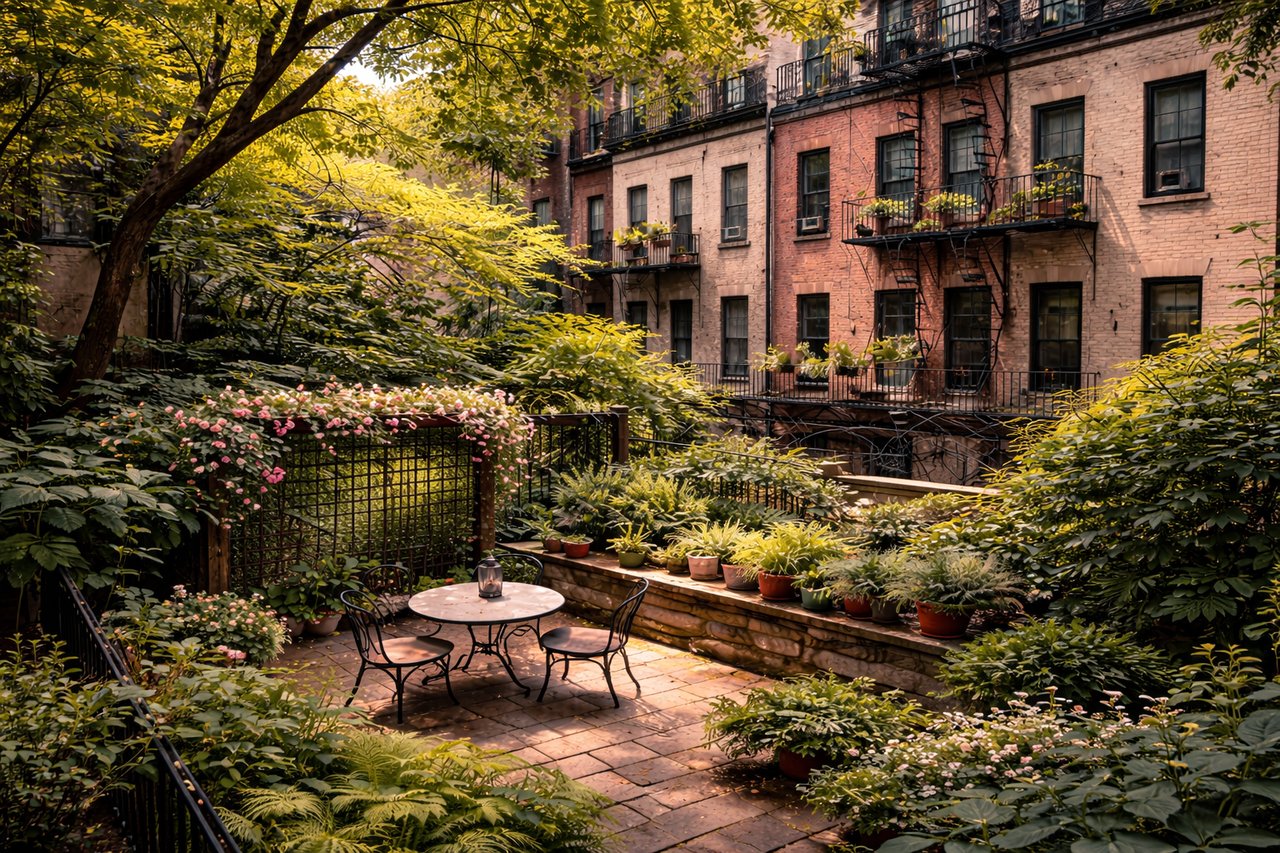
The Village's residential inventory spans nearly two centuries. Federal-style row houses from the 1820s and 1830s sit alongside Greek Revival townhouses from the 1840s, Italianate brownstones from the 1860s, and prewar apartment buildings from the early twentieth century. The architectural diversity within the district is extraordinary. Still, it is unified by scale — most buildings stand three to six stories — and by the quality of materials and craftsmanship that characterized construction in lower Manhattan during these periods.
For buyers, the inventory divides broadly into two categories. Townhouse and brownstone units — typically in co-op conversions or as individual condos within subdivided houses — offer the most distinctive living experience: private entrances, garden access, original architectural details, and the sense of inhabiting a building with a singular identity. Prewar co-op apartments in larger buildings offer the full-service infrastructure of a traditional apartment building — doormen, elevators, laundry rooms — within the Village's protected streetscape.
Buyers frequently ask: Are there any condos in the Village? Yes, though the inventory is limited compared to co-ops. Newer condo development has been constrained by the historic district, which limits the scale and character of new construction. The condos that do exist — typically in converted commercial buildings or small-scale ground-up projects — command significant premiums, reflecting both the scarcity of condo product and the flexibility of fee-simple ownership.
PRICING: WHY THE PREMIUM IS STRUCTURAL
Greenwich Village pricing reflects the intersection of extreme supply constraint and persistent demand. The landmark protections that preserve the neighborhood's character also prevent the kind of inventory expansion that moderates pricing in less protected markets. When supply cannot expand, and demand remains strong, prices do what economics predicts: they rise.
A renovated two-bedroom co-op in a prime Village location may trade between $1.5 million and $3 million. A comparable condo — rarer and more flexible — may trade between $2.5 million and $5 million. Townhouse units and full-floor apartments can exceed $10 million. Price per square foot ranges from $1,400 in unrenovated co-ops to well above $3,000 in premium condo and townhouse product.
Transaction history is searchable through the NYC Department of Finance's ACRIS system. Buyers should also review the NYC Department of Finance's Property Tax Benefits page and confirm Cooperative and Condominium Property Tax Abatement status for each building.
The neighborhood profiles at danielblatman.com provide current Village pricing context.
THE BOTTOM LINE
Greenwich Village is the proof case that preservation and premium are not opposites — they are cause and effect. The landmark protections that have maintained the neighborhood's architectural integrity for more than fifty years have simultaneously created the supply constraints and environmental stability that sustain the highest residential pricing in lower Manhattan.
For buyers who value architectural permanence, cultural depth, and a streetscape that will endure, Greenwich Village offers something that no new-construction neighborhood can replicate. For those ready to purchase, Daniel Blatman provides the building-level expertise and negotiation discipline this market demands.