Hell's Kitchen vs. Midtown West: Which Fits Your Buyer Profile?
Should you buy in Hell's Kitchen or Midtown West? The two overlap, Hell's Kitchen sits inside the broader Midtown West area, but buyers use the terms to mean different things: Hell's Kitchen is the residential, dining-rich, lower-rise neighborhood west of the Midtown core, generally more attainable, while "Midtown West" often points toward the newer, taller, amenity-rich luxury development near Hudson Yards. The choice comes down to whether you want neighborhood character and value or new-construction scale and services.
Where Are Hell's Kitchen and Midtown West?
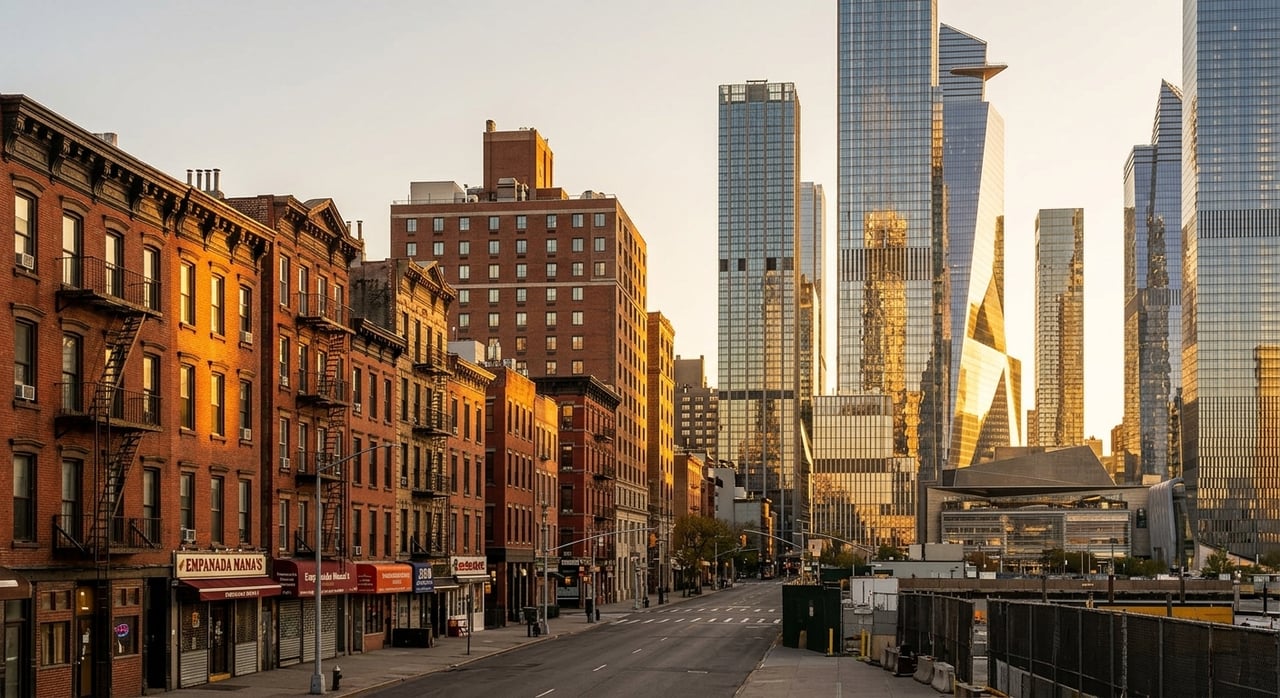
They occupy the same corner of the map with different emphases. Hell's Kitchen, also called Clinton, runs roughly from the 40s into the 50s west of Eighth Avenue toward the Hudson, a long-residential neighborhood known for its restaurants, its proximity to the Theater District, and a mix of older walk-ups and newer mid-rise buildings. Midtown West is the broader western slice of Midtown that contains Hell's Kitchen along with Hudson Yards and the commercial core, and in buyer shorthand it often signals the gleaming new towers and large-scale development that have risen on the far West Side. Both put you near Midtown, the Hudson River parks, and some of the city's best transit.
What Kind of Buildings Does Each Have?
The housing stock is where the distinction sharpens. Hell's Kitchen real estate leans toward older tenement and walk-up buildings, prewar and postwar co-ops, and a growing supply of newer mid-rise condominiums, which gives it more neighborhood character and a wider range of price points. Midtown West real estate, in the sense buyers usually mean, is dominated by newer high-rise condominiums, including the ultra-luxury towers of Hudson Yards, with full amenity packages, concierge service, and the scale that comes with new development. In short, Hell's Kitchen offers more character and value, while Midtown West offers more new construction and amenities.
Which Is More Expensive, Hell's Kitchen or Midtown West?
Midtown West, at its high end, is clearly the pricier of the two. The new luxury towers near Hudson Yards sit among the most expensive new-construction product in the city, while Hell's Kitchen, with its older buildings and mid-rise condos, generally offers a more attainable entry point and more apartment per dollar. That said, both areas span a range, and a newer Hell's Kitchen condo can approach Midtown West pricing, so the gap is widest when you compare a Hudson Yards tower to a classic Hell's Kitchen walk-up or co-op. As a rule, a budget stretches further in Hell's Kitchen.
Who Should Buy in Hell's Kitchen vs Midtown West?
Fit comes down to what you want from the neighborhood. Hell's Kitchen rewards buyers who value a real residential community, a deep and diverse dining scene, proximity to the theaters, and more value for the money, which appeals to first-time buyers, young professionals, and those who want neighborhood texture. Midtown West, in the Hudson Yards sense, rewards buyers who want brand-new construction, full-service amenities, and the scale and services of a luxury tower, which draws buyers prioritizing convenience, newness, and a lock-and-leave lifestyle. A rough test: if character and value matter most, Hell's Kitchen fits; if new construction and amenities are the priority, Midtown West does.
How Does Each Affect Closing and Carrying Costs?
The building type drives your costs. Midtown West's newer condos carry common charges and, at the luxury end, higher price points that more often cross the mansion-tax threshold at one million dollars and up, and the supplemental tax at two million and above, which the New York State Department of Taxation and Finance explains for transfer-related taxes; some newer towers also carry tax abatements worth confirming. Hell's Kitchen's mix of co-ops and smaller condos can mean board approval and financing caps in the co-op case, or lower overall price points that keep closing costs down. Weigh these alongside the asking price when comparing the two.
How Do You Choose Between Them?
Lead with your profile, then test it against real inventory. Decide first whether you want new-construction scale and amenities or neighborhood character and value, since that single choice points you toward Midtown West's towers or Hell's Kitchen's mix. Then rank what matters most, price, amenities, dining, or newness, and let that ordering guide you. When you are ready to compare options, browsing active and coming-soon listings across both will show you how your budget behaves in each, and our guidance for Manhattan buyers covers how to translate a profile into a focused search.
Common Missteps
Watch for treating the two as entirely separate when they overlap, comparing a Hudson Yards tower to a Hell's Kitchen walk-up without accounting for the very different costs and lifestyles, and assuming either is uniformly cheaper, since both span a wide range. Each is easy to avoid by leading with your own priorities and confirming the numbers with your agent and attorney.
There is no better neighborhood here, only the one that fits your budget, your priorities, and your stage of life. If you are weighing the two, see how we approach buying a condo in Manhattan, follow Manhattan real estate market trends to understand where each area sits today, and learn more about Daniel Blatman's NYC real estate expertise and how it helps buyers match a neighborhood to their profile.