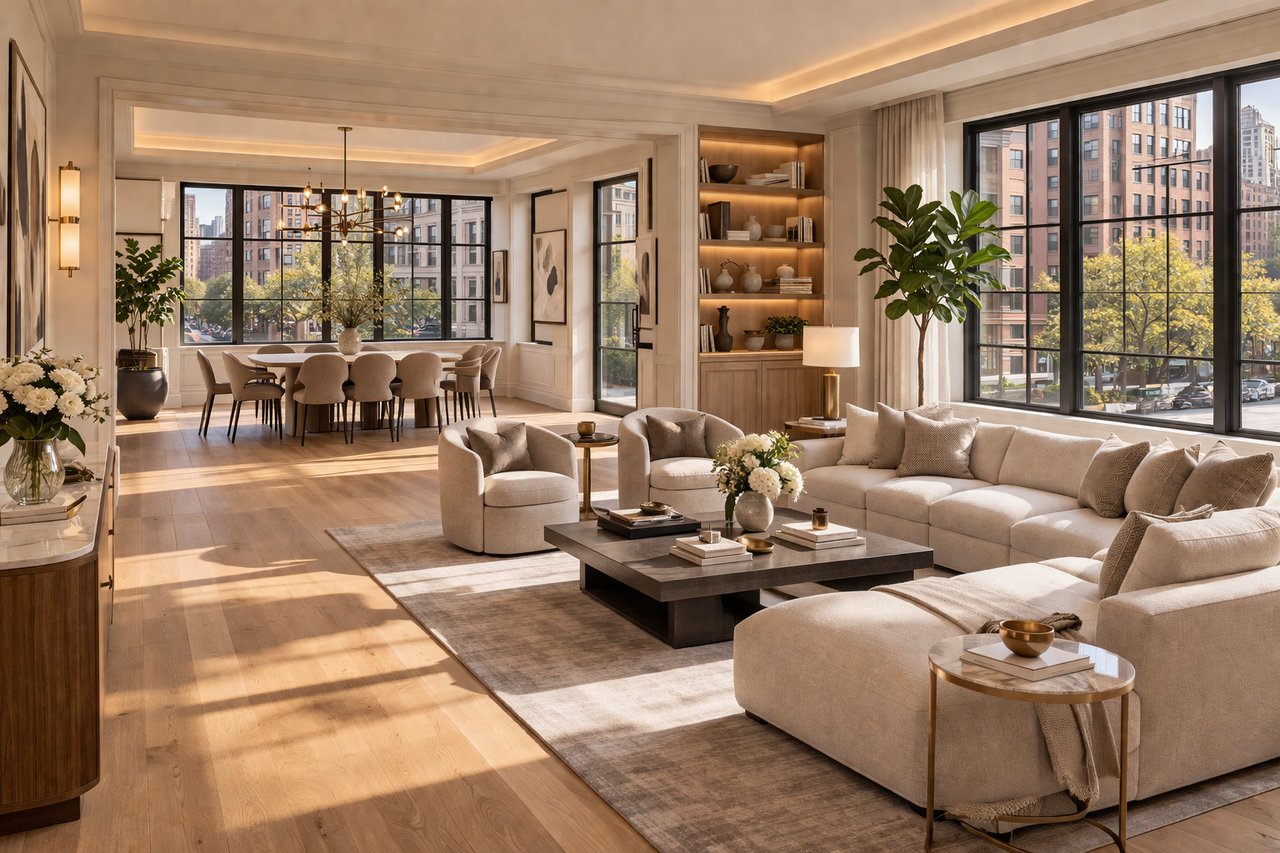
HOW INTERIOR DESIGN IMPACTS YOUR HOME’S VALUE IN MANHATTAN
WHY DESIGN IS A FINANCIAL DECISION, NOT JUST AN AESTHETIC ONE
In Manhattan real estate, interior design directly influences pricing, time on market, and buyer perception. In competitive neighborhoods such as Chelsea, SoHo, and the Upper West Side, design is often the deciding factor between comparable properties. Buyers in these markets are highly attuned to layout efficiency, material quality, and visual cohesion, which means that even subtle design decisions can translate into meaningful differences in value.
Sellers frequently ask whether design upgrades deliver measurable returns. Market behavior consistently shows that well-designed homes command stronger offers and shorter marketing timelines. Reviewing current listings on Daniel Blatman’s Manhattan property search makes clear that properties with thoughtful interiors consistently outperform those requiring updates, even when located in the same building.
CHELSEA: CONTEMPORARY DESIGN THAT DRIVES PREMIUMS
Chelsea buyers expect clean, modern interiors that align with the neighborhood’s gallery-driven aesthetic. Open layouts, integrated kitchens, and refined finishes tend to resonate most strongly, particularly in newer condominium developments. Strategic upgrades such as custom cabinetry, upgraded lighting, and cohesive material palettes often yield a clear pricing advantage.
A common question is whether full renovations are necessary to increase value. In many cases, targeted improvements can be just as effective. Updating fixtures, repainting in neutral tones, and refining spatial flow can significantly enhance buyer perception without the cost of a full overhaul. Sellers can also reference permitting requirements through the New York City Department of Buildings, ensuring that any work aligns with local regulations before listing.
SOHO: PRESERVING CHARACTER WHILE INTRODUCING MODERN FUNCTION
In SoHo, design strategy requires balance. Buyers are drawn to original loft features such as cast-iron columns, high ceilings, and expansive windows, but they also expect modern functionality. The most successful properties preserve architectural character while integrating contemporary kitchens, updated bathrooms, and discreet climate systems.
Owners often ask how far they can modify historic properties. Many SoHo buildings fall within landmark districts governed by the New York City Landmarks Preservation Commission, which regulates exterior changes and certain interior elements. Understanding these guidelines is critical when planning renovations. For investors, aligning upgrades with the building’s architectural identity tends to produce the strongest resale outcomes. Opportunities in this category can be explored through Daniel Blatman’s SoHo listings.
UPPER WEST SIDE: CLASSIC LAYOUTS WITH MODERN EXPECTATIONS
The Upper West Side presents a distinct design opportunity, where prewar layouts meet contemporary buyer expectations. Original details such as moldings, hardwood floors, and formal dining rooms remain highly desirable, but they must be complemented by updated kitchens, renovated baths, and improved storage solutions.
Homeowners frequently ask whether preserving prewar charm outweighs modernization. The answer is not either or. The highest-value properties successfully integrate both. Retaining architectural details while introducing modern conveniences creates a layered appeal that resonates with today’s buyers. Those evaluating potential upgrades can compare similar renovated units through Daniel Blatman’s Upper West Side property search, where design quality often correlates directly with pricing.
STAGING, LIGHT, AND SPATIAL PERCEPTION
Beyond renovation, staging plays a critical role in shaping buyer perception. In Manhattan’s often compact interiors, scale and proportion must be carefully managed. Thoughtful furniture placement, consistent color palettes, and strategic lighting can make a property feel significantly larger and more functional.
Sellers often ask whether staging is necessary in a strong market. Even in high-demand conditions, staging enhances presentation and reduces buyer hesitation. It allows prospective buyers to understand how a space functions, which is particularly important in unique layouts common in Chelsea and SoHo lofts. The cost of staging is typically offset by improved pricing and faster transactions.
MAKING DESIGN DECISIONS THAT MAXIMIZE RETURN
The most effective design strategies are those aligned with both the property and its target buyer. Over-improving or introducing overly personalized elements can limit appeal, while under-investing can leave value unrealized. The goal is to create a space that feels intentional, refined, and adaptable.
For homeowners, sellers, and investors, navigating these decisions requires both design awareness and market expertise. A data-informed approach, combined with insight into buyer behavior, allows for strategic upgrades that enhance value without unnecessary expenditure. Through Daniel Blatman’s NYC real estate advisory, clients can identify the design interventions that deliver the strongest return in Chelsea, SoHo, and the Upper West Side, ensuring that every decision contributes to both immediate appeal and long-term value.