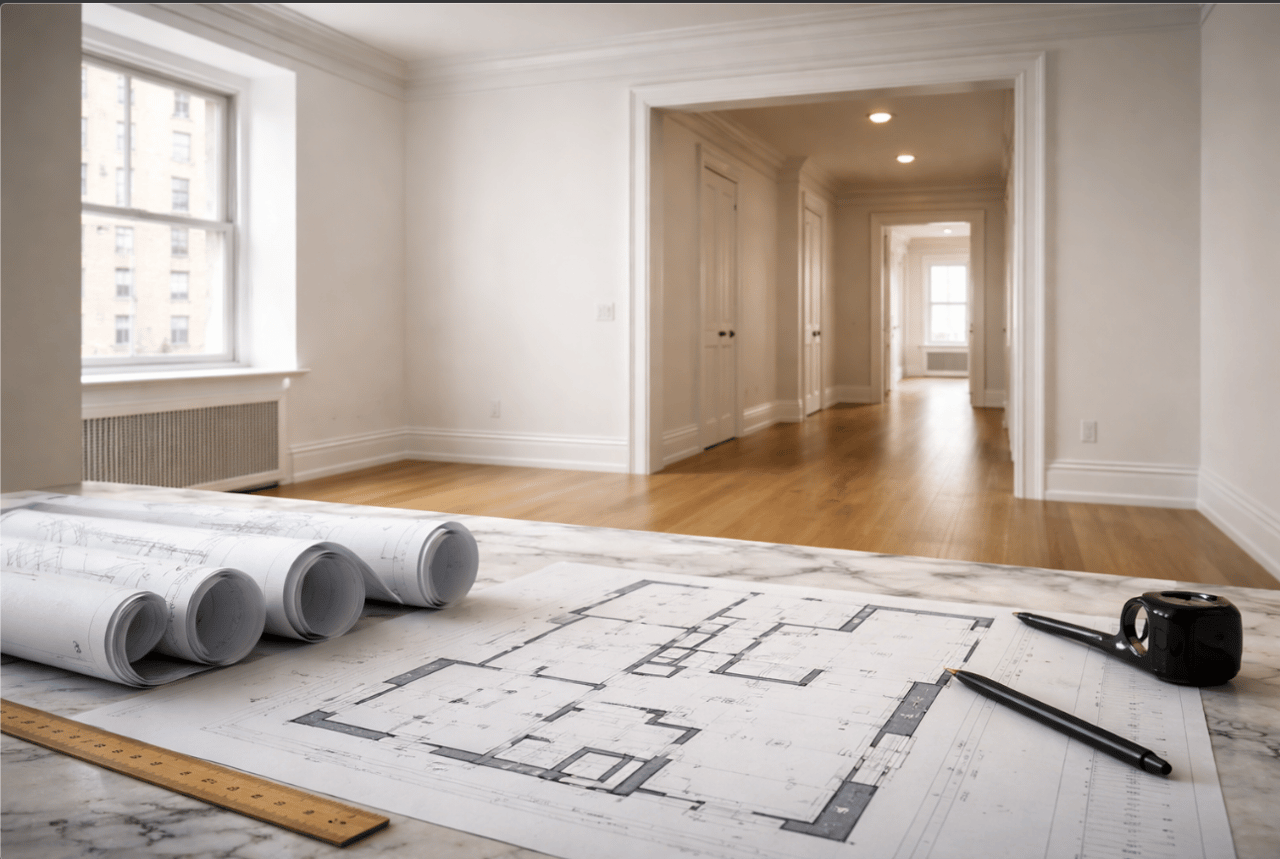
HOW TO EVALUATE A FLOOR PLAN LIKE AN ARCHITECT
WHY FLOOR PLANS ARE WHERE MANHATTAN VALUE IS WON OR LOST
In Manhattan, two apartments can share the same square footage and feel like entirely different homes. The difference is rarely finished. It is geometry, circulation, light, storage, and whether the layout supports how you actually live. Buyers often ask whether a “pretty” floor plan is the same as a functional one. It is not. A functional plan reduces wasted space, creates privacy where it matters, and makes everyday movement feel effortless. If you want a broader framework for aligning layout with monthly costs and long-term resale, start with How Much Home Can You Actually Afford in Manhattan.
READ IT LIKE A ROUTE, NOT A PICTURE
Architects read plans as paths. Start at the entry and trace the first thirty seconds of your day. Where do you drop keys, shoes, packages, and coats? Does the entry immediately expose bedrooms? Do guests walk through private space to reach a powder room? Buyers often ask if a long hallway is always bad. It depends, but in most Manhattan apartments, hallways are either a smart privacy buffer or a tax on usable square footage. The test is simple: if the circulation spine is doing work, separating sleeping and living, it can be valuable. If it is only dead space, you are paying for air.
MEASURE “NET LIVABILITY,” NOT JUST TOTAL SQUARE FOOTAGE
Square footage is not the same as usable living area. A plan can be large and still feel tight if the dimensions are awkward, furniture walls are short, or the layout forces pinch points. When you review a plan, look for uninterrupted wall lengths in the living room and primary bedroom, and mentally place a sofa, media wall, bed, and nightstands. Buyers often ask how to know whether a living room is truly comfortable without seeing it staged. The fastest answer is whether the plan allows a seating zone that does not block the main circulation path to the kitchen, bedrooms, or terrace.
LIGHT AND AIR, WINDOW PLACEMENT IS MORE IMPORTANT THAN WINDOW COUNT
The plan rarely tells you everything about light, but it tells you where light can enter and how it will travel. Corner exposures, long window walls, and borrowed light opportunities matter. Buyers often ask whether interior rooms can be considered bedrooms. Legality depends on the building’s approved use and code conditions, which is why it is smart to cross-check the property’s legal use through NYC’s Certificate of Occupancy page. This is not about being rigid. It is about avoiding a layout assumption that later conflicts with appraisal, financing, or resale expectations.
PRIVACY GRADIENT, GOOD PLANS HAVE A LOGICAL HIERARCHY
A strong Manhattan plan has a clear gradient from public to private. Living and dining are accessible, bedrooms feel tucked away, and bathrooms are placed where they serve daily life without making guests feel intrusive. Buyers often ask whether an en-suite bath is “required” for resale. It is not required, but a primary suite that functions like a retreat often carries premium value because it reads as long-term livability, not short-term compromise.
KITCHEN LOGIC, FUNCTIONAL TRIANGLES STILL MATTER IN NYC
Kitchen size is less important than kitchen logic. Look for clear prep space, workable appliance spacing, and whether the kitchen is a bottleneck. A beautiful open kitchen that forces the refrigerator door into the main walkway will feel annoying every day. Buyers often ask whether a galley kitchen is outdated. In Manhattan, a well-designed galley can be exceptionally efficient, especially if it keeps cooking mess out of sight and preserves a larger living area.
STORAGE IS A FLOOR PLAN FEATURE, NOT AN AFTERTHOUGHT
Closets are not a luxury in Manhattan; they are a structure. Count them, but also evaluate where they are. Entry closets support daily life. Bedroom closets support calm. Deep closets with awkward doors can waste volume. Buyers often ask whether they can “add storage later.” You can, but built-ins rarely replace the value of properly placed closets, especially in resale. This is one reason experienced buyers track building-level warnings early, see 10 Red Flags in Manhattan Apartments Every Buyer Should Watch.
WET OVER WET AND RENOVATION REALITY, WHAT YOU CAN CHANGE IS NOT INFINITE
Many buyers assume a floor plan is a starting point, and everything can be moved. In practice, plumbing stacks, venting, structural elements, and building rules define your boundaries. If you are evaluating a layout for renovation potential, you should treat feasibility as part of due diligence, not a future surprise. NYC’s Department of Buildings explains the DOB NOW ecosystem and how filings function on Use DOB NOW, and the DOB NOW Public Portal is a helpful way to understand what has been filed and where the building sits in the city’s systems.
Buyers often ask whether moving a kitchen is “just design.” It is usually a permitting and logistics decision, and it can trigger more costs and time than expected. If you want a broader view of how process failures derail deals, see The Most Common Deal-Killers in NYC and How to Avoid Them.
THE MANHATTAN FLOOR PLAN STRESS TEST, THE QUESTIONS TO ASK BEFORE YOU FALL IN LOVE
A good plan answers a few questions immediately. Where do daily routines happen: coffee, work calls, laundry, workouts, and hosting. Where does noise live: street side, living room, courtyard, bedroom, adjacent to elevators. Where does clutter hide: coats, luggage, and cleaning supplies. Buyers often ask if they can judge all this from a PDF. You can judge a surprising amount from a plan, but you confirm it in person by walking the circulation path and validating dimensions with a tape measure mindset.
If financing is part of your purchase, a layout issue becomes a financing issue faster than most buyers realize, because appraisal, marketability, and legal use can matter. For a clean lender and timeline framework that supports your offer strength, see How to Choose a Lender for a Manhattan Purchase, and for standardized cost clarity, use the CFPB’s Loan Estimate explainer.
HOW TO USE THIS IN REAL LIFE, A SMARTER WAY TO SHOP
The best Manhattan buyers do not tour randomly. They define non-negotiables in plain language, not listing language. They eliminate layouts that waste circulation, lack storage, or compromise privacy. Then they compete aggressively for plans that will last well for five to ten years, because those are also the plans that tend to resell with less friction.
For a Manhattan-wide buyer strategy built around smart screening and fewer surprises, start at danielblatman.com.