HOW TO MAKE SMALL UPGRADES THAT ADD BIG VALUE
WHY “SMALL” UPGRADES OFTEN OUTPERFORM BIG RENOVATIONS IN MANHATTAN
Manhattan buyers pay for confidence. Not only in location and building, but in the feeling that an apartment is cared for, functional, and move-in ready. The highest-return upgrades are rarely the most expensive. They are the ones that remove friction from a showing and reduce the buyer’s mental renovation checklist. Buyers do not always articulate this directly, but it shows up in how quickly they commit and how hard they negotiate.
If you want the pricing lens that ties “condition” to real demand, start with the market framework on danielblatman.com and the strategy logic in the Daniel Blatman Team blog.
START WITH THE BUYER’S FIVE-MINUTE TEST
In Manhattan, most showings begin the same way. A buyer walks in and unconsciously scans for light quality, cleanliness, finishes, and anything that signals future work. Sellers often ask, what is the fastest way to increase perceived value. The answer is to upgrade what the buyer touches and sees immediately, and make the apartment feel bright, cohesive, and well-maintained.
This is also why Daniel does not recommend virtual staging. Buyers can forgive a small bedroom, but they do not forgive feeling misled. Credibility is part of value, and the FTC’s guidance on truth in advertising is a useful general standard for why expectation gaps are risky.
LIGHTING IS THE MOST UNDERRATED “VALUE” UPGRADE
A Manhattan apartment can be beautifully renovated and still feel flat if the lighting is harsh or dim. Small lighting improvements often change the entire experience. Upgrading to consistent color temperature, adding layered light where possible, and improving fixture quality can make rooms feel larger and more expensive without touching the footprint.
Buyers often ask, is it worth it if the apartment already has windows. Yes, because buyers are buying atmosphere, not just square footage. If the apartment photographs brighter and shows warmer, it will generally feel more competitive against similarly priced options.
KITCHEN AND BATHROOM, REFRESH THE CONTACT POINTS, NOT THE WHOLE ROOM
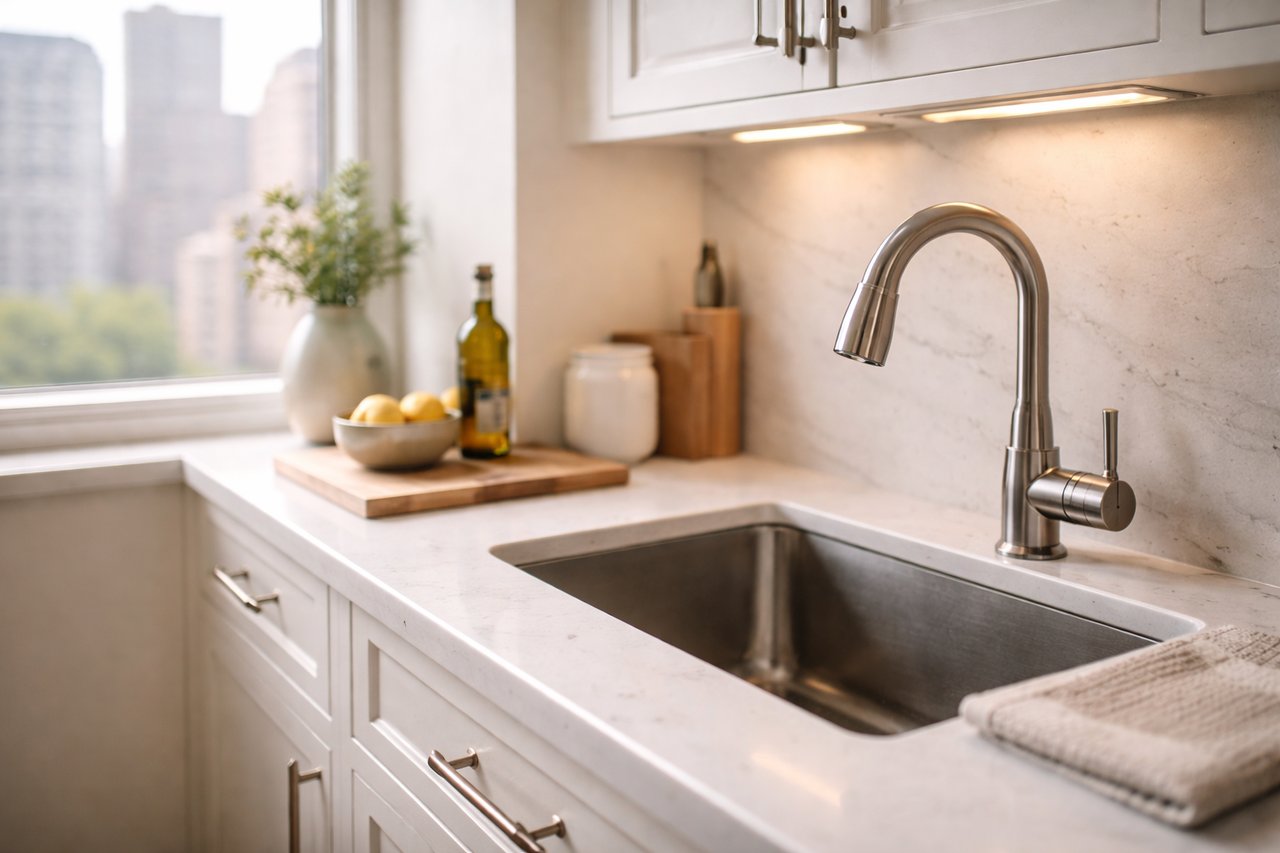
Full kitchen renovations in Manhattan can be complicated, expensive, and sometimes unnecessary for the goal. Instead, refresh the high-contact elements that signal quality. Modern cabinet hardware, a clean faucet, a cohesive backsplash, updated switches and outlets, and a deep clean that makes surfaces feel crisp. In bathrooms, small upgrades like a new vanity light, mirror, shower fixtures, and fresh caulk and grout can shift perception dramatically.
A common question is, will buyers “discount” me anyway because it is not a full renovation? Not if the apartment feels clean and coherent. Many Manhattan buyers prefer a well-maintained, neutral base over a high-design renovation that may not match their taste.
PAINT AND FINISHES, THE VALUE OF COHESION
Paint is not glamorous, but in Manhattan, it is powerful because it compresses visual noise. Use consistent, soft neutrals that make light bounce and let buyers imagine their own furniture. Patch, skim, and address cracks or water stains properly. A buyer will assume visible neglect extends beyond what they can see.
Buyers often ask whether prewar walls, moldings, and patina are a liability. They are an asset when presented well. Small restorative work, clean lines, and polished surfaces help the apartment read as “classic” instead of “tired.”
FLOORING, DO THE BORING MAINTENANCE THAT MAKES EVERYTHING LOOK EXPENSIVE
Refinishing hardwood floors, repairing obvious squeaks where feasible, and ensuring thresholds and transitions look clean can lift the entire apartment. If you have area rugs, make sure they do not visually shrink the room or make circulation feel tight. In many Manhattan apartments, the floor is the largest visible surface. If it looks worn, the apartment looks worn.
STORAGE AND FUNCTION, MANHATTAN’S REAL LUXURY
If you want one upgrade category that consistently matters to buyers, it is functionality. Closet systems, tidy built-ins, and simple organizational improvements photograph well and feel practical in person. Buyers often ask, can a closet system really change value. It rarely changes an appraisal, but it often changes buyer urgency, because it reduces the “where will we put everything” anxiety that kills momentum.
KNOW WHAT YOU CAN DO LEGALLY. CO-OP AND CONDO RULES COME FIRST
Small upgrades still need to respect building rules. Co-ops and condos often require approvals even for seemingly minor work, and your timeline can be driven by managing agent processes. If any work touches plumbing, electrical, structural elements, or windows, you should confirm requirements early.
For official city guidance on permits and when they may be required, review NYC Department of Buildings resources at the NYC DOB website. If your apartment is in a protected building or historic district, changes may also involve the Landmarks Preservation Commission, and the NYC LPC website explains how oversight works.
A common seller question is, do I really need permits for small work. The only responsible answer is that it depends on the scope and the building, and you should confirm with the appropriate professionals and official guidance rather than guessing.
WHAT NOT TO DO, THE “EXPENSIVE MISTAKES” CATEGORY
In Manhattan, value is not the same as cost. Overly personalized finishes, trendy materials that date quickly, and renovations that interrupt building rules or create disclosure issues can reduce demand. The best upgrades are timeless, quiet, and credible. Buyers reward restraint when it feels intentional.
THE BOTTOM LINE, BUYER VALUE IS A FEELING BACKED BY EVIDENCE
Small upgrades add big value when they make an apartment feel brighter, cleaner, more functional, and easier to trust. The goal is not to create a different apartment, it is to reveal the best version of the one you already have. If you want a Manhattan-first strategy conversation that ties upgrades to pricing and buyer psychology, start with danielblatman.com and explore additional guidance in the Daniel Blatman Team blog.