HOW TO USE LIGHT, SPACE, AND PHOTOGRAPHY TO INCREASE VALUE IN MANHATTAN
WHY THIS WORKS IN MANHATTAN, THE MARKET BUYS THE FIRST IMPRESSION
In Manhattan, buyers filter aggressively. They decide what is worth a showing in seconds, and that decision is made on a phone screen, long before anyone steps into the apartment. The practical takeaway for sellers is simple: light, space, and photography are not cosmetic; they are price protection. When those three variables are executed well, you tend to see more qualified showings early, tighter negotiating spreads, and fewer “let’s wait and see” buyers. For the broader positioning framework that supports this, start with the seller strategy lens on danielblatman.com, where pricing, presentation, and demand are treated as one integrated system.
LIGHT IS NOT A FEATURE, IT IS A VALUE MULTIPLIER
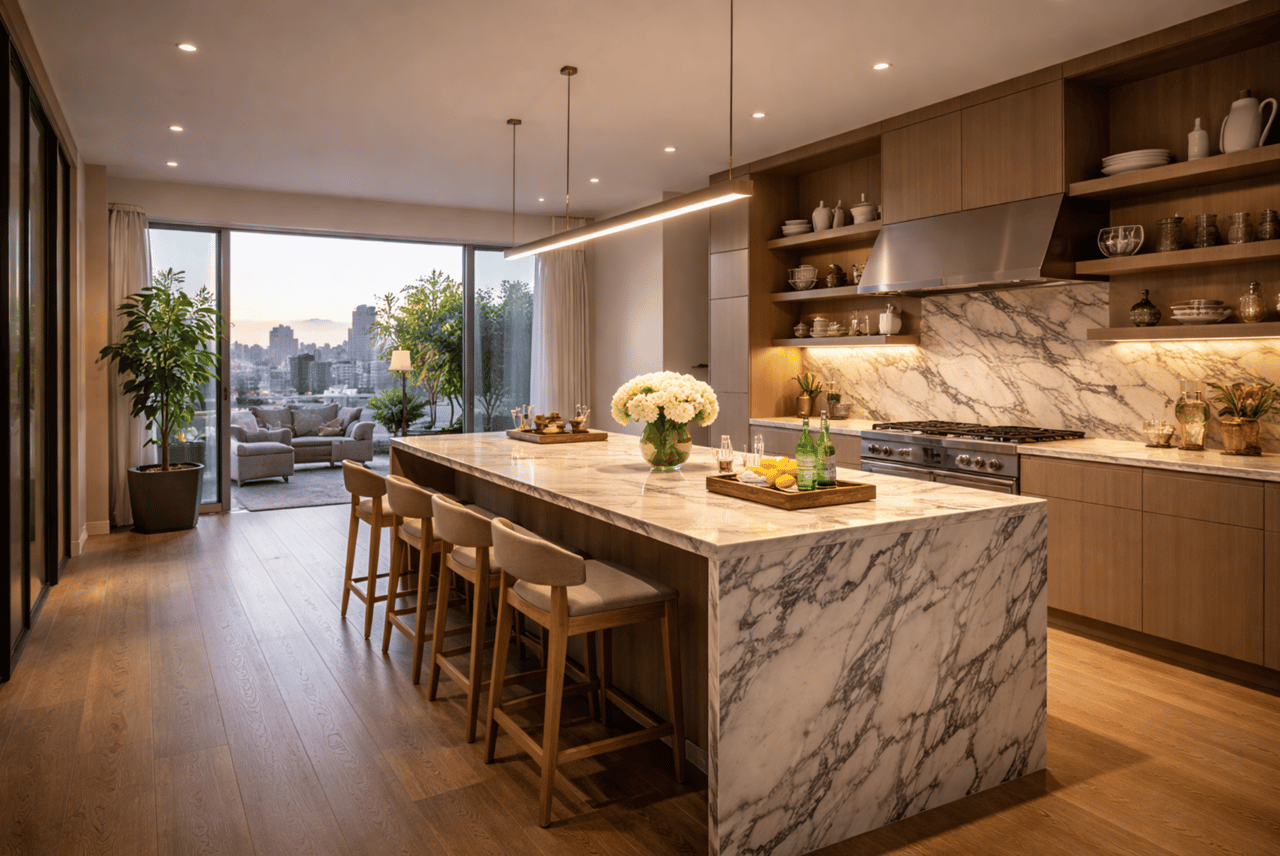
Natural light is one of the few attributes that translates instantly in photos and holds up in person. In practice, “bright” apartments create confidence, and confidence creates urgency. Sellers often ask whether lighting changes can really move the needle if the windows are what they are. The answer is yes, because buyers experience light as a feeling, not a measurement. Clean windows, simplified treatments, correct bulb temperature, and consistent lamp placement can make a space read calmer, larger, and more expensive without touching the footprint.
It is also worth separating “pretty” from “truthful.” A seller’s goal is to show the apartment at its best, but in a way that is consistent with the real experience of the home. Misleading imagery can create the worst outcome: high traffic with low intent. If you want to understand how quickly perception turns into negotiating leverage, the seller-side consequences of a weak launch are unpacked in the market context of days on market and why it matters.
SPACE IS A STORY, NOT A SQUARE FOOTAGE ARGUMENT
Buyers do not fall in love with dimensions, they fall in love with how life fits. That is why two apartments with identical square footage can produce different price outcomes. Space is communicated through clear sightlines, clean wall lines, and functional zones that feel effortless. Sellers often ask if removing furniture makes an apartment feel larger. Sometimes, but not always. The better rule is that every piece in a room should explain the scale of the room. If furniture is too large, it compresses the space. If it is too small, it makes the room feel oddly proportioned.
If you are deciding whether to do small pre-market upgrades versus leaving things as is, the value logic is strongest when changes improve how a room reads in photos and at the showing, not when they are purely personal taste. The most effective “space upgrades” are often editorial, removing visual noise, tightening the palette, simplifying surfaces, and making storage look intentional. When you want a high-level framework for improvements that support demand, not distraction, use the seller guidance on how to make small upgrades that add big value.
PHOTOGRAPHY IS THE LISTING, NOT A DOCUMENTATION OF THE LISTING
In Manhattan, professional photography is not optional if you want to compete at the top of your segment. The right photography does three things at once. It communicates brightness accurately, it clarifies layout without distortion, and it creates emotional calm. The mistake sellers make is thinking “more angles” equals better. What actually converts is a clean visual narrative, entry, main living space, primary bedroom, kitchen, best detail moments, and one or two shots that prove scale.
A common seller question is whether wide-angle lenses help. They can, but only if used with restraint and proper correction. Overly wide images make rooms look warped, and sophisticated buyers will clock it instantly, especially in prewar apartments with strong lines and moldings. Another common question is whether you should photograph with lights on or off. In most Manhattan apartments, a layered approach wins, daylight plus warm interior lighting, balanced so that windows do not blow out and interiors do not look yellow. This is exactly where a skilled photographer earns their fee.
Because listing images can influence buyer expectations and even the tone of negotiations, it is worth remembering that consumer protection rules still apply in real estate advertising. The Federal Trade Commission’s guidance on truth in advertising is not written for listing photos specifically, but the principle is relevant, accuracy builds trust, and trust is what sustains premium pricing through contract.
THE MANHATTAN PREWAR AND NEW DEVELOPMENT DIFFERENCE, LIGHT PHOTOGRAPHS DIFFERENTLY
Prewar apartments often have beautiful detailing and proportion, but can photograph darker if window size, orientation, or surrounding buildings limit direct sun. New development often has glass, height, and openness, but can feel sterile if shot too clinically. Sellers ask whether they should “lean into” the style of the building. Yes, but without turning the apartment into a set. Prewar wants warmth, texture, and architectural honesty. New development wants softness, calm, and fewer harsh contrasts so the space reads luxury rather than showroom.
If you are unsure whether your apartment is competing more on character or on clean modernity, the easiest way to get grounded is to review how buyers compare substitutes. NYC’s recorded transfer documents can help you validate what has traded and when, and you can access those public records through the NYC Department of Finance ACRIS system. That data does not tell you why something sold fast, but it does tell you what the market ultimately paid for similar inventory.
WHAT TO AVOID, THE TACTICS THAT BACKFIRE
Sellers often ask about aggressive editing, heavy filters, and dramatic color grading. The problem is not taste, it is trust. Over-edited images create a mismatch between online expectation and in-person reality, and that mismatch shows up as weaker offers or demands for concessions. Another question that comes up is whether “virtual” changes are acceptable. The safest Manhattan strategy is to avoid anything that materially misrepresents the physical space, because the goal is not clicks, it is contract-quality buyers.
If you want a market-savvy way to think about this, treat every photo as a promise. The best listings are the ones where the showing feels even better than the images, and that is when buyers stop negotiating and start competing.
HOW TO USE THIS AS A SELLER, A CLEAN PRE-LAUNCH SEQUENCE
Start by aligning strategy, what segment you are targeting, what your closest substitutes are, and what your apartment’s strongest differentiator is. Then execute presentation in the order buyers experience it, light first, space second, photography last. If you are asking how far in advance to plan, in Manhattan it is common to need time for touch-ups, decluttering, and scheduling, and you want enough runway to shoot on the right day, not the first available day. If you want support on the overall listing approach, the seller strategy resources on danielblatman.com are a strong starting point, and the market context in the Market Journal helps sellers understand how demand is actually behaving week to week.