If you are choosing between Lincoln Center and Riverside on the Upper West Side, you are not just picking an address. You are choosing a daily rhythm. One side leans into culture, transit, and constant activity, while the other centers more on park access, residential blocks, and a quieter pace. Understanding that difference can help you focus your search and avoid paying for a lifestyle that does not actually fit how you want to live. Let’s dive in.
Lincoln Center and Riverside at a Glance
The simplest way to frame this comparison is that Lincoln Center is the Upper West Side’s culture-and-transit-heavy edge, while Riverside is the park-and-residential edge. Neither one is universally better.
What matters is how you want your week to feel. If you want easy access to performances, public plazas, and a strong transit anchor, Lincoln Center may feel more natural. If you picture walks near the water, park time, and blocks that read more residential, Riverside may be the better fit.
Lincoln Center Feel
Lincoln Center works as the civic and cultural core of this part of the Upper West Side. The campus spans 16.3 acres and is home to 11 performing arts and arts-education nonprofits. That concentration gives the area a destination feel that extends beyond the people who live there.
The neighborhood also reflects its planning history. Lincoln Center was created through 1950s urban renewal, replacing part of historic San Juan Hill, and that helps explain why the area can feel more planned and institutional than an organically built rowhouse district.
In practical terms, this is a place where your routine may include a concert, a performance, a public event, or simply passing through an active plaza on the way home. If you like energy and movement around you, that can be a real advantage.
Daily Life Near Lincoln Center
Lincoln Center’s everyday pattern is strongly tied to programming and public space. The campus includes 3.8 acres of public plazas that are open from 8 a.m. to midnight, along with a Welcome Center, the LeFrak Lobby, public Wi-Fi, seating, and food-and-drink options.
You also have a large group of resident organizations in one place, including the Met Opera, New York City Ballet, the New York Philharmonic, Juilliard, Film at Lincoln Center, and the New York Public Library for the Performing Arts. For some buyers, that means instant access to the kind of New York experience they moved here for.
Riverside Feel
Riverside presents a different version of Upper West Side living. It is more residential, more park-oriented, and generally calmer in tone. The nearby blocks often feel tied to the landscape and waterfront rather than to a major destination campus.
Riverside Park itself is nearly 400 acres and supports walking, running, cycling, tennis, playground visits, and quieter outdoor time. The park is open daily from 6 a.m. to 1 a.m., which makes it a meaningful part of everyday life rather than a once-in-a-while amenity.
The park’s rules also reinforce that calmer mood in certain areas. Passive lawns do not allow dogs, radios, or team sports, which helps preserve quieter spaces for sitting, strolling, and relaxing.
Daily Life Near Riverside
Life on the Riverside side often revolves around outdoor routines and neighborhood habits. Depending on the section of the park you use most, you may have access to playgrounds, tennis courts, cafés, dog-related spaces, and quiet lawns.
Riverside Park South adds more recreational infrastructure, including soccer fields, baseball fields, handball courts, bike paths, a boardwalk, overlook terraces, boat landings, a 740-foot recreational pier, and an esplanade. That variety can make the Riverside side feel especially appealing if you want your free time to happen outdoors.
There is also a seasonal landscape element that shapes the experience. The crabapple restoration between West 72nd and West 83rd Streets adds another reason people walk, linger, and notice the park throughout the year.
Housing Stock and Architecture
The visual difference between these areas is one of the clearest parts of the comparison. Lincoln Center and Riverside do not just feel different because of amenities. They also look different block by block.
Lincoln Center Buildings
Lincoln Center’s campus is explicitly modernist, with Formalist and Brutalist design created between 1955 and 1972 by major architects including Philip Johnson, Wallace Harrison, Eero Saarinen, Gordon Bunshaft, and Dan Kiley. Around that core, the broader Lincoln Square area mixes institutional buildings, high-density residential buildings with retail at street level, and low-rise townhouses on side streets.
That mix can shift quickly within a few blocks. You may see large campuses and newer high-rise residences near older residential streets, with major pre-war apartment buildings along Central Park West.
For buyers, that means the search here can be broad. You may compare a full-service high-rise, a pre-war apartment, and a side-street townhouse-like setting without leaving the general area.
Riverside Buildings
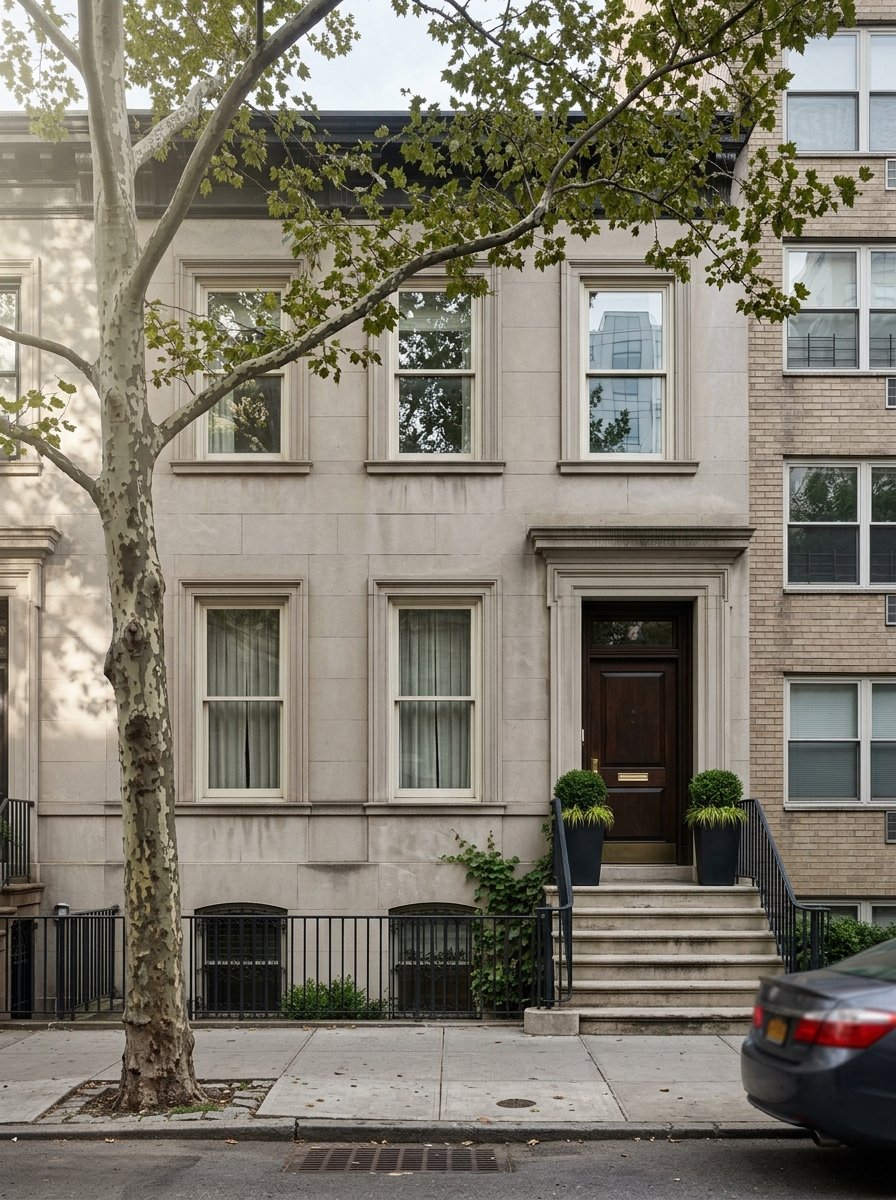
Riverside-adjacent blocks tend to read as older and more traditional. The Riverside Drive-West 80th-81st Street Historic District includes 1890s rowhouses and townhouses, turn-of-the-century tenements, and a later apartment building.
A separate district report describes the wider Riverside-West End area as a dense urban enclave dominated by large apartment buildings along Riverside Drive and West End Avenue, with row houses, flats, and tenements on side streets. In plain terms, Riverside often feels more architecturally rooted in older Upper West Side building patterns.
If you are drawn to classic Manhattan streetscapes, this side may align more naturally with your taste. If you prefer a setting that mixes older buildings with larger-scale development and a more modern civic core, Lincoln Center may be the better match.
Transit and Getting Around
Transit is one of the strongest reasons some buyers lean toward Lincoln Center. The 66 St-Lincoln Center station is accessible and has elevator entrances at Broadway, along with bus connections including the M5, M7, M11, M20, M66, M104, and BxM2.
The M66 also gives this area a useful cross-town connection. If you want a very clear subway anchor and straightforward bus options, Lincoln Center has an edge.
Riverside is still well served, but the exact block matters more. Accessible West Side options include 72 St/Broadway and 96 St/Broadway, with bus connections that include the M5, M7, M11, M57, M72, M104, and at 96th Street also the M96 and M106.
For a buyer, that means you should not evaluate Riverside as one single transit story. A block near 72nd can feel very different from one that sits farther between stations and depends more on buses and walking.
Why Exact Block Matters
This is the part many buyers underestimate. On the Upper West Side, a neighborhood label can be useful, but it does not tell you enough on its own.
Planning materials for the area show meaningful differences between avenue blocks, retail corridors, superblocks, and quieter midblocks. A Broadway or Columbus address can give you a very different experience from a Riverside Drive address, even if both are described as Upper West Side.
That is why a smart search usually starts with your routine. Think about whether you care more about a direct subway stop, a park entrance, a plaza, a retail corridor, or a quieter side street. Once you know that, your search becomes more precise.
Which Side Fits Your Lifestyle?
If you are deciding between these two micro-areas, the best question is not which one is better. The better question is which one supports how you actually live.
Lincoln Center may fit you best if you want:
- Immediate access to arts and cultural programming
- A more active, destination-oriented setting
- Strong transit connections centered on 66th Street
- A mix of newer high-rise residences, institutions, and some pre-war options
Riverside may fit you best if you want:
- Daily access to park and waterfront spaces
- A calmer, more residential feel
- Traditional Upper West Side streetscapes and older building character
- Recreation that centers on walking, running, cycling, and outdoor time
For many buyers and sellers, the answer comes down to one simple tradeoff. Lincoln Center offers more built-in activity. Riverside offers more built-in breathing room.
If you are weighing the Upper West Side block by block, the right guidance can save you time and sharpen your decision. The Blatman Team can help you compare buildings, routines, and micro-locations so you can move with confidence.
FAQs
What is the main difference between Lincoln Center and Riverside on the Upper West Side?
- Lincoln Center is generally more culture- and transit-focused, while Riverside is more park-oriented and residential in feel.
Which Upper West Side area feels more active, Lincoln Center or Riverside?
- Lincoln Center usually feels more active because it is anchored by year-round arts programming, public plazas, and major destination institutions.
Which Upper West Side area feels quieter, Lincoln Center or Riverside?
- Riverside generally feels quieter because many nearby blocks are organized around park access, passive lawns, and older residential streets.
Is Riverside Park a major factor when living near Riverside?
- Yes. Riverside Park is nearly 400 acres and supports walking, running, cycling, tennis, playground use, and other outdoor recreation that shapes daily life nearby.
Is transit better near Lincoln Center or Riverside on the Upper West Side?
- Lincoln Center has a stronger direct transit identity around the accessible 66 St-Lincoln Center station, while Riverside access can vary more depending on how close your block is to 72nd Street or 96th Street.
Do exact blocks matter when comparing Lincoln Center and Riverside?
- Yes. Avenue blocks, retail corridors, superblocks, and quieter side streets can feel very different, so it is important to evaluate each address in context rather than rely only on the neighborhood label.