Wondering if Flatiron is still just a place you pass through on the way to work? That old image misses what the neighborhood has become. If you are thinking about buying, renting, or simply getting to know this part of Manhattan better, it helps to see Flatiron as it is today: a central, active, full-time neighborhood with real residential appeal. Let’s take a closer look.
Flatiron Today
Flatiron is no longer best described as an office district with a few apartments around the edges. The Flatiron NoMad Partnership describes the area as home to retailers, employers, cultural and educational institutions, and a thriving residential community.
That mixed-use identity also shows up in city planning documents. New York City has described the district as primarily commercial but residential in places, with street-level retail, older building stock, and continuing waves of residential conversion and investment.
Why the Neighborhood Feels More Lived-In
A big reason Flatiron feels more residential today is that daily life happens out in the open. You are not just surrounded by office buildings. You have public spaces, local services, restaurants, transit, and housing all working together in a compact area.
That pattern is likely to deepen. The Midtown South Mixed-Use plan aims to create a more active 24/7 mixed-use neighborhood in the surrounding office corridor and could add about 9,700 homes across 42 blocks.
Housing in Flatiron
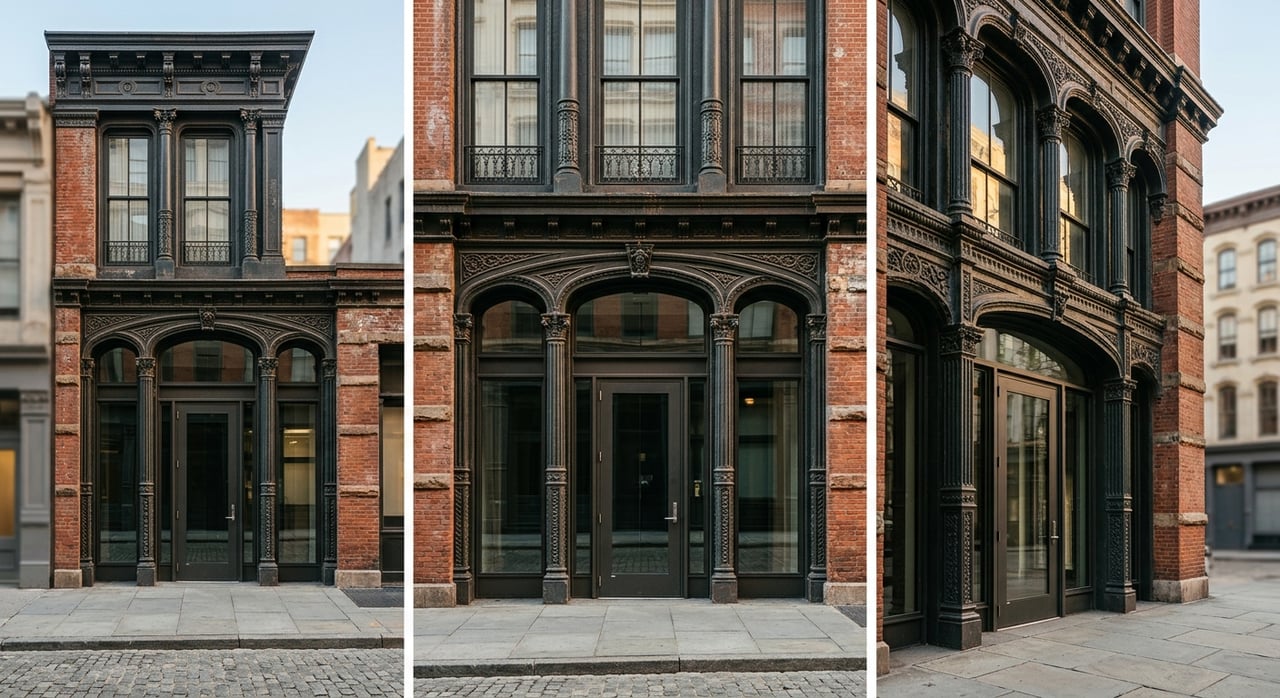
If you picture Flatiron as rows of classic low-rise residential blocks, you may be surprised by the housing mix. The area is better known for loft-style apartments, mixed-use buildings, and homes created through commercial conversions.
City Planning materials point to large loft buildings that were originally built for manufacturing or warehousing, along with major residential projects and redevelopment along key corridors. Even the iconic Flatiron Building is in the pipeline for residential conversion, with a proposed program that includes up to 60 dwelling units and ground-floor retail.
Ownership options exist as well. Based on recent NYC Finance sales records, Flatiron includes condo and co-op inventory, with the exact mix varying by block and building.
What You Can Expect by Building Type
In practical terms, Flatiron often appeals to buyers who want something different from a standard uptown apartment layout. Depending on the property, you may find:
- Loft-style homes with larger open living areas
- Converted commercial buildings with distinctive layouts
- Mixed-use buildings with retail at street level
- Condo and co-op ownership options
- Newer high-density residential projects
That variety is part of the neighborhood’s appeal, but it also means your home search needs to be building-specific. Two blocks that look similar on a map can offer very different inventory.
Daily Life Around Madison Square Park
For many residents, Madison Square Park is the anchor that makes Flatiron feel like a true neighborhood. According to the Madison Square Park Conservancy, the seven-acre park serves as a neighborhood park, public garden, public art space, and gathering place, with lawns, trees, a playground, and dog run.
That matters because parks shape how a neighborhood lives. In Flatiron, the park gives you a place to slow down in a part of Manhattan that is otherwise known for movement and energy.
If you are trying to imagine day-to-day life here, this is an important piece of the puzzle. Flatiron is not quiet in the traditional sense, but it offers accessible outdoor space that helps balance the pace.
Flatiron’s Public Spaces Add to the Lifestyle
The streetscape has also changed in ways that support residential life. NYC DOT says the Flatiron Plazas project transformed a congested, traffic-heavy area into a major public space, later adding a protected bike lane and a shared street.
Today, the plazas include seating, planters, umbrellas, and food-and-beverage kiosks. The city estimates foot traffic there at more than 50,000 people per day, which helps explain why the area feels active well beyond office hours.
For buyers who want a neighborhood with energy, people-watching, and easy access to amenities, that can be a real advantage. For buyers who want a quieter, more tucked-away setting, it is something to weigh carefully.
Dining and Retail Are Part of Everyday Living
One of Flatiron’s clearest strengths is convenience. A recent Flatiron NoMad market report found nearly 800 occupied storefronts in the district, with food and beverage making up 39 percent of occupied ground-floor retail.
The same report found that 83 percent of the district’s 960-plus storefronts were occupied. Other major categories include design and home goods, beauty and wellness, apparel, hospitality, and wholesale uses.
That density of retail means you can do a lot without leaving the neighborhood. Whether you are grabbing coffee, meeting friends, picking up essentials, or spending time in the plazas and park, Flatiron supports a lifestyle centered on walking and convenience.
Transit Is a Major Advantage
Flatiron’s central location is one of the biggest reasons people choose it. The neighborhood is served by nearby 23 Street stations on the F and M lines and the R and W, with additional access nearby to the C and E corridor, 34 Street-Herald Square, and 14 Street-Union Square.
City Planning materials also note walkable access to the 1 train and the PATH station to the west, along with multiple bus lines. In day-to-day terms, that gives you strong flexibility for commuting, downtown trips, crosstown movement, and regional access.
If you value getting around Manhattan without much friction, Flatiron checks an important box.
How Flatiron Compares Nearby
Flatiron sits in a very connected part of Manhattan. The MTA Manhattan neighborhood map places it next to Greenwich Village, Union Square, Chelsea, and Gramercy.
That location gives you access to several distinct areas within a relatively short walk. You can move between park space, shopping corridors, transit hubs, and restaurant clusters without feeling tied to just one pocket of the city.
This is part of what makes Flatiron so useful as a home base. It offers centrality in a very practical sense, not just on a map.
Who Flatiron Tends to Suit
Flatiron tends to work best for buyers who want a highly walkable Manhattan lifestyle and are comfortable living in an active mixed-use district. If your priorities include transit, dining, retail access, and proximity to multiple neighborhoods, Flatiron can make a strong case.
It may be especially appealing if you like the idea of loft conversions, condo or co-op ownership, and a central location that feels plugged into the city all day. On the other hand, if your top priority is a quieter, lower-traffic residential setting, Flatiron may feel busier than what you want.
That does not make it better or worse than nearby areas. It simply means fit matters. The right question is not whether Flatiron has changed, but whether the way it has changed matches the way you want to live.
What This Means for Buyers and Sellers
For buyers, Flatiron offers a compelling blend of centrality, housing variety, public space, and neighborhood convenience. But because inventory can differ significantly from one building to the next, it helps to have a clear strategy around building type, ownership structure, and block-by-block feel.
For sellers, the neighborhood’s evolution matters because the story has changed. Flatiron is not just a workplace address. It is increasingly understood as a live-work neighborhood with established daily-life amenities and more residential momentum ahead.
If you are considering a move in Flatiron or anywhere nearby, the best next step is a conversation grounded in your goals, timing, and the type of property you want to buy or sell. The Blatman Team can help you evaluate the market, compare building types, and navigate the process with a clear plan.
FAQs
Is Flatiron still mostly an office district?
- No. Current planning and neighborhood sources describe Flatiron as a mixed-use district with a strong commercial core and a growing residential community.
What kinds of homes are common in Flatiron?
- Flatiron is best known for loft conversions, mixed-use buildings, condo and co-op inventory, and newer high-density residential projects.
What makes Flatiron feel residential today?
- Madison Square Park, the Flatiron Plazas, a large retail and dining base, and more housing conversions all contribute to a stronger full-time neighborhood feel.
How is transit access in Flatiron?
- Transit access is one of the neighborhood’s biggest strengths, with nearby service on the F, M, R, W, C, E, 1, and PATH connections in the broader area.
Who is Flatiron a good fit for?
- Flatiron tends to suit people who want a central, walkable Manhattan base with strong dining, park access, and transit, and who are comfortable with an active daytime environment.