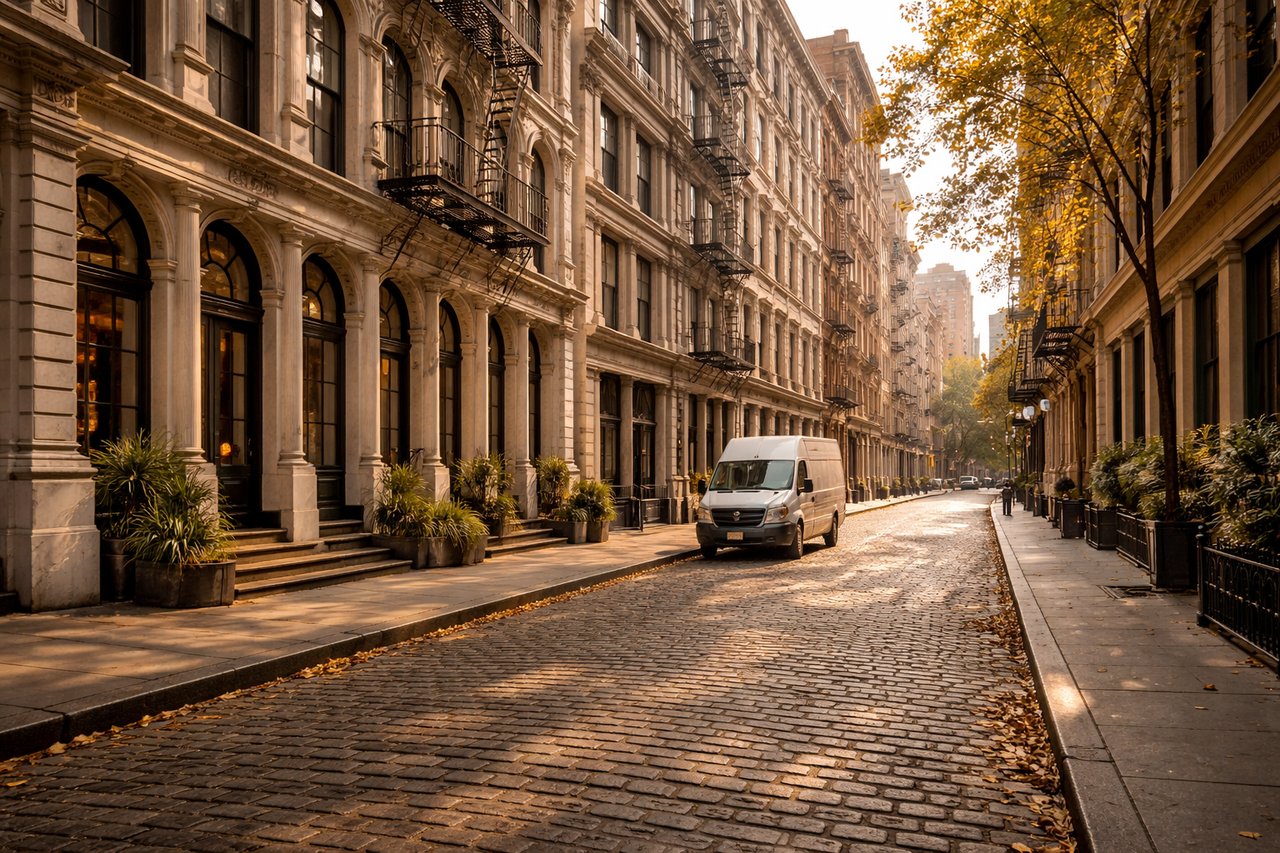
NOHO NEIGHBORHOOD GUIDE FOR SELLERS
NoHo occupies a singular position in the Manhattan real estate landscape. Bounded roughly by Houston Street to the south, Astor Place and East 8th Street to the north, Broadway to the west, and the Bowery to the east, this compact neighborhood combines landmark architectural character, exceptional transit access, and a residential inventory unlike almost anything else in the city. For sellers, NoHo represents both opportunity and complexity—a market where the right strategy can command extraordinary prices, and where the wrong approach reveals itself quickly.
This guide is for sellers who own property in NoHo and want to understand the specific forces shaping value, buyer demand, and transaction dynamics in this neighborhood. Every section addresses the practical realities of selling here—not generic Manhattan advice repackaged with a NoHo label.
THE ARCHITECTURE THAT DEFINES THE MARKET
NoHo’s residential stock is overwhelmingly composed of converted loft buildings—nineteenth-century commercial and industrial structures repurposed for residential use beginning in the 1970s and 1980s. These are not conventional apartments. They are characterized by soaring ceilings, oversized windows, open floor plans, exposed brick and timber, and the kind of raw architectural detail that cannot be replicated in new construction.
The neighborhood sits almost entirely within the boundaries of the NoHo Historic District, designated by the NYC Landmarks Preservation Commission in 1999, with the NoHo East Historic District added in 2003 and a further extension in 2008. Together, these designations encompass more than 21 contiguous blocks of landmarked buildings, representing one of the most architecturally cohesive commercial-to-residential districts in the city.
For sellers, this architectural identity is both an asset and a constraint. The asset is clear: buyers who seek NoHo are drawn specifically by this character, and they are willing to pay a premium for it. The constraint is equally real: any exterior work—window replacement, facade restoration, rooftop additions—requires approval from the Landmarks Preservation Commission, a process that adds time, cost, and regulatory complexity to renovation projects. Sellers should understand this dynamic because it directly shapes how buyers evaluate the condition and potential of a NoHo property.
Sellers sometimes ask: Does landmark status help or hurt my sale price? In NoHo, the evidence consistently supports the former. Landmark designation preserves the neighborhood’s character, prevents incompatible development from eroding the streetscape, and provides the aesthetic continuity that makes NoHo a destination market. Buyers are not deterred by LPC oversight—they expect it, and they view it as a form of long-term value protection.
CO-OPS, CONDOS, AND LOFT LAW CONVERSIONS
NoHo’s residential inventory includes co-ops, condos, and a distinct category that sellers must understand: loft law conversions. Many NoHo lofts were originally occupied under the protections of New York State’s Loft Law, which provided a legal pathway for converting former commercial and manufacturing spaces into legal residential units. The conversion process, overseen by the NYC Department of Buildings, required compliance with residential building codes, fire safety standards, and amendments to the certificate of occupancy.
For sellers of properties that underwent loft law conversion, the compliance history matters. A buyer’s attorney will review whether the conversion was fully completed, whether the certificate of occupancy reflects legal residential use, and whether any outstanding violations remain. Sellers who can demonstrate a clean compliance record—searchable through the Buildings Information System—eliminate a category of buyer concern that can otherwise slow or complicate negotiations.
The co-op-versus-condo distinction also shapes the selling experience in NoHo. Co-ops dominate the older building stock and carry board approval requirements that add time to the transaction. Condos, which are more common in newer conversions and ground-up developments, offer buyers a more streamlined closing process but typically cost more per square foot. Sellers of co-op units should be prepared for the board process to influence which buyers can realistically close. In contrast, sellers of condo units should recognize that their property competes not only within NoHo but against the broader Manhattan condo market.
WHAT DRIVES BUYER DEMAND IN NOHO
The buyers who pursue NoHo are not browsing casually. They have typically narrowed their search to this neighborhood specifically—or to a short list that includes NoHo alongside SoHo, the West Village, and Tribeca. Understanding what motivates these buyers is essential to positioning a listing effectively.
NoHo attracts buyers who value architectural authenticity over new-construction polish. They want the 12-foot ceilings, the original cast-iron columns, the oversized factory windows that flood a living space with natural light. They want a neighborhood that feels residential without being suburban—walkable to some of Manhattan’s best restaurants, galleries, and cultural institutions, yet quiet enough on a Tuesday morning that the street feels almost private.
Transit access reinforces this appeal. The neighborhood is served by multiple subway lines at Astor Place, Bleecker Street, and Broadway-Lafayette, providing connectivity across the city that few Manhattan neighborhoods can match at this scale.
Buyers frequently ask: Is NoHo still considered a strong market? For properties that have been well maintained and thoughtfully renovated, the answer is unambiguously yes. NoHo’s constrained supply—there are simply not many units available at any given time—combined with its architectural distinctiveness and location, creates a market where well-priced listings generate strong interest. The neighborhood profiles at danielblatman.com provide current context on how NoHo compares to adjacent markets.
PRICING A NOHO PROPERTY
Pricing in NoHo requires a different analytical approach than most Manhattan neighborhoods. The inventory is small, the properties are architecturally varied, and the comparable sales that matter most are often not the most recent transactions but the ones that share key physical characteristics—ceiling height, window exposure, floor plan layout, and quality of renovation.
A 2,000-square-foot loft with 11-foot ceilings, south-facing factory windows, and a high-end renovation is not comparable to a 2,000-square-foot loft with 9-foot ceilings, limited light, and original-condition finishes, even if both are on the same block. Pricing by square footage alone—a shortcut that works passably in many Manhattan markets—will misposition a NoHo listing in either direction.
Transaction history for individual properties can be reviewed through the ACRIS system maintained by the NYC Department of Finance, which provides access to deeds, prior sale prices, and mortgage records. An agent who pulls this data and cross-references it against the property’s current condition and renovation history can build a pricing strategy that reflects what the specific unit is worth—not just what the neighborhood average suggests.
Sellers sometimes wonder: Should I price aggressively to create competition, or conservatively to attract the widest pool? In NoHo, where the buyer pool is sophisticated and the inventory is thin, the answer is typically neither. The goal is precision—pricing at the level where the data supports an expectation of serious interest within the first two to three weeks of listing, without leaving value on the table or creating the perception of overreach.
PREPARING THE PROPERTY FOR MARKET
NoHo buyers have refined taste and high expectations. The condition in which a property is presented directly affects both the speed of sale and the final price.
For lofts with strong architectural bones—original columns, exposed brick, timber beams—the goal is not to conceal these features but to ensure they are clean, well-lit, and presented as intentional design elements rather than deferred maintenance. A crumbling brick wall reads as neglect; a properly repointed and sealed brick wall reads as character.
Kitchen and bathroom renovations carry disproportionate weight in buyer evaluations. A NoHo loft with a chef-grade kitchen and a spa-quality bathroom will consistently outperform an otherwise identical unit with dated finishes, even if the asking prices are close. Sellers who are willing to invest $30,000 to $60,000 in targeted renovations before listing can often recover two to three times that investment in the final sale price.
For sellers in landmarked buildings who are considering exterior improvements—window upgrades, facade repairs, or rooftop work—the LPC’s rules and permit guidelines should be reviewed early in the process. LPC approval timelines vary, and beginning the application process months before the intended listing date ensures that any improvements are completed and permitted before the first showing.
CLOSING COSTS AND NET PROCEEDS FOR NOHO SELLERS
NoHo properties typically transact at price points where seller closing costs are substantial and must be modeled in advance.
For sales above $500,000—which includes virtually every NoHo transaction—the NYC Real Property Transfer Tax is 1.425 percent of the sale price. The New York State transfer tax adds 0.4 percent for sales below $3 million and 0.65 percent for sales at $3 million or above, with an additional base tax layered on top for sales of $3 million and above in New York City.
When combined with the broker's commission, the seller’s attorney's fee, any flip tax imposed by the co-op, and outstanding common charges or assessments, the total seller closing costs for a $3 million NoHo co-op can exceed $250,000. For a $5 million condo, they can approach $400,000 or more.
Sellers who also own their unit as a primary residence should confirm whether the Cooperative and Condominium Property Tax Abatement is currently in effect for their property. While this abatement benefits the owner rather than the buyer directly, its presence reduces effective carrying costs. It can be highlighted as a feature of the listing—particularly for cost-conscious buyers evaluating NoHo against higher-tax alternatives.
The seller’s resources at danielblatman.com are designed to build complete net proceeds models before the listing goes live, so that every offer can be evaluated on its true bottom line rather than on the headline number alone.
CHOOSING THE RIGHT BROKER FOR NOHO
Selling in NoHo requires a broker who understands this specific market—not just Manhattan in general, but the architectural nuances, the landmark regulations, the loft conversion history, and the buyer profile that defines transactions here.
The right broker will know which buildings have strong financials and cooperative boards, which units have been recently renovated versus those carrying deferred maintenance, and how to position a listing to attract the concentrated pool of buyers who are specifically seeking NoHo. They will have relationships with buyer agents who regularly work this neighborhood and the credibility to present your property as a serious offering to serious buyers.
Sellers occasionally ask: Does it matter if my broker has sold in NoHo specifically? In this neighborhood, yes. The inventory is idiosyncratic, the buyer expectations are precise, and the landmark overlay adds a layer of complexity that generalist agents frequently mishandle. A broker with NoHo-specific experience—the kind of advisory approach detailed at danielblatman.com—brings transactional intelligence that directly improves pricing, preparation, and negotiation outcomes.
THE BOTTOM LINE
NoHo is not a neighborhood that rewards a generic selling strategy. It rewards precision—in pricing, in preparation, in understanding the landmark framework that governs exterior work, and in recognizing that the buyers who come here are seeking something specific and are willing to pay for it when the property and the presentation match their expectations.
For sellers ready to bring that level of discipline to their NoHo transaction, Daniel Blatman provides the neighborhood expertise, market intelligence, and strategic judgment that this distinctive market demands.