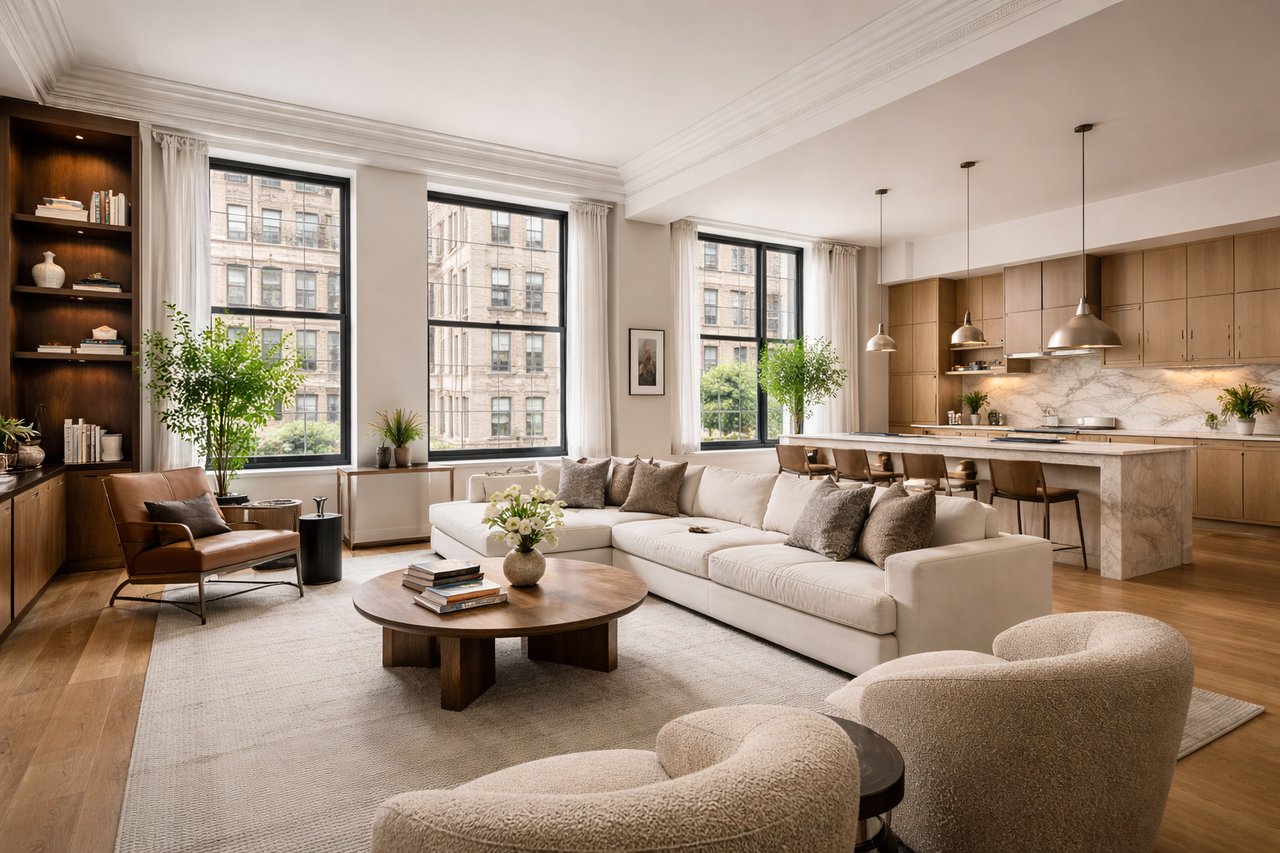
NOMAD: A BUYER'S GUIDE TO THE NEW MIDTOWN SOUTH
NoMad—North of Madison Square Park—has undergone one of the most consequential residential transformations in Manhattan over the past fifteen years. A neighborhood that was primarily wholesale commercial space through the late twentieth century has evolved into one of the city's most desirable residential addresses, powered by the restoration of its Gilded Age architectural stock, the arrival of ground-up luxury condominiums, the continued vitality of Madison Square Park, and a dining and cultural ecosystem that rivals neighborhoods with far longer residential pedigrees.
For buyers, NoMad represents a rare intersection: a neighborhood with genuine architectural heritage that is still early enough in its residential evolution to offer value relative to more established markets like Greenwich Village, Tribeca, and the Upper East Side. This guide examines what informed buyers need to know—the building stock, pricing dynamics, historic district framework, and neighborhood fundamentals that drive long-term appreciation.
THE MADISON SQUARE NORTH HISTORIC DISTRICT
NoMad's architectural identity is formally anchored by the Madison Square North Historic District, designated by the NYC Landmarks Preservation Commission in 2001. The district encompasses approximately 96 buildings across ten blocks between 25th and 29th Streets, from Madison Avenue to Sixth Avenue. The LPC's historic district map delineates the boundaries and identifies every contributing structure.
The building stock within the district is architecturally distinctive. Classical Revival and Beaux-Arts commercial loft buildings from the 1890s through the 1920s dominate the streetscape—structures originally built as showrooms, offices, and light-manufacturing spaces for the wholesale toy, novelty, textile, and clothing industries that defined the area for much of the twentieth century. These buildings feature high ceilings, large floor plates, ornate limestone and terra cotta facades, and a scale that translates exceptionally well to residential conversion.
Buyers frequently ask: Does the historic district affect what I can do with my apartment? The LPC's jurisdiction extends to exterior work visible from a public thoroughfare. Interior renovations are not subject to LPC review. For buyers considering properties within the district, this means that the building's facade, windows, and rooftop elements are protected—a constraint that also functions as a guarantee that the architectural character which attracted you to the neighborhood will be preserved for the duration of your ownership. The LPC's applications and permit process provides details on what types of work require Commission approval.
THE RESIDENTIAL INVENTORY: CONVERSIONS AND NEW CONSTRUCTION
NoMad's residential inventory falls into two broad categories, each with distinct characteristics and financial profiles.
The first is converted loft space. Many of the historic commercial buildings within and adjacent to the Madison Square North district have been converted to residential use—either as co-ops during earlier conversion waves or as condominiums in more recent projects. These units typically offer the high ceilings, oversized windows, and open floor plans that characterize Manhattan's best loft stock, combined with the architectural detailing of early twentieth-century commercial construction.
The second is new-construction luxury condominiums. NoMad has attracted significant ground-up development over the past decade, with glass-and-steel residential towers offering the full suite of modern amenities: doormen, fitness centers, rooftop terraces, children's playrooms, and in-unit washer/dryers. These buildings appeal to a different buyer profile—one that values turnkey living, contemporary finishes, and the convenience of a fully staffed, recently built residential infrastructure.
Buyers often wonder: Are converted lofts or new condos a better investment in NoMad? Both have performed well, but they serve different needs. Converted lofts offer architectural character that cannot be replicated and tend to trade at lower price-per-square-foot points than new construction, reflecting their older building systems and more limited amenity packages. New condos command premium pricing but deliver modern infrastructure, stronger appeal to international buyers, and typically lower maintenance burdens. The right choice depends on how you live, how long you plan to own, and what you value in daily residential experience.
MADISON SQUARE PARK: THE INFRASTRUCTURE OF APPRECIATION
At the southern edge of NoMad sits Madison Square Park—6.2 acres of landscaped public space maintained through a partnership between NYC Parks and the Madison Square Park Conservancy. The park's presence is not decorative. It is structural. It anchors property values across both NoMad and the adjacent Flatiron District in a way that no restaurant, hotel, or retail opening can replicate.
The park hosts rotating public art installations, seasonal programming, a year-round farmers' market, and some of the most carefully maintained green space in Manhattan south of Central Park. For buyers evaluating NoMad, the park functions as permanent infrastructure—the kind of immovable public asset that sustains demand and supports appreciation through market cycles that challenge neighborhoods without comparable anchors.
Apartments with direct park views or immediate park proximity have historically commanded premiums of 15 to 25 percent over comparable units a few blocks north. This differential has held consistently through multiple market cycles and shows no signs of narrowing.
PRICING DYNAMICS AND WHAT DRIVES VALUE
NoMad pricing reflects the neighborhood's transitional position—no longer emerging, not yet fully established at the price levels of Manhattan's most expensive residential districts. This creates an opportunity for buyers who recognize the fundamentals and can act before the market fully prices them in.
Price per square foot in NoMad varies significantly by product type. Converted lofts in co-op buildings may trade between $1,100 and $1,600 per square foot, depending on condition, ceiling height, and building quality. New-construction condos with full amenity packages typically range from $1,800 to $2,800 per square foot, with premium units in the most desirable buildings exceeding $3,000 per square foot.
Transaction history for individual properties is publicly searchable through the NYC Department of Finance's ACRIS system, which provides access to deeds, prior sale prices, and mortgage records. An agent who reviews this data—and who understands how NoMad's pricing compares to adjacent markets like the Flatiron District, Gramercy Park, and Murray Hill—can identify properties that are mispriced relative to their fundamentals, in either direction.
Buyers sometimes ask: Has NoMad peaked? The structural factors that drive long-term appreciation—constrained historic building stock, landmark protections, Madison Square Park, exceptional transit access, and a cultural and commercial ecosystem that continues to deepen—suggest that the neighborhood's trajectory is far from complete. The proposed expansion of historic district protections to additional blocks surrounding the existing Madison Square North district would further reinforce the regulatory framework that protects value.
CLOSING COSTS AND TAX PLANNING
NoMad's price points place most transactions in ranges where closing costs require careful modeling. Purchases above $1 million are subject to the New York State mansion tax, beginning at 1 percent and scaling to 3.9 percent for purchases of $25 million or more. Financed condo buyers must also account for the NYC Mortgage Recording Tax—1.8 percent for loans below $500,000 and 1.925 percent for loans at or above $500,000. Co-op buyers avoid this tax because co-op shares are classified as personal property.
All buyers should confirm whether the building has filed for the Cooperative and Condominium Property Tax Abatement, which can reduce annual property taxes by up to 28 percent for eligible primary-residence owners. The NYC Department of Finance's Property Tax Benefits page provides detail on all available exemptions. An agent who models total ownership costs—including purchase price, closing costs, monthly carrying charges, and applicable tax benefits—provides the financial clarity that distinguishes a good decision from a guess.
The buyer's guide at danielblatman.com is structured around this kind of comprehensive financial analysis.
CO-OPS VS CONDOS: THE STRUCTURAL CHOICE
NoMad offers both co-op and condo inventory, and the choice between them shapes the buying experience materially.
Co-ops in NoMad are concentrated in the older converted buildings. They require board approval, typically mandate down payments of 20 to 25 percent, and impose restrictions on subletting and use that vary by building. The advantage is a lower entry price and lower monthly carrying costs relative to comparable condo units. The New York State Attorney General's guidance on co-op and condo purchases outlines the disclosure requirements and legal framework that govern both ownership structures.
Condos—particularly in newer developments—offer fee-simple ownership, no board approval requirement, greater flexibility on subletting and foreign ownership, and broader financing options. The trade-off is a higher price per square foot and, in many cases, higher monthly common charges and property taxes.
For buyers weighing these options, the comparison should be based on the total cost of ownership over the expected holding period, not on the asking price alone. An experienced agent can model these scenarios, building by building, helping buyers identify where the best value sits within their specific parameters.
TRANSIT, CULTURE, AND THE TEXTURE OF DAILY LIFE
NoMad's central location provides transit access that few Manhattan neighborhoods can match at this price point. The N, R, W, and 6 trains at 28th Street, the B, D, F, M, N, Q, R, W, and PATH at Herald Square, and the 4, 5, 6, N, Q, R, W, and L lines at Union Square are all within walking distance—connecting NoMad to every corner of the city.
The neighborhood's cultural and commercial ecosystem continues to deepen. Fotografiska, the international photography museum, occupies a landmark building on Park Avenue South. The design showrooms that line Madison Avenue between 25th and 30th Streets have earned NoMad the informal title of Manhattan's "Design District." The dining scene—anchored by establishments from some of the city's most celebrated chefs—provides a quality of daily life that sustains residential demand and attracts the kind of buyer who makes long-term commitments.
For a strategic perspective on how NoMad compares across the Manhattan landscape, the neighborhood profiles at danielblatman.com offer current data and market context.
THE BOTTOM LINE
NoMad is a neighborhood in the middle of a story that is still being written—but whose structural foundations are already in place. The Madison Square North Historic District protects the architectural character that gives the neighborhood its identity. Madison Square Park provides the kind of permanent public infrastructure that anchors long-term appreciation. The residential inventory spans converted lofts with genuine architectural distinction and new-construction condos with full modern amenity packages. And the cultural, commercial, and transit infrastructure that supports daily life continues to strengthen.
For buyers who can read these fundamentals and act with strategic discipline, NoMad offers a position in one of Manhattan's most compelling residential markets—at a price point that still reflects opportunity rather than saturation.
For a NoMad-specific buying strategy, Daniel Blatman provides the market intelligence, building-level analysis, and financial modeling that this neighborhood rewards.