Open House Recap : What Buyers Should Notice and Take Away
Quick Answer: What should you notice at an open house in NYC? In most cases, the finishes are the least important thing in the room. The takeaways that actually matter are the ones about light, layout, noise, and the building itself, plus how the home is priced against comparable sales, since those are the factors you cannot change after closing. The buyers who tour deliberately, reading the space and the building rather than the staging, are the ones who make smarter, faster offers when the right home appears.
Look Past the Staging
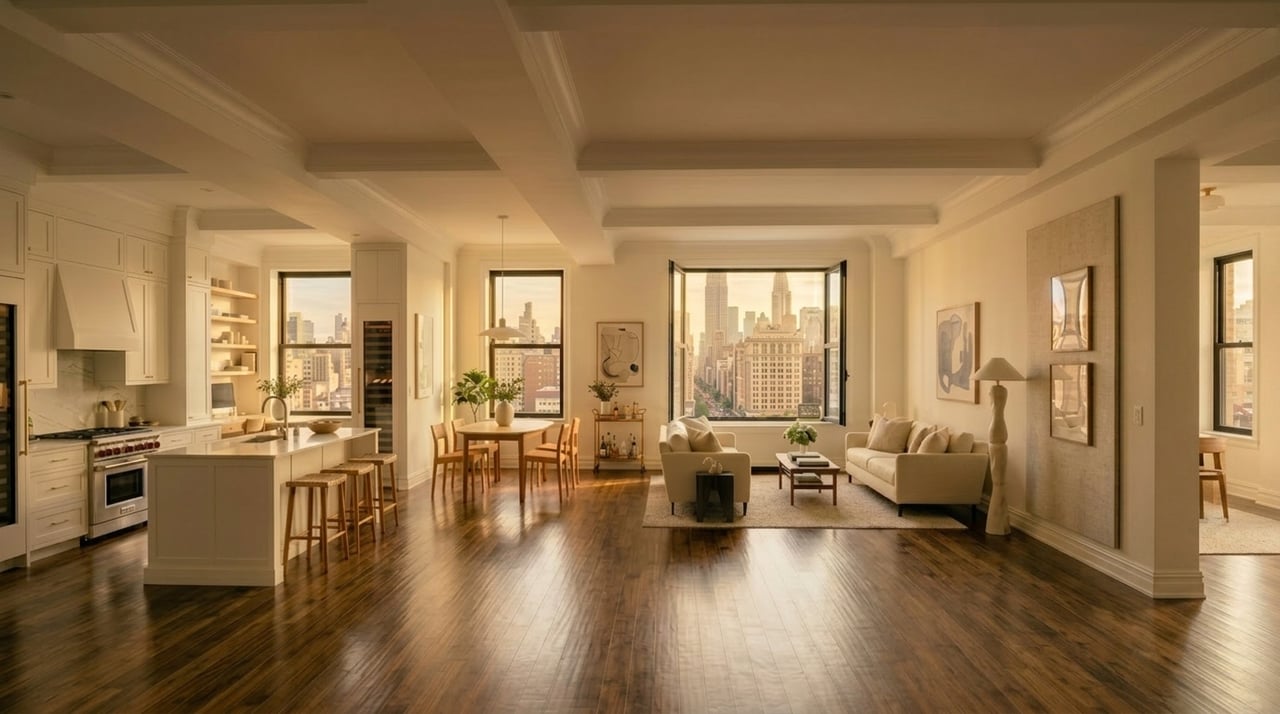
Staging exists to help you picture a life in the space, which is useful, but it is also designed to flatter. The most valuable thing you can do at an open house is mentally remove the furniture and read the bones of the apartment: the actual room sizes, the flow from space to space, the storage, and the natural light at the time of day you would really be home. A beautifully styled room can distract from an awkward layout, while an underwhelming, empty apartment can hide genuinely good bones. Train yourself to evaluate what you are buying, not what you are being shown.
What Buyers Notice That Matters
A few things reward close attention at any showing:
Light and exposure: which direction the windows face and how much direct sun the rooms actually get, since this is impossible to change.
Noise: street noise, mechanical hum, and how sound carries from the hallway or neighboring units.
Layout and flow: whether the rooms are usable and well-proportioned, or whether the square footage is eaten by hallways and dead space.
Condition: what is cosmetic and cheap to fix versus what signals a deeper, costlier issue.
The view and outlook: what you actually see, and whether a future building could take it away.
Read the Building, Not Just the Unit
In NYC you are buying into a building as much as an apartment, so an open house is a chance to assess both. Notice the condition of the lobby, hallways, and elevators, which reflect how well the building is maintained. Ask about the building's financial health, whether there are any planned assessments or capital projects, and, for a co-op, the board's requirements and any restrictions on financing or subletting. A stunning apartment in a poorly run building is a harder purchase than an average apartment in a well-funded one, and the open house is your first window into which you are looking at.
Questions Worth Asking at the Open House
The agent hosting is a source of information, so use the visit to learn what the listing does not tell you. Useful questions include how long the home has been on the market, whether there have been price changes, what the monthly charges and taxes are, whether any assessment is in place or planned, why the seller is moving, and how much interest the listing has drawn. The answers help you gauge both the home and the seller's position, which is exactly the context you need before deciding whether and how to make an offer.
Turning Observations Into Offer Strategy
The point of a good open house visit is not just to like or dislike a home; it is to build the judgment that shapes an offer. Comparing several homes across a weekend teaches you what your budget really commands and what a fair price feels like in person, which is the fluency that lets you move decisively when the right one appears. Weigh what you noticed, the light, the layout, the building, the days on market, against comparable sales rather than against the asking price alone, and you will know whether a home is priced to sell or priced on hope, and how much room may remain to negotiate.
The Due-Diligence Callout: What to Verify Before You Offer
An open house is the start of due diligence, not the end. Before you make an offer, plan to have your attorney review the building's financial statements, reserve fund, and board minutes, since those reveal pending assessments and how well the building is run, and confirm the monthly carrying costs and any flip tax or financing restrictions. The apartment you can see is only half the purchase; the building's finances are the other half, and they are the part most likely to cost you after closing if you skip them.
Key Takeaways
A productive open house comes down to a few habits:
Look past the staging to the light, layout, and condition you cannot change
Read the building, its upkeep and its finances, as carefully as the unit
Ask about days on market, price history, charges, and any assessments
Weigh what you saw against comparable sales, not just the asking price
Touring open houses well is how buyers turn a weekend of visits into a confident, well-timed offer. When you are ready, our guidance for Manhattan buyers walks through the process, you can browse active and coming-soon listings to plan your weekend, follow Manhattan real estate market trends, and learn more about Daniel Blatman's NYC real estate expertise.