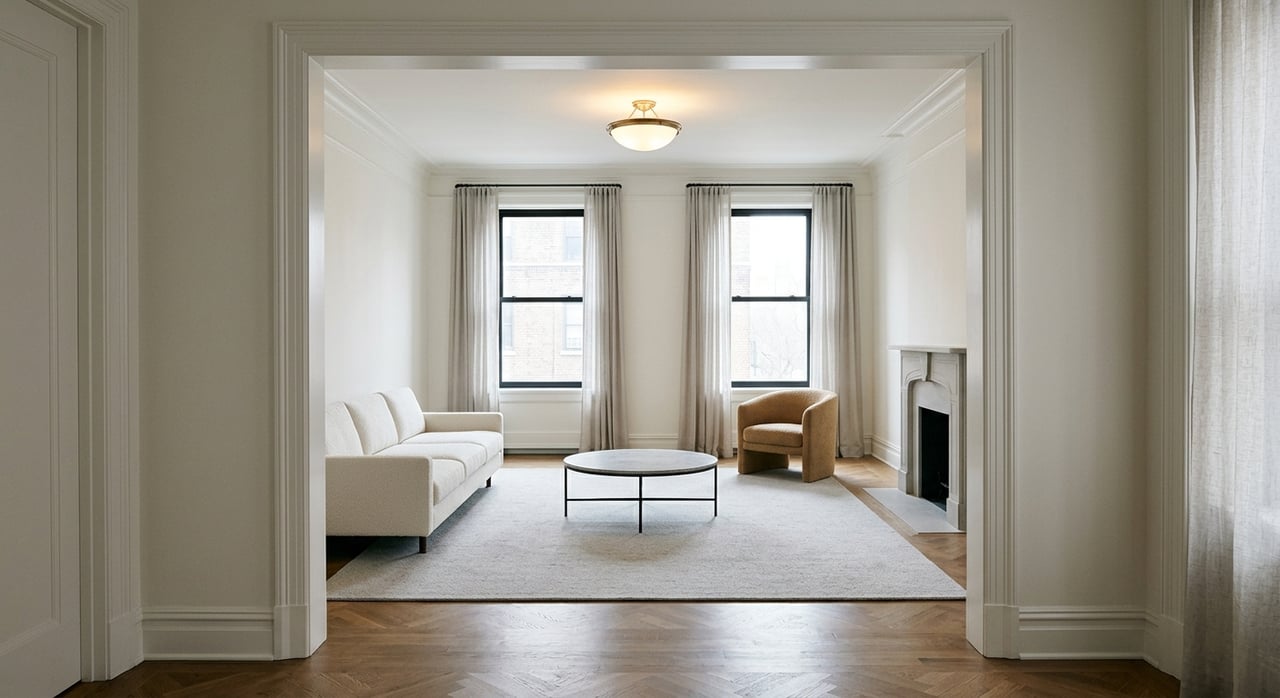
Selling a classic six on the Upper East Side can feel like a balancing act. You want to honor the apartment’s prewar character, but you also need it to feel fresh, bright, and easy for today’s buyers to understand. In a market where buyers are selective and presentation matters, the right preparation can sharpen your position, reduce friction, and help your home stand out for the right reasons. Let’s dive in.
Why prep matters on the Upper East Side
Upper East Side sellers are not operating in a rush market right now. Realtor.com’s April 2026 neighborhood summary shows about 1,800 homes for sale, a median listing price of $1,695,000, median days on market of 63, and a sale-to-list ratio of 98%.
StreetEasy’s current neighborhood page shows a median sale price of $1.2 million and 52 days on market. The figures come from different slices of the market, but they point to the same takeaway: pricing discipline and strong presentation matter.
That is especially true for a classic six. These apartments often compete less on flashy amenities and more on scale, privacy, layout, and architectural detail. When buyers can clearly see that value from the first photo onward, your apartment has a better chance of commanding attention.
What makes a classic six special
A classic six is a distinctly New York prewar layout, most often found in older co-op buildings on the Upper East Side. These homes typically include two bedrooms, a living room, a kitchen, a formal dining room, and a maid’s room, and they often run about 1,500 to 2,000 square feet.
They also tend to offer the details buyers still respond to: high ceilings, thick walls, hardwood floors, moldings, large foyers, and sometimes fireplaces. Compared with newer development, the tradeoff is usually fewer building amenities. In exchange, buyers get clearly defined rooms, more separation, and a stronger sense of privacy.
That means your preparation strategy should not try to make the apartment look like a new condo. It should help buyers appreciate why a classic six is compelling in the first place.
Start with the highest-impact updates
If you are wondering whether you need a full renovation before listing, the answer is usually no. The strongest evidence supports decluttering, deep cleaning, paint touch-ups, minor repairs, depersonalizing, and professional marketing assets before taking on major construction.
For most classic six sellers, the goal is to make the apartment feel larger, lighter, and better cared for. You want buyers to notice the proportions and craftsmanship, not the deferred maintenance or crowded rooms.
A strong pre-listing checklist usually includes:
- Deep cleaning throughout the apartment
- Neutral paint touch-ups where needed
- Repairing visible wear and tear
- Refreshing hardware if it looks dated or inconsistent
- Removing excess furniture
- Streamlining personal items and collections
- Refreshing rugs or removing worn ones
- Improving lighting in darker rooms
These updates are often more cost-effective than a broad renovation, and they support both in-person showings and online marketing.
Stage the rooms buyers care about most
Home staging is not just cosmetic. According to the National Association of Realtors’ 2025 Profile of Home Staging, 83% of buyers’ agents said staging makes it easier for buyers to visualize a property as their future home. In the same report, 29% of agents said staged homes saw a 1% to 10% increase in the dollar value offered.
For a classic six, staging matters because the apartment already relies on room-by-room function. NAR identifies the living room as the most important room to stage, followed by the primary bedroom and kitchen, with the dining room also a common priority. That lines up well with the classic six layout.
In practical terms, focus on these spaces first:
Living room
This is often the emotional center of the apartment. Use enough furniture to show how the room lives, but avoid crowding the perimeter or blocking windows. Buyers should read the room as generous and calm.
Primary bedroom
The bedroom should feel restful and well-scaled. Clean lines, better lighting, and fewer decorative items usually help more than elaborate styling. A dim or cluttered bedroom can make the whole apartment feel tired.
Kitchen
Keep counters as clear as possible and remove visual clutter from open shelves or surfaces. Even if the kitchen is not newly renovated, order and cleanliness can go a long way.
Dining room
In a classic six, the dining room is part of the appeal. It should read as intentional space, not overflow storage. If you want to suggest flexibility, do it thoughtfully so buyers still understand the room’s original function.
Use furniture and lighting to show scale
Classic six apartments often have excellent proportions, but that can get lost when rooms are overfurnished. Fewer, better-scaled pieces usually help the apartment feel more expansive and let buyers appreciate the ceiling height, flow, and wall space.
Lighting matters just as much. NAR’s staging guidance emphasizes natural light, and that is particularly important on the Upper East Side, where buyers often compare prewar homes against newer properties. Open window treatments where appropriate, replace weak bulbs, and make sure each room feels bright and intentional.
A few simple rules help:
- Keep circulation paths clear
- Avoid oversized furniture that shrinks the room
- Let windows stay visually open
- Use lamps to warm up darker corners
- Remove anything that interrupts sightlines
Highlight period details without feeling dated
One of the biggest mistakes sellers make is hiding the apartment’s best original features. In a classic six, moldings, cornices, hardwood floors, fireplaces, and large foyers are not obstacles. They are part of the value story.
The trick is to present those details cleanly and simply. A restrained palette and contemporary accessories usually help prewar elements feel timeless instead of heavy. You are not erasing the apartment’s history. You are making it easier for buyers to see how that history fits modern living.
If you have a gracious entry foyer or gallery, treat it as an asset. These moments often help a classic six feel elevated from the moment a buyer enters.
Give the maid’s room a clear purpose
The smallest room in a classic six can be a quiet advantage if you present it well. Mansion Global notes that the maid’s room can function as an office or guest room, which fits today’s demand for adaptable, closed-door space.
What matters most is clarity. If the room currently serves as storage, buyers may overlook its usefulness. If you stage it as a compact office, guest space, or another defined flex room, it becomes part of the apartment’s practicality rather than a question mark.
Prepare for co-op and landmark realities
Many classic six apartments on the Upper East Side are in co-op buildings, so your preparation is not only about design. It is also about timing, approvals, and avoiding unnecessary delays.
If your building is landmarked or located in a historic district, some exterior work or interior work that requires a Department of Buildings permit may also require Landmarks Preservation Commission approval. New York City notes that simple same-color repainting or basic maintenance does not require that level of review, but projects involving protected features may.
The Upper East Side Historic District Extension was designated in 2010, and many buildings in the area fall under historic district rules. If you are considering any pre-listing work that touches windows, doors, masonry, or other protected features, start the approval conversation early.
Build your timeline backward from launch
Seasonality still matters in Manhattan. A 2025 Forbes analysis of Manhattan and Brooklyn activity found that deals generally rise in the first half of the year, peak in late spring, cool after Memorial Day, and rebound in September.
That does not mean every seller should list on the same calendar. It does mean your prep window should usually begin before your ideal launch window, especially if you need painter availability, staging rentals, photography coordination, or building approvals.
A simple timeline often looks like this:
| Prep Phase | What to do |
|---|---|
| 4 to 8 weeks before listing | Declutter, repair, paint, clean, confirm any approvals |
| 2 to 3 weeks before listing | Stage key rooms, finalize lighting and styling |
| 1 week before listing | Photograph, film, and complete final touch-ups |
| Launch week | Go live with strong pricing and polished media |
Win against condos by leaning into strengths
A classic six does not need to beat a new condo at its own game. Newer developments often win on amenities and contemporary finishes. Your apartment should compete on proportion, privacy, craftsmanship, and room definition.
That is not just theory. Miller Samuel’s Q4 2025 Manhattan report showed co-ops with 5.5 months of supply, 72 days on market, and a 4.0% listing discount, compared with condos at 8.2 months of supply, 78 days on market, and a 5.9% discount. Co-ops also made up 84.7% of the overall Manhattan sales share in that report.
The message for sellers is clear: a well-presented co-op can still be highly competitive. The best strategy is not to imitate new development finish for finish. It is to make your classic six read as a premium, well-kept, value-conscious alternative with qualities newer homes often cannot replicate.
Invest in photography and video
Your buyer’s first showing will probably happen online. NAR found that buyers’ agents rated photos, physical staging, videos, and virtual tours as especially important, and sellers’ agents also identified photos and videos as among the most valuable listing tools.
For a classic six, photography should capture more than attractive corners. It should show room size, natural light, flow from one room to the next, and the character details that make the home memorable.
That means your visual prep should support the camera as much as the in-person visit. The apartment should feel bright, orderly, and easy to understand in a single glance.
The smartest prep is usually selective
Before you spend heavily, step back and ask what buyers are most likely to notice. In many cases, the answer is not a major renovation. It is whether the apartment feels cared for, functional, and well positioned for the market.
On the Upper East Side, where buyers have options and classic six apartments often attract people who appreciate architectural homes, selective prep usually performs better than over-improving. Clean execution, strong visuals, and a clear value story can do more for your sale than expensive work that does not change how the apartment reads.
If you are thinking about selling a classic six and want a tailored prep strategy based on your building, layout, and timing, the Blatman Team can help you map out the right next steps.
FAQs
How much staging matters for an Upper East Side classic six sale
- According to NAR’s 2025 staging report, 83% of buyers’ agents said staging helps buyers visualize a home, and 29% reported a 1% to 10% increase in the dollar value offered on staged homes.
How much sellers usually spend on staging before listing
- NAR reported a median staging-service cost of $1,500, while agent-handled staging had a lower median cost of $500.
Whether a classic six apartment needs a full renovation before selling
- Usually not. The strongest evidence supports decluttering, cleaning, paint touch-ups, minor repairs, depersonalizing, and better photos before major construction.
Which rooms matter most when staging a classic six apartment
- The top priorities are usually the living room, primary bedroom, kitchen, and dining room because those rooms help buyers understand the apartment’s layout and everyday function.
What to know about landmark approvals before updating an Upper East Side apartment
- If your building is landmarked or in a historic district, some work involving protected features may require Landmarks Preservation Commission approval, so it is wise to review any planned work early.
How a classic six can compete with newer Upper East Side condos
- A classic six usually competes best by emphasizing proportion, privacy, prewar craftsmanship, and clearly defined rooms rather than trying to mimic newer amenity-driven buildings.