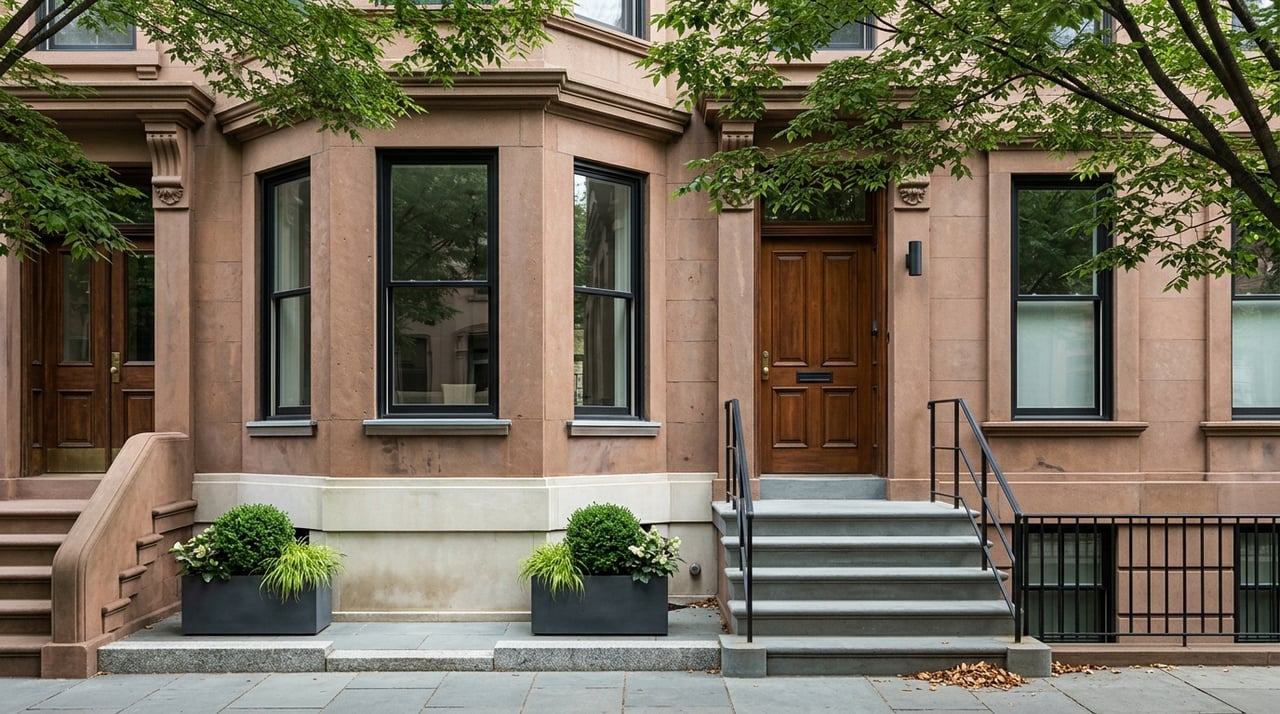
If you are pricing an Upper West Side brownstone or townhouse, one mistake can cost you real money. Price too high and you risk sitting in a market where buyers are selective. Price too low and you may leave value on the table for a property type where small details can change the number dramatically. The good news is that smart pricing is not guesswork. It comes down to how careful buyers and appraisers actually evaluate these homes. Let’s dive in.
Why townhouse pricing is different
An Upper West Side townhouse should not be priced like a typical Manhattan apartment. Brownstones and townhouses trade in a much thinner market, which means there are usually fewer truly comparable sales to work from.
That matters because recent Manhattan townhouse data shows a market with rising deal volume but more price sensitivity. In the first half of 2025, Manhattan townhouse transactions rose 11% to 151 sales, while average sale price fell 18% to $6.3 million and average price per square foot slipped 6% to $1,245. By the third quarter of 2025, transaction volume was up 23% year over year to 253 sales, while average sale price was down 14% to $6.9 million and average price per square foot was down 4% to $1,324.
The broad takeaway is simple: buyers are active, but they are not pricing every house the same way. They are paying close attention to value, condition, and location.
What the Upper West Side market is rewarding
Recent townhouse reporting points to steady Upper West Side activity, especially in the $3 million to $6 million range. It also notes continued interest in conversion opportunities.
Another important pattern has emerged as 2025 has progressed. Well-located, renovated properties have continued to attract decisive buyers, while estate-condition homes and multi-family conversion opportunities have drawn value-oriented interest.
For you as a seller, that means the market is not just asking, "How big is the house?" It is asking, "What am I getting, how much work will it take, and how does this particular block compare to nearby options?"
Why block matters so much
On the Upper West Side, location is hyperlocal. Manhattan Community Board 7 defines the area as 59th Street to 110th Street, between Central Park and the Hudson River, but pricing does not move evenly across that whole span.
A townhouse closer to Central Park, Riverside Drive, Broadway, or West End Avenue may appeal to a different buyer pool than one on another stretch of the neighborhood. Even moving a few cross streets north or south can change the competitive set.
That is why sellers should think in terms of block-by-block pricing, not just neighborhood averages. The best comp for your house may not be the nearest townhouse sale by distance. It may be the sale that best matches your block feel, scale, condition, and legal setup.
Landmark status can shape value
Many Upper West Side townhouses sit in areas influenced by landmark controls. In the Upper West Side/Central Park West Historic District, the Landmarks Preservation Commission must approve in advance any alteration, reconstruction, demolition, or new construction affecting a designated building.
That does not mean landmark designation freezes a building. It does mean that renovation flexibility can be narrower than it would be for an unprotected property.
From a pricing standpoint, landmark status can cut both ways. Historic context and preserved streetscapes can support buyer interest, while added review requirements may affect how some buyers view renovation plans. The market usually prices that feature together with condition, layout, and location, not as a fixed premium or discount by itself.
Zoning can affect the buyer pool
Not every Upper West Side townhouse sits in the same zoning context. The Department of City Planning says R8B districts are mapped on Upper West Side midblocks, while R10A districts are mapped along avenues.
That distinction matters because midblock brownstone rows and wider avenue properties can offer different possibilities. A buyer evaluating a classic row house may focus on charm, layout, and turnkey condition, while another buyer may place more weight on width, expansion potential, or a different legal use pattern.
In practical terms, zoning helps explain why two homes with similar square footage can trade at different values. The market is often pricing the lot and the future options along with the house itself.
The features that move price most
When comparable sales are limited, the details matter even more. Appraisal guidance makes that clear by emphasizing that comparable properties should have similar physical and legal characteristics, including site, room count, finished area, style, and condition.
For an Upper West Side townhouse, the biggest value drivers often include:
- Width and depth
- Usable square footage
- Ceiling height and natural light
- Layout efficiency
- Legal use and configuration
- Renovation level
- Private outdoor space
These are not cosmetic details. They are the traits that shape how buyers live in the house, what changes may be needed, and how easy it is to compare the property to other sales.
Width and layout often punch above square footage
Two townhouses can have similar square footage and still feel very different in person. A wider house may offer better room proportions, more light, and a more flexible floor plan.
Layout also matters because townhouse buyers are often choosing a use case as much as a structure. A house that lives comfortably day to day can command stronger interest than one with awkward circulation, chopped-up rooms, or less functional floor distribution.
Condition changes the pricing strategy
Condition is one of the clearest dividing lines in today’s market. Recent reporting shows that renovated homes continue to draw decisive buyers, while estate-condition properties tend to attract buyers looking for value or customization potential.
That does not mean every renovation adds equal value. A renovation budget is not the same as resale value. Buyers and appraisers react to the quality, usability, and immediacy of the finished product, not just the amount spent.
Configuration matters more than many sellers expect
The legal and practical setup of a townhouse can shape value in a major way. Some buyers want single-family use. Others are open to a live-with-income structure or are specifically seeking conversion potential.
This is why pricing should reflect what the house is now and what it could realistically become. A flexible configuration can expand your buyer pool, but only if the market sees that flexibility as usable and valuable.
Outdoor space is not just a bonus
Private outdoor space can make a meaningful difference in townhouse pricing. In New York City, analysis of home features found that outdoor space and flex space can command premiums, and in the above-$2.5 million segment, a private patio or terrace was associated with a 10.7% premium relative to comparable sales.
For an Upper West Side townhouse, that supports treating a garden, terrace, or roof rights as real functional living space. The value is strongest when the outdoor area is private, usable, and well connected to the home’s main living areas.
A practical framework for pricing your house
If you are preparing to sell, it helps to organize the pricing conversation around three questions.
What is the house now?
Start with the home as it exists today. That includes size, width, condition, legal configuration, outdoor space, and the specific block.
This is the baseline that buyers and appraisers will use first. Clear facts beat vague impressions every time.
What could the house become?
Next, consider the realistic upside. Could the property appeal as a turnkey single-family home, a live-with-income setup, or a conversion opportunity?
That potential can matter, but only when it is grounded in the property’s legal characteristics, zoning context, and renovation path. Buyers usually discount upside when the path feels uncertain or complicated.
How much friction stands in the way?
This is the step many sellers skip. Friction includes renovation risk, approval requirements, layout issues, older systems, or any complexity tied to legal use or building controls.
The lower the friction, the easier it is for buyers to act decisively. The higher the friction, the more likely buyers are to build caution into their offers.
What to prepare before pricing
A strong pricing strategy gets easier when your information is organized. Sellers should be ready with as much clarity as possible about the house’s physical and legal details.
Helpful materials often include:
- Floor plans
- A survey, if available
- Permit history
- Landmark approvals, if applicable
- A concise renovation summary
- A rent roll or unit-by-unit breakdown, if applicable
These materials help separate real value from assumptions. They also make it easier to support your price with the kinds of facts buyers, lenders, and appraisers are likely to focus on.
Common pricing myths to avoid
Upper West Side townhouse pricing often gets distorted by rules of thumb that sound logical but do not hold up well in a thin-comp market.
“There must be one neighborhood average”
There usually is not one number that tells the story. Block quality, zoning, landmark status, width, condition, and outdoor space can shift value materially.
“Single-family is always worth more”
Not always. Some buyers will pay more for single-family living, but others may value income potential or conversion flexibility. The market decides based on the full package.
“Outdoor space adds the same amount everywhere”
It does not. The value depends on whether the space is private, usable, and connected well to the interior.
“Landmark status is always good or always bad”
It is neither. Landmark context may support desirability, while approval requirements can add complexity. Buyers price both realities together.
The bottom line on pricing an Upper West Side townhouse
Pricing an Upper West Side brownstone or townhouse is less about finding a simple average and more about understanding what makes your property truly comparable. In this market, buyers are active but selective, and the homes that price well are the ones evaluated with precision.
If you want to price confidently, focus on the features that are hardest to ignore: block, width, condition, legal setup, landmark context, zoning, and usable outdoor space. That is how buyers tend to judge value, and it is how appraisers are likely to approach the property as well.
If you are thinking about selling and want a pricing strategy built around the specifics of your house and block, the Blatman Team can help you position it with clarity, data, and a tailored plan.
FAQs
How should you price an Upper West Side townhouse?
- You should price it using the most similar nearby townhouse sales and then adjust for block, width, condition, legal configuration, landmark context, zoning, and outdoor space.
Does landmark status affect Upper West Side townhouse value?
- Yes, landmark status can affect value because it may support buyer appeal through preserved historic context while also narrowing renovation flexibility through required approvals.
Does renovation level matter when pricing an Upper West Side brownstone?
- Yes, renovation level matters a great deal because renovated homes have been drawing more decisive buyers, while estate-condition homes are often priced to reflect renovation risk and customization needs.
Is private outdoor space important in Upper West Side townhouse pricing?
- Yes, private outdoor space can be a meaningful value driver, especially when it is usable, private, and connected to the home’s main living areas.
Why are townhouse comps harder to find on the Upper West Side?
- Townhouse comps are harder to find because this is a thinner market with fewer truly comparable sales, and small differences between homes can materially change value.