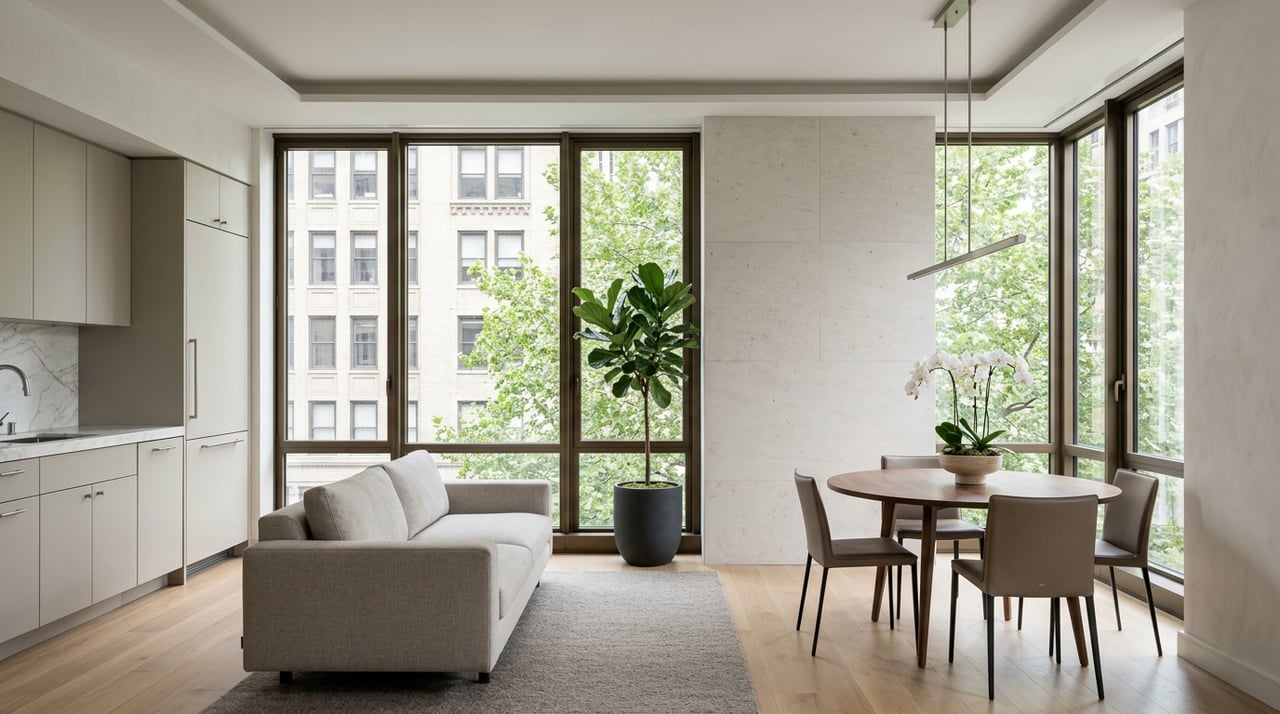
You do not have to chase attention to live well in Manhattan. On the Upper East Side, luxury often shows up in quieter ways: a well-kept prewar building, an easy walk to the park, a museum you pass often enough to treat it like part of your routine, and streetscapes shaped by long-term care rather than constant reinvention. If you are curious about what “quiet luxury” really means here, this guide will show you how the neighborhood’s architecture, housing culture, and daily rhythm make that idea feel real. Let’s dive in.
Why quiet luxury fits the Upper East Side
On the Upper East Side, status is often tied less to display and more to continuity. The neighborhood’s character comes from preserved buildings, a layered streetscape, and proximity to cultural institutions that feel woven into daily life rather than reserved for special occasions.
That feeling is grounded in the area’s built environment. The Landmarks Preservation Commission describes historic districts as collections of landmark buildings that create a distinct sense of place, and the Upper East Side Historic District was first designated in 1981, with a major extension added in 2010. In practical terms, that helps protect the neighborhood’s visual rhythm and reinforces a lived-in, established feel.
Architecture shapes the experience
The Upper East Side did not build its identity around one look. Landmark reports describe a mix of row houses, French flats, large apartment houses, cooperative conversions, and modernized row-house facades. That mix is a big reason the neighborhood feels refined without feeling staged.
You can see that restraint in the streets themselves. Instead of one-note uniformity, there is a sense of accumulated care. Buildings from different periods sit together in a way that feels settled, which is a large part of the area’s appeal for buyers who value character and consistency.
Preservation supports long-term appeal
Landmark designation does not stop change, but it does shape how change happens. The Landmarks Preservation Commission requires review for many proposed exterior alterations, demolition, and new construction, and owners are expected to keep landmarked properties in good repair.
For you as a buyer or seller, that often translates into a neighborhood culture built around stewardship. The result is not frozen-in-time living. It is a setting where upkeep, materials, and context tend to matter, which can support the polished but understated tone many people associate with quiet luxury.
Co-op culture and everyday order
The Upper East Side’s luxury history is closely tied to apartment-house development. According to landmark reporting, between 1922 and 1929, 16 large apartment houses were built along or near Lexington Avenue, rising from nine to 15 stories and replacing older row houses and tenements. Several were built as cooperatives, a model in which residents hold shares in the corporation that owns and manages the building.
That history still matters today. In many Upper East Side buildings, daily life is shaped by systems, standards, and a long view of maintenance. For buyers, especially those considering a move-down purchase or pied-à-terre, that can feel less like formality for its own sake and more like a framework that supports consistency.
What that means for buyers and sellers
If you are buying, the appeal may be less about flashy amenities and more about predictability. A building with established governance, strong maintenance habits, and a clear identity can create a more orderly living experience.
If you are selling, understanding that buyer mindset matters. In this part of Manhattan, presentation is important, but so is positioning a home within the broader story of the building and block. Buyers are often responding to the full environment, not just the apartment itself.
Daily life feels easy to repeat
Quiet luxury works best when it becomes routine. On the Upper East Side, some of the neighborhood’s biggest advantages are close enough and familiar enough to become part of your week, not just part of your wish list.
The area combines preserved residential streets with direct access to major open space, museums, and transit. That mix helps daily life feel low-friction, which is often one of the most valuable forms of luxury in the city.
Central Park is part of the rhythm
Central Park runs from 59th Street to 110th Street, and the east side is served by the 4, 5, and 6 trains, along with M1 through M4 buses. East-side access points around 86th Street and 96th Street make the park feel accessible for regular walks, morning exercise, or a quick reset in the middle of the day.
The park is open daily from 6:00 a.m. to 1:00 a.m., which adds to that sense of flexibility. Instead of being a distant amenity, it can function like an extension of your neighborhood routine.
Museum Mile feels local, not distant
Fifth Avenue from 82nd Street to 110th Street is home to Museum Mile, a concentration of institutions that includes The Metropolitan Museum of Art, Neue Galerie New York, Guggenheim New York, Cooper Hewitt, the Jewish Museum, and the Museum of the City of New York. Their locations along a relatively tight corridor make culture feel nearby and repeatable.
That matters more than it might seem at first glance. When the Met anchors 82nd Street, the Guggenheim sits at 89th, Cooper Hewitt at 91st, the Jewish Museum at 92nd, and the Museum of the City of New York at 103rd, the area starts to feel socially legible. You do not need to plan a major outing to enjoy what the neighborhood offers.
The East River side offers a softer pace
The Upper East Side also has a quieter edge. Carl Schurz Park is a 15.2-acre city park along the East River, described by the conservancy as a well-planted park within a heavily urbanized setting.
That contrast is part of the neighborhood’s appeal. You can have institutional polish on one side of your routine and a calmer waterfront rhythm on the other. For many buyers, that balance is exactly what makes the area feel livable over the long term.
The numbers behind the lifestyle
Lifestyle language is useful, but the data helps explain why the Upper East Side often feels orderly and manageable. According to the NYU Furman Center’s neighborhood profile, the area had 141,670 housing units in 2024, a 37.9% homeownership rate, and a 7.0% rental vacancy rate.
The same profile reports 338 residential units authorized by new building permits in 2025 and 550 certificates of occupancy issued that year. That suggests the neighborhood is still evolving, but in measured ways rather than through wholesale change.
Movement is simple
The Upper East Side also supports a city lifestyle with less dependence on a car. The Furman Center reports a 90.3% car-free commute share in 2024 and a mean travel time to work of 30.1 minutes.
For you, that can mean more than convenience. It can mean a day that feels easier to manage, with less friction between home, work, culture, and recreation. In a Manhattan neighborhood, that kind of ease is a real luxury.
Stability has practical appeal
The same profile lists a serious crime rate of 8.8 per 1,000 residents in 2025, compared with 12.3 citywide. No single number defines a neighborhood, but this helps explain why many people experience the area as orderly and comfortable for everyday living.
That sense of order supports the Upper East Side’s broader identity. Quiet luxury here is not one feature or one building type. It is the cumulative effect of preservation, maintenance, walkability, and institutions that anchor daily life.
Who this lifestyle often suits best
The Upper East Side can appeal to a wide range of buyers, but the idea of quiet luxury is especially relevant if you are thinking about a move-down purchase, a pied-à-terre, or a home that prioritizes consistency over spectacle. In that context, luxury often means dependable building culture, elegant proportions, and routines that feel easy to keep.
That does not mean every home looks the same or every block feels identical. It means the neighborhood has a strong underlying logic. If you value architecture, access, and a sense of permanence, the Upper East Side offers a version of Manhattan living that feels polished without trying too hard.
What to keep in mind as you search
If you are exploring the Upper East Side, it helps to look beyond finishes and square footage. The feel of the block, the building’s governance structure, the maintenance story, and your likely daily route all shape whether a home fits your version of luxury.
A great search here is often about alignment. You are not only choosing an apartment. You are choosing a cadence of life that may include prewar architecture, cooperative decision-making, regular park access, and a museum corridor that turns culture into habit.
If that sounds like the kind of Manhattan life you want, the Upper East Side deserves a close look. And if you want a thoughtful, neighborhood-specific strategy for buying or selling in this market, the Blatman Team can help you navigate the details with clarity and care.
FAQs
What does quiet luxury mean on the Upper East Side?
- On the Upper East Side, quiet luxury usually refers to everyday quality rather than showiness, including preserved architecture, established apartment houses, co-op culture, park access, and nearby museums that become part of regular life.
How do landmark rules affect Upper East Side buildings?
- In landmarked areas, many exterior changes, demolition plans, and new construction proposals require review, and owners must keep landmarked properties in good repair, which helps preserve the neighborhood’s character.
Why are co-ops important on the Upper East Side?
- Co-ops are part of the neighborhood’s housing history and daily culture, and they often reflect a long-term focus on building stewardship, maintenance, and continuity.
What parks support everyday living on the Upper East Side?
- Central Park and Carl Schurz Park are major lifestyle anchors, offering open space on both the west and east edges of the neighborhood for walks, exercise, and time outdoors.
How walkable is the Upper East Side for daily routines?
- The neighborhood supports low-friction daily movement with access to the 4, 5, and 6 trains, east-side bus routes, nearby parks, and Museum Mile, which helps make culture and recreation part of normal weekly life.
Is the Upper East Side still changing?
- Yes, the neighborhood is still evolving, with 338 residential units authorized by new building permits in 2025 and 550 certificates of occupancy issued that year, though its changes tend to happen within a strong framework of preservation and established housing stock.