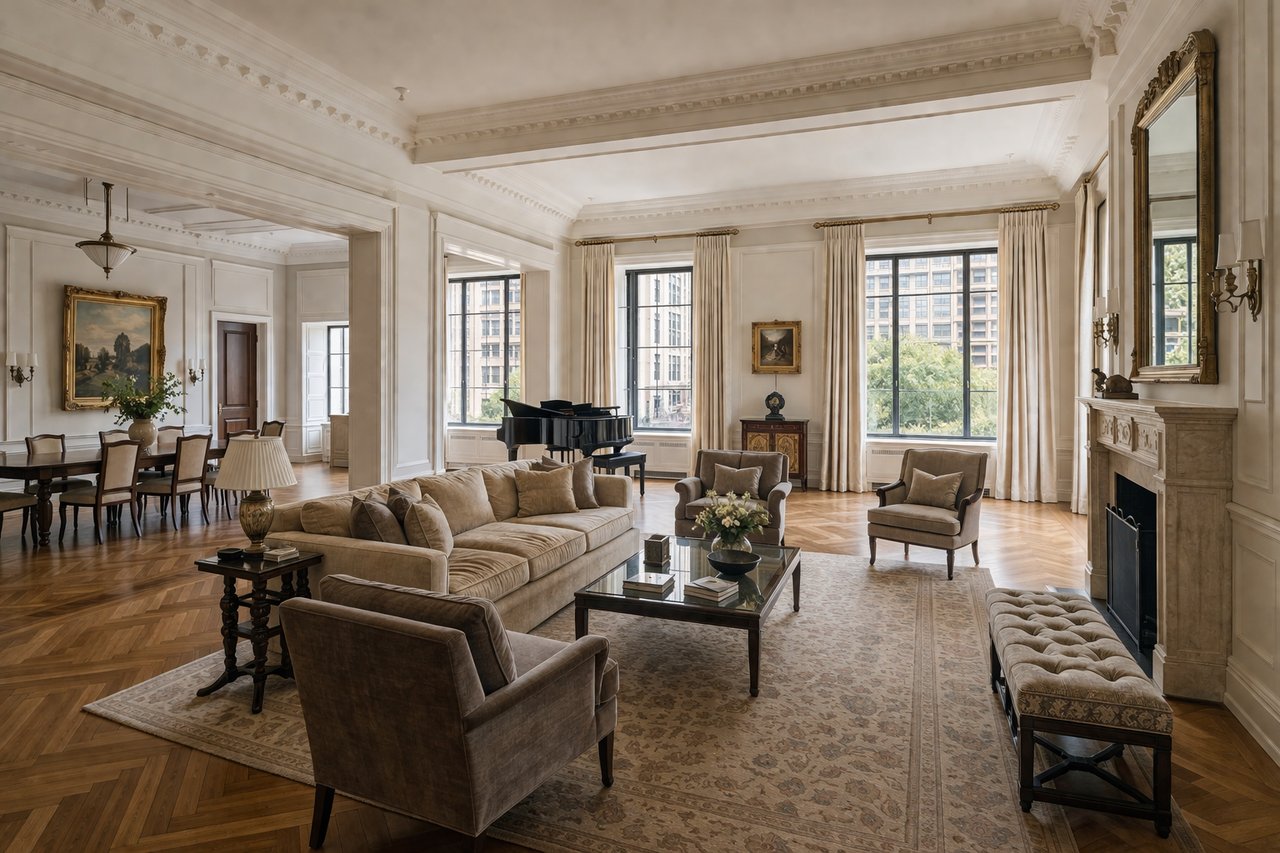
ARCHITECTURAL ICONS: ROSARIO CANDELA BUILDINGS IN MANHATTAN
WHY ROSARIO CANDELA STILL DEFINES LUXURY LIVING
In Manhattan real estate, few names carry as much weight as Rosario Candela. His buildings, primarily located on the Upper East Side and Upper West Side, continue to set the benchmark for pre-war luxury. Known for his mastery of proportion, flow, and spatial hierarchy, Candela designed residences that feel both grand and livable, a combination that remains difficult to replicate in modern construction.
Buyers often ask why buildings designed nearly a century ago still command premium pricing. The answer lies in layout. Candela’s floor plans prioritize separation between public and private spaces, generous room proportions, and architectural detail that creates a sense of permanence. A review of listings through Daniel Blatman’s Manhattan property search consistently shows that Candela-designed residences outperform comparable units in both demand and value.
THE SIGNATURE CANDELA FLOOR PLAN
Candela’s approach to design was rooted in functionality as much as elegance. His layouts are defined by clear spatial organization, often featuring formal entry galleries, large living rooms, separate dining rooms, and distinct bedroom wings. Service areas were carefully positioned to maintain privacy while supporting household operations.
A common question is whether these traditional layouts align with modern living. In many cases, they do, and often better than contemporary open plans. The separation of space allows for flexibility, quiet, and defined use, which has become increasingly important for buyers who work from home or entertain regularly. Building regulations and renovation considerations can be reviewed through the New York City Department of Buildings, particularly when updating historic interiors.
UPPER EAST SIDE: THE EPICENTER OF CANDELA’S LEGACY
The Upper East Side is home to many of Candela’s most celebrated buildings, particularly along Park Avenue and Fifth Avenue. These properties represent the pinnacle of pre-war co-op living, combining architectural integrity with white-glove service and long-established reputations.
Buyers frequently ask whether these buildings maintain their exclusivity. Strict co-op boards and ownership requirements play a significant role in preserving both the culture and value of these residences. Guidance on co-op structures and housing standards can be found through the New York City Department of Housing Preservation and Development. For high-net-worth buyers, these buildings offer not just a home, but a legacy asset.
UPPER WEST SIDE: GRANDEUR WITH A RESIDENTIAL FEEL
On the Upper West Side, Candela’s work reflects a slightly different character. While still grand in scale, many of his buildings here emphasize a more residential atmosphere, often with proximity to Central Park and Riverside Park.
A frequent question is how these buildings compare to their Upper East Side counterparts. While the architectural quality remains consistent, the Upper West Side offers a more relaxed environment, appealing to buyers who value both elegance and livability. Exploring options through Daniel Blatman’s Upper West Side listings highlights how Candela’s designs continue to attract discerning buyers across different lifestyle preferences.
WHY CANDELA BUILDINGS HOLD THEIR VALUE
Candela buildings consistently demonstrate strong long-term performance in the Manhattan market. Their limited supply, architectural significance, and enduring layouts create a level of scarcity that supports pricing stability. Unlike trend-driven developments, these properties are rooted in design principles that do not age.
Investors often ask whether pre-war buildings require more maintenance and whether that impacts value. While upkeep is an important consideration, well-managed buildings with strong financials tend to maintain their appeal. The combination of design quality and building governance contributes to consistent demand.
CHOOSING A CANDELA RESIDENCE TODAY
For buyers and investors, purchasing a Candela-designed home requires careful evaluation. Factors such as building financials, renovation history, and board policies all play a role in determining long-term value. However, the underlying architectural framework provides a strong foundation that continues to resonate with today’s market.
Through Daniel Blatman’s NYC real estate expertise, clients can identify opportunities within these legacy buildings that align with both lifestyle and investment goals. In a market defined by constant change, Candela’s work remains a rare constant, offering a level of design, proportion, and prestige that continues to define luxury living in Manhattan.