SoHo vs. Tribeca: Which Fits Your Buyer Profile?
Quick Answer: Should you buy in SoHo or Tribeca? In most cases, SoHo suits buyers who want to live at the center of fashion, art, and cast-iron loft energy, while Tribeca suits buyers who want quiet, family-friendly luxury in one of Manhattan's most exclusive and priciest neighborhoods. The two sit side by side downtown but feel very different, so the right answer depends on whether you want the buzz of the shopping district or a calmer, residential enclave a few blocks south.
Where Are SoHo and Tribeca?
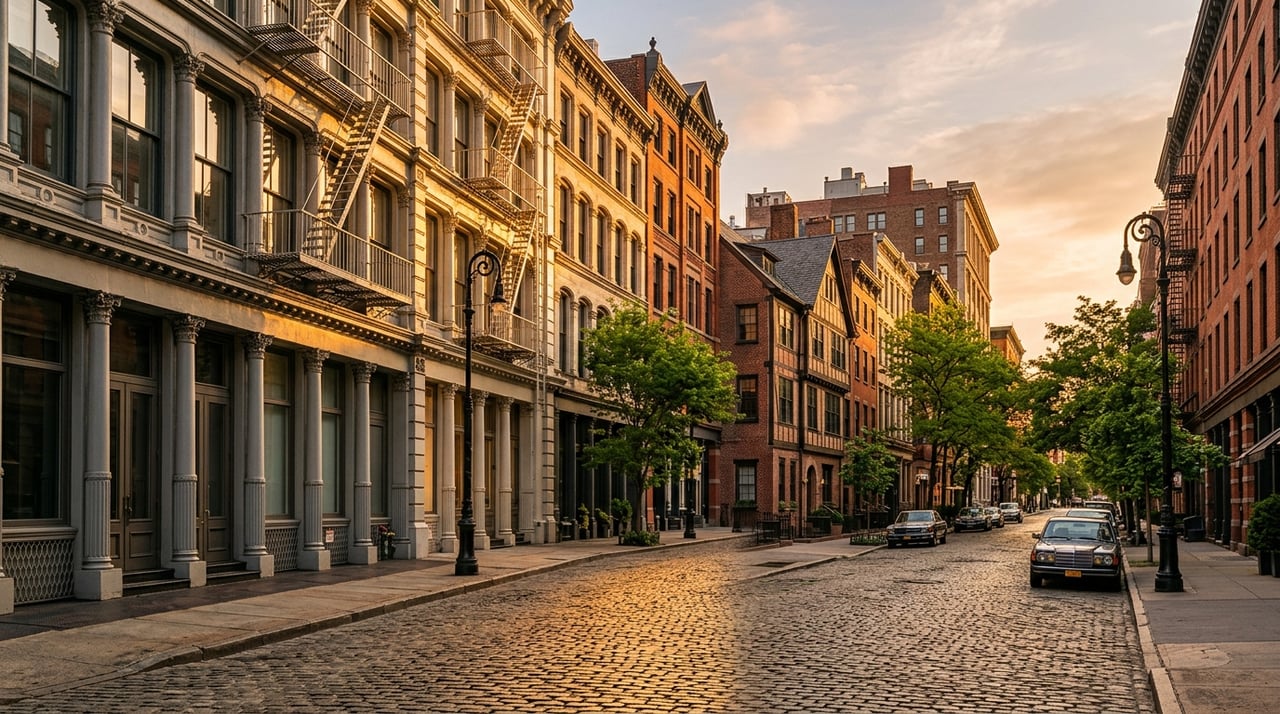
They are downtown neighbors with distinct identities. SoHo, short for South of Houston, runs roughly from Houston Street down to Canal Street, a National Historic Landmark district defined by cast-iron architecture, cobblestone streets, and a dense concentration of flagship retail, galleries, and restaurants. Tribeca, the Triangle Below Canal, sits just south, a former industrial area that became a quieter, more residential enclave of converted warehouses and new luxury towers, bordered by the Hudson to the west. West Village, Greenwich Village, Nolita, and Hudson Square all sit within a short walk, which gives buyers in either neighborhood easy access to a broad swath of downtown.
What Kind of Buildings Does Each Have?
SoHo real estate is dominated by classic cast-iron loft buildings, many with the large windows and open floor plates that made the neighborhood famous, alongside a mix of walk-ups and luxury co-ops and condos carved from former manufacturing space. Tribeca real estate leans toward larger converted loft condominiums and a wave of high-end new development, which tends to offer bigger layouts, full-service amenities, and the kind of family-sized apartments that are harder to find in SoHo. In practice, buyers seeking amenity-rich, larger condos often find more of them in Tribeca, while SoHo offers more historic character and loft authenticity.
Which Is Quieter, SoHo or Tribeca?
Tribeca, clearly. Its residential streets are calmer and more insulated from foot traffic, which is a large part of why it has become a favorite for families and buyers seeking privacy, including many who value its low-key exclusivity. SoHo, by contrast, is one of the busiest shopping districts in the city, drawing crowds of visitors by day, and its energy is part of the appeal for buyers who want to be in the middle of it. If quiet and a residential feel are priorities, Tribeca fits; if you want vibrancy and to live where the activity is, SoHo delivers it.
Who Should Buy in SoHo vs Tribeca?
Fit comes down to how you want to live. SoHo rewards buyers who value fashion, art, dining, and living inside a historic, high-energy district, which appeals to creative professionals and those who want the neighborhood's cachet and loft character. Tribeca rewards buyers who value quiet, space, and family-friendly luxury, which draws established buyers, families, and anyone prioritizing privacy and larger, amenity-rich homes. A rough test: if your ideal Saturday is galleries and flagship shopping steps from your door, SoHo fits; if it is a quiet cobblestoned block and a larger apartment near the river, Tribeca does.
How Does Each Affect Closing and Carrying Costs?
Both neighborhoods sit among Manhattan's priciest, so most purchases cross the tax thresholds that raise closing costs, including the additional tax commonly called the mansion tax that applies at one million dollars and up, and a supplemental tax on residential purchases at two million and above, both of which the New York State Department of Taxation and Finance explains for transfer-related taxes. Because those taxes are calculated on the full purchase price rather than only the amount above the threshold, they matter more at these price points. The mix of co-ops and condos also varies building by building, which affects financing flexibility and closing costs, so weigh these alongside the asking price when comparing the two.
How Do You Choose Between Them?
Lead with your profile, then test it against real inventory. Rank what matters most, whether that is energy, quiet, space, or character, and let that ordering point you toward one neighborhood. Our Tribeca neighborhood guide is a useful place to study that area's building stock and pace before you tour, and it also helps frame what SoHo offers by contrast just to the north. When you are ready to compare options, browsing active and coming-soon listings across both will show you how your budget behaves in each, and our guidance for Manhattan buyers covers how to translate a profile into a focused search.
Common Missteps
Watch for choosing a neighborhood on reputation rather than on how you actually live, comparing asking prices without accounting for the closing and carrying costs at these price points, and assuming the two are interchangeable because they sit side by side, since their pace and housing stock differ meaningfully. Each is easy to avoid by leading with your own priorities and confirming the numbers with your agent and attorney.
There is no better neighborhood here, only the one that fits your budget, your pace, and your stage of life. If you are weighing the two, see how we approach buying a condo in Manhattan, follow Manhattan real estate market trends to understand where each area sits today, and learn more about Daniel Blatman's NYC real estate expertise and how it helps buyers match a neighborhood to their profile.