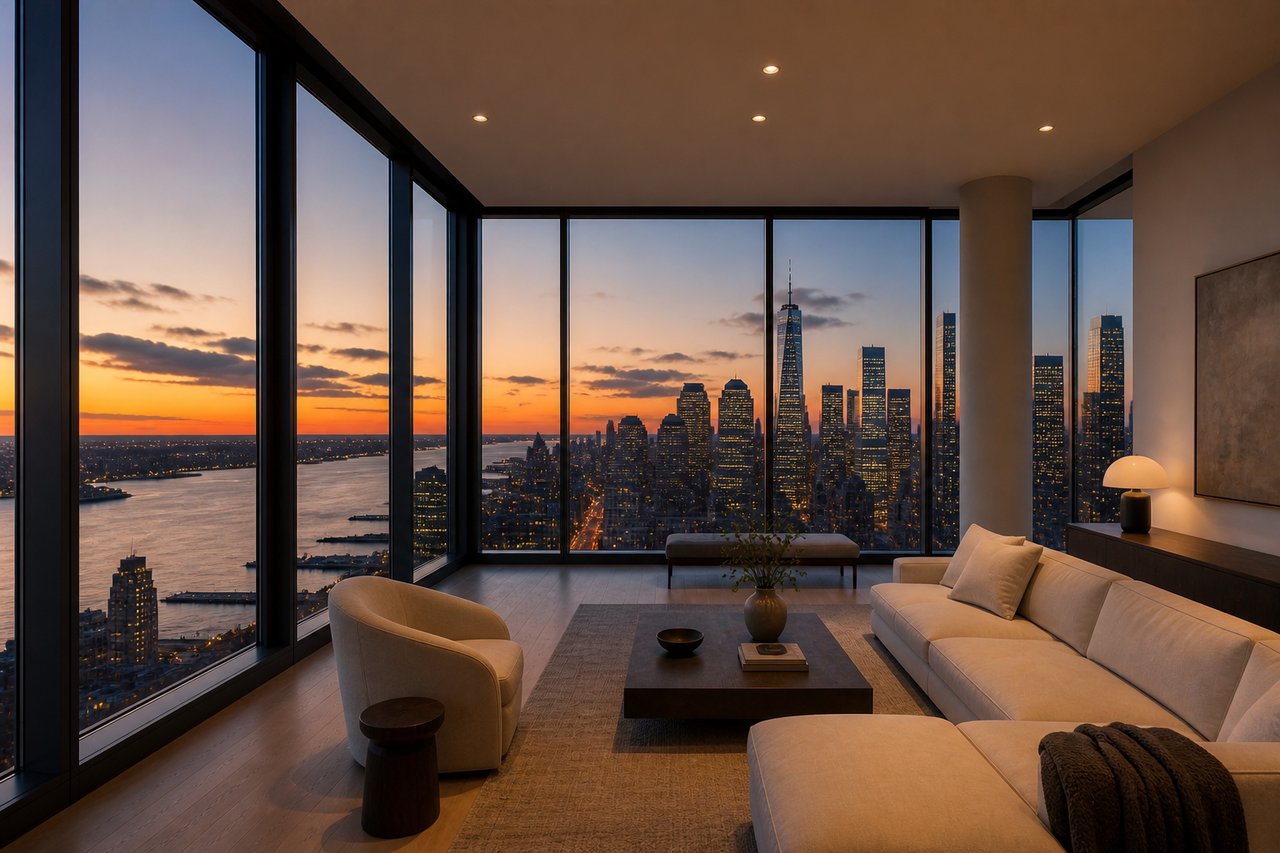
THE MOST PHOTOGENIC VIEWS IN MANHATTAN
WHY VIEWS DRIVE DEMAND AND PERCEIVED VALUE
In Manhattan real estate, views are one of the most powerful differentiators. In neighborhoods such as Tribeca, Midtown West, and the Upper West Side, a compelling vista can significantly influence buyer behavior, marketing performance, and final sale price. While square footage and layout remain critical, the visual experience of a property often shapes the emotional response that drives decision-making.
Buyers frequently ask whether views truly justify higher pricing. In many cases, they do. Properties with unobstructed skyline, river, or park views tend to command premiums and attract broader interest. Reviewing listings through Daniel Blatman’s Manhattan property search shows that well-positioned units with strong exposures consistently outperform comparable properties without views.
TRIBECA: OPEN SKYLINES AND DOWNTOWN PERSPECTIVE
Tribeca offers a unique advantage in Manhattan. With fewer high-rise obstructions compared to Midtown, many properties provide expansive skyline views and open sky exposures. Loft-style residences with large windows further enhance this effect, creating a cinematic perspective that photographs exceptionally well.
A common question is whether these views are protected. While no view is permanently guaranteed, zoning and development patterns influence long-term outlooks. Buyers can review planning frameworks through the NYC Department of City Planning to better understand how surrounding areas may evolve. For investors, properties with wider street frontage and lower surrounding density often offer more stable view corridors.
MIDTOWN WEST: ICONIC SKYLINE AND RIVER VIEWS
Midtown West delivers some of the most recognizable views in Manhattan. High-rise developments in this area often feature sweeping perspectives of the Hudson River, the Midtown skyline, and illuminated cityscapes at night. These views are particularly impactful in marketing, where photography plays a central role in attracting attention.
Buyers often ask whether higher floors always mean better value. While elevation generally enhances views, orientation and window placement are equally important. Units with west-facing exposures capture sunsets over the Hudson River, while north- and south-facing units may offer broader skyline perspectives. Infrastructure and waterfront development, supported by agencies such as the Hudson River Park Trust, contribute to the long-term appeal of these views.
UPPER WEST SIDE: PARK AND RIVER VISTAS
On the Upper West Side, views are defined by proximity to green space and water. Apartments overlooking Central Park or the Hudson River benefit from a rare combination of openness and natural scenery within an urban environment. These vistas offer a sense of calm and scale that is difficult to replicate elsewhere in the city.
A frequent question is whether park views outperform city views in pricing. In many cases, they do, particularly when unobstructed. The permanence of Central Park, managed by organizations such as the Central Park Conservancy, provides a level of certainty that supports long-term value. River views similarly benefit from protected waterfront development, reinforcing their appeal.
HOW PHOTOGENIC VIEWS IMPACT MARKETING PERFORMANCE
In today’s digital-first market, photogenic views are a critical marketing asset. Listings with striking visuals generate more online engagement, higher click-through rates, and increased showing activity. A well-composed photograph of a skyline or sunset can define a listing’s identity and differentiate it within a crowded marketplace.
Sellers often ask whether professional photography makes a measurable difference. When paired with a strong view, it does. High-quality images that capture light, depth, and perspective can significantly enhance perceived value before a buyer ever visits the property. This initial impression often sets the tone for negotiations.
EVALUATING VIEW VALUE FOR LONG-TERM INVESTMENT
Not all views carry equal weight. Buyers and investors must consider factors such as obstruction risk, orientation, and building placement. A partial view may still add value, but unobstructed, wide-angle vistas consistently perform best over time.
A common concern is how to assess whether a view will remain intact. Reviewing zoning regulations and nearby development plans is essential. Guidance from the New York City Department of Buildings can provide insight into permitted construction that may affect sightlines.
Through Daniel Blatman’s NYC real estate expertise, clients can evaluate properties not only for their current views but for their long-term potential. In Manhattan, a great view is more than a visual feature. It is a strategic asset that enhances lifestyle, strengthens marketing, and supports enduring property value.