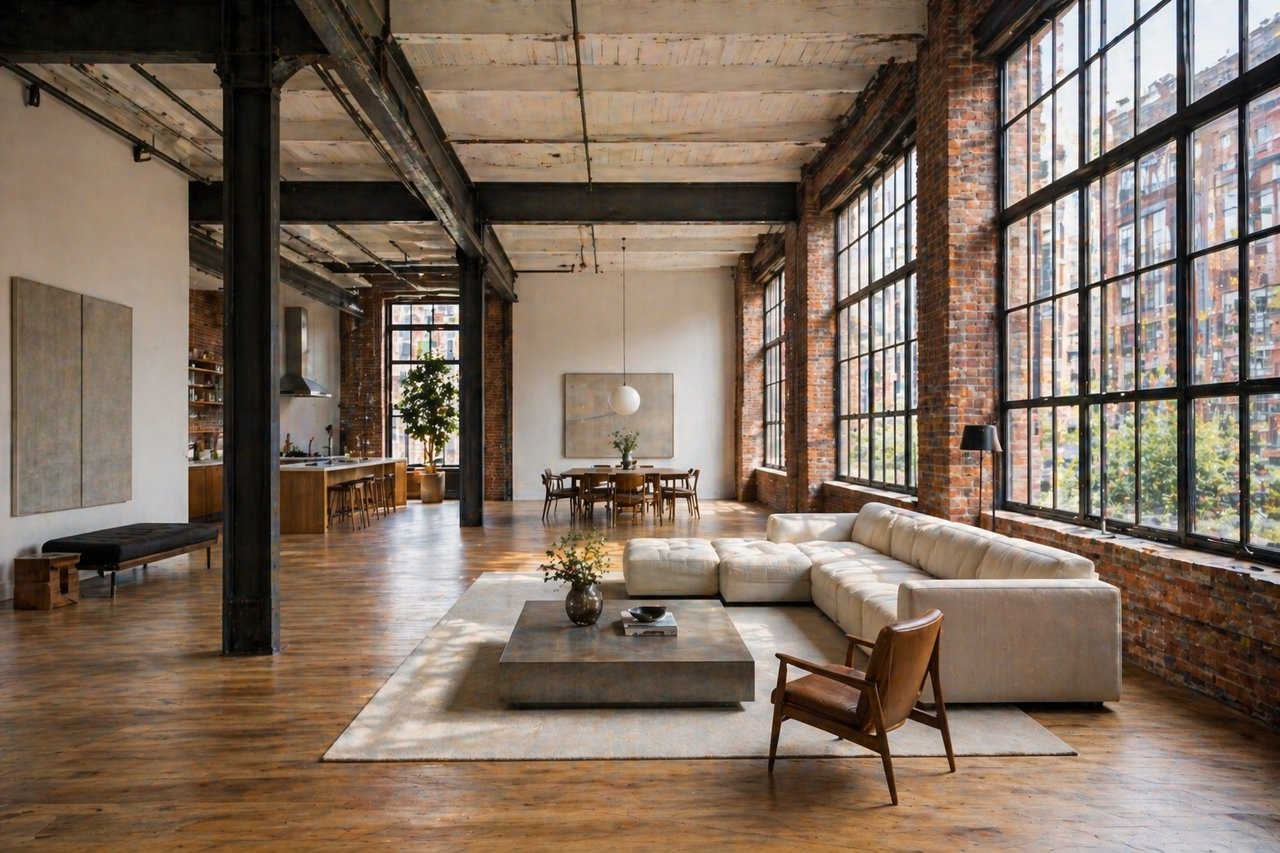
THE RETURN OF LOFT AESTHETIC IN 2026
WHY LOFT LIVING IS RESURGING IN MANHATTAN
In 2026, the loft aesthetic has re-emerged as one of the most sought-after design movements in Manhattan real estate. In neighborhoods such as SoHo, Tribeca, and Chelsea, buyers are increasingly drawn to open layouts, raw materials, and architectural authenticity. What was once a niche preference tied to artist communities has evolved into a defining feature of high-end urban living.
Buyers often ask why loft-style properties are gaining renewed attention. The answer lies in flexibility. Open floor plans, high ceilings, and expansive windows offer adaptability that traditional layouts cannot match. Reviewing listings through Daniel Blatman’s Manhattan property search shows that well-executed lofts consistently attract competitive interest, particularly among design-forward buyers and investors.
SOHO: THE ORIGIN AND CONTINUED AUTHORITY OF LOFT LIVING
SoHo remains the epicenter of authentic loft living. Its cast-iron buildings and historic manufacturing spaces define the original loft model, with full-floor residences, exposed structural elements, and expansive proportions.
A common question is whether authenticity still impacts value. In SoHo, it does. Buyers place a premium on original features such as cast-iron columns, timber beams, and oversized factory windows. Many properties are located within landmark districts regulated by the New York City Landmarks Preservation Commission, ensuring that the architectural integrity of these buildings is preserved. This protection reinforces long-term desirability and market stability.
TRIBECA: SCALE, LUXURY, AND MODERN LOFT INTERPRETATIONS
Tribeca has expanded the definition of loft living by combining industrial architecture with luxury finishes. Many properties offer expansive layouts with high ceilings and open living areas, while incorporating modern kitchens, spa-like bathrooms, and advanced building systems.
Buyers frequently ask whether newer loft-style developments carry the same value as original conversions. The answer depends on execution. While authenticity remains important, well-designed new developments that replicate loft proportions and incorporate contemporary amenities can perform equally well. Development and zoning frameworks can be reviewed through the NYC Department of City Planning, which outlines how these projects evolve within the neighborhood.
CHELSEA: CONTEMPORARY LOFT LIVING AND DESIGN EVOLUTION
Chelsea represents the most flexible interpretation of the loft aesthetic. While fewer original industrial buildings remain, many new developments incorporate loft-inspired elements such as open layouts, floor-to-ceiling windows, and minimalist design.
A frequent question is whether loft-style design in new construction holds the same appeal. For many buyers, it does, particularly when paired with modern infrastructure and amenities. Chelsea’s gallery-driven environment also reinforces the connection between open space and creative living. Current opportunities can be explored through Daniel Blatman’s Chelsea listings, where contemporary loft-style residences continue to attract strong demand.
WHAT BUYERS VALUE IN TODAY’S LOFT PROPERTIES
Today’s loft buyers are highly discerning. They prioritize ceiling height, window scale, and structural authenticity, but also expect modern functionality. Climate control, updated systems, and efficient layouts are essential, even in historic spaces.
A common concern is whether open layouts limit privacy. While lofts are inherently open, thoughtful design solutions such as sliding partitions, custom millwork, and flexible room divisions allow for both openness and separation. The ability to adapt space is one of the key reasons lofts remain attractive.
LONG-TERM VALUE AND MARKET OUTLOOK
The resurgence of loft living reflects broader shifts in how buyers use and experience space. Flexibility, natural light, and architectural character have become central to value in Manhattan’s evolving market. Loft properties, particularly those with authentic features and strong locations, continue to demonstrate resilience and pricing power.
Investors often ask whether this trend is sustainable. Market patterns suggest that it is, driven by limited supply and consistent demand from design-conscious buyers. Through Daniel Blatman’s NYC real estate expertise, clients can identify loft properties that balance authenticity, functionality, and long-term investment potential.
In SoHo, Tribeca, and Chelsea, the return of the loft aesthetic is not a temporary shift. It is a reflection of enduring preferences for space, light, and design integrity that continue to shape Manhattan real estate in 2026.