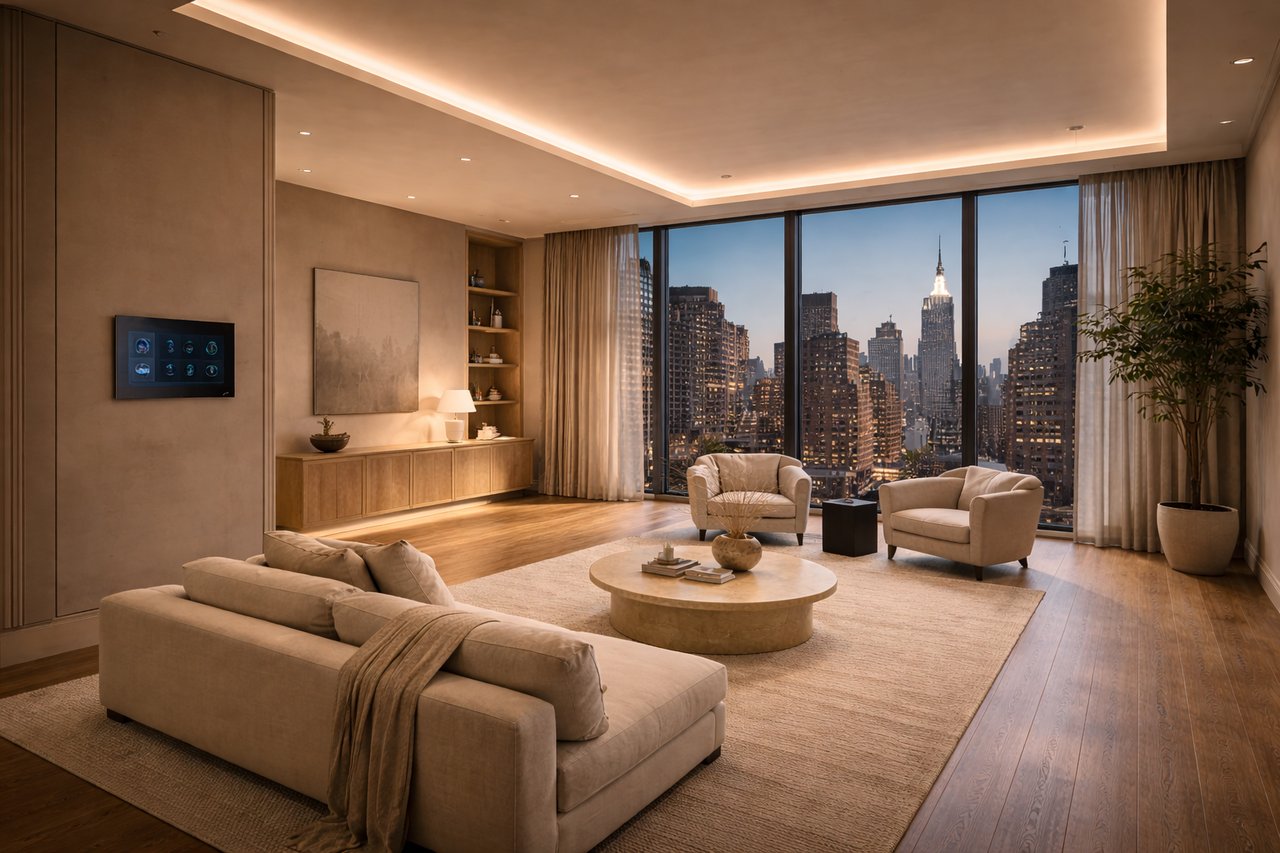
THE RISE OF SMART HOMES IN LUXURY MANHATTAN BUILDINGS
HOW TECHNOLOGY IS REDEFINING LUXURY LIVING
Luxury in Manhattan has evolved beyond finishes and square footage. In neighborhoods such as Hudson Yards, Midtown West, and Tribeca, smart home technology has become a defining feature of new development and high-end renovation. Integrated systems now control lighting, climate, security, and entertainment, allowing residents to manage their homes with precision and ease.
Buyers often ask whether smart features meaningfully impact value or if they are simply lifestyle enhancements. In today’s market, they are both. Properties equipped with seamless, well-designed automation systems attract tech-savvy buyers and tend to differentiate themselves in competitive inventory. Current offerings on Daniel Blatman’s Manhattan property search show that technology integration is increasingly expected rather than optional in luxury segments.
HUDSON YARDS: PURPOSE-BUILT FOR SMART LIVING
Hudson Yards represents the most comprehensive expression of smart living in Manhattan. As a master-planned development, many buildings were designed from the ground up with integrated technology infrastructure. Residents benefit from centralized systems that manage everything from climate control to building-wide services.
A common question is whether these systems extend beyond individual units. In Hudson Yards, they often do. Building-wide applications allow residents to book amenities, coordinate deliveries, and communicate with staff digitally. Infrastructure and development standards can be explored through the NYC Department of City Planning, which highlights how large-scale projects incorporate advanced systems. For buyers seeking a fully integrated environment, Hudson Yards sets a new benchmark.
MIDTOWN WEST: HIGH-RISE INNOVATION AND CONNECTIVITY
Midtown West has emerged as a hub for luxury high-rise developments that prioritize connectivity and convenience. Smart apartments in this area often feature app-controlled systems, voice integration, and automated shading that responds to sunlight and time of day.
Relocating professionals frequently ask whether these technologies are reliable and easy to maintain. In well-executed buildings, the answer is yes. Developers are increasingly partnering with established technology providers to ensure long-term functionality and user-friendly interfaces. Proximity to major transit corridors, supported by infrastructure from the Metropolitan Transportation Authority, further enhances the appeal of these tech-forward residences.
TRIBECA: DISCREET TECHNOLOGY IN DESIGN-DRIVEN HOMES
In Tribeca, smart home technology is often integrated more subtly. Rather than emphasizing visible systems, properties in this neighborhood focus on embedding technology within a design-driven environment. Automated lighting, climate control, and security systems are present but unobtrusive, aligning with the neighborhood’s preference for understated luxury.
Buyers often ask whether adding smart technology to a loft conversion increases value. When executed thoughtfully, it does. Retrofitting historic spaces with modern systems requires careful planning and compliance with building regulations, which can be reviewed through the New York City Department of Buildings. For investors, this combination of character and innovation can create a highly desirable product.
WHICH SMART FEATURES MATTER MOST TO BUYERS
Not all smart home features carry equal weight. Buyers tend to prioritize systems that enhance daily living without adding complexity. Climate control, lighting automation, integrated security, and high-speed connectivity consistently rank as the most valuable. Features such as voice control and remote access further enhance convenience, particularly for those who travel frequently.
A frequent question is whether highly customized systems limit resale appeal. Overly complex or proprietary setups can create challenges, but standardized, intuitive systems tend to support value. The key is integration that feels seamless rather than intrusive.
LONG-TERM VALUE AND THE FUTURE OF SMART LUXURY
Smart home technology is no longer a niche feature in Manhattan’s luxury market. It is an evolving standard that continues to shape buyer expectations. As buildings incorporate more advanced systems, properties that lack these features may face increased competition.
For investors, the question is whether this trend will sustain long-term value. Current market behavior suggests that it will, particularly in newer developments where infrastructure supports ongoing upgrades. Through Daniel Blatman’s NYC real estate expertise, buyers and investors can identify properties where technology, design, and location align to create lasting value.
In Hudson Yards, Midtown West, and Tribeca, the rise of smart homes reflects a broader shift in how luxury is defined. Efficiency, control, and seamless integration are no longer optional. They are central to the modern Manhattan living experience.