TRIBECA: THE ULTIMATE BUYER'S PLAYBOOK FOR MANHATTAN'S MOST PRESTIGIOUS DOWNTOWN NEIGHBORHOOD
There is no neighborhood in Manhattan quite like Tribeca. It is simultaneously one of the city's oldest districts and one of its most forward-looking real estate markets, a place where 19th-century warehouse architecture sits alongside some of the most sophisticated residential conversions and new developments in the country. For buyers who understand the market, Tribeca represents a rare convergence of irreplaceable inventory, long-term value retention, and one of the finest living environments New York City has to offer.
This playbook is written for serious buyers. Whether you are entering Tribeca for the first time or returning after years of watching the market from the sidelines, the fundamentals here reward preparation and penalize hesitation. Daniel Blatman at Compass has worked with buyers and sellers across Tribeca's most consequential transactions, and what follows reflects the real intelligence this market demands.
UNDERSTANDING TRIBECA: GEOGRAPHY, HISTORY, AND WHY IT COMMANDS A PREMIUM
Tribeca, short for Triangle Below Canal, is bounded by Canal Street to the north, Chambers Street to the south, Broadway to the east, and the Hudson River to the west. It sits at the southwestern edge of Manhattan's street grid, where the ordered blocks of lower Manhattan give way to wider, quieter streets, loading dock alleyways repurposed as private drives, and a sense of horizontal scale unusual for New York City.
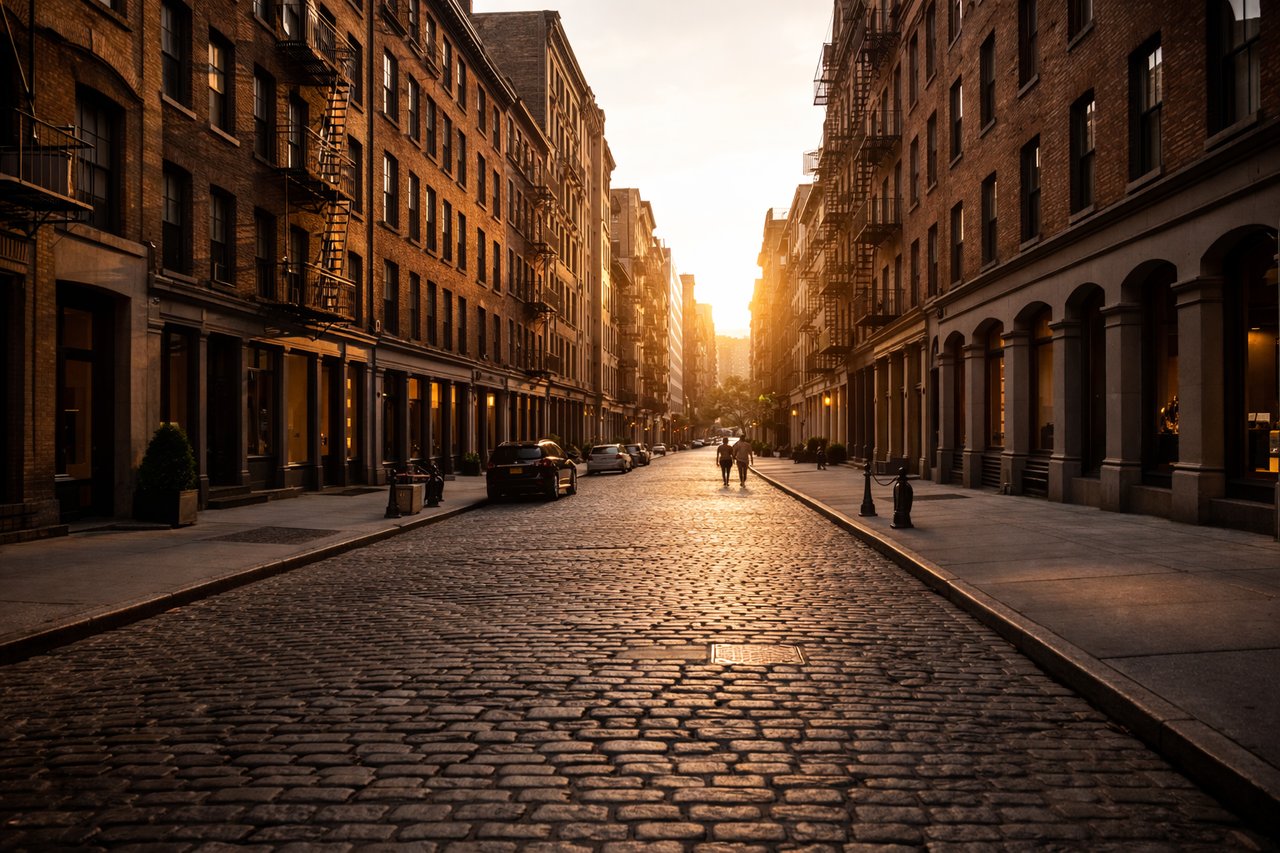
The neighborhood's architectural character is defined by its industrial past. The buildings that now house some of Manhattan's most expensive residences were originally constructed as dry goods warehouses and commercial lofts in the 1800s, serving the city's thriving textile and manufacturing economy. When that economy shifted and the buildings emptied, artists moved in, much as they did in SoHo, establishing the residential culture that eventually attracted the broader market. Many of these structures are now protected under the New York City Landmarks Preservation Commission, which governs exterior modifications and maintains the district's architectural integrity.
The result is a housing stock that cannot be rebuilt, replicated, or meaningfully expanded. New development fills in the gaps, but the neighborhood's essential character is set in cast iron, brick, and timber. That supply constraint is the first and most important driver of Tribeca's long-term value.
THE TRIBECA REAL ESTATE MARKET: WHAT BUYERS ARE ACTUALLY COMPETING FOR
Tribeca consistently ranks among the highest-priced residential neighborhoods in New York City and, by extension, the country. Median transaction prices have held in the range of several million dollars for over a decade, and the upper end of the market, full-floor lofts, penthouse residences, and trophy conversions in landmark buildings, regularly transact well above ten million dollars.
Inventory is the defining constraint. Tribeca has a relatively small permanent residential population for a neighborhood of its stature, which means that when well-positioned units come to market, competition is real and immediate. Days on market for correctly priced units in desirable buildings are short. Overpriced listings sit, but buyers who wait for price corrections in this neighborhood frequently find themselves watching the market cycle rather than participating in it.
The pricing spectrum is wide. Entry-level one-bedrooms in older co-op conversions can begin below two million dollars. More typical Tribeca purchases, two- and three-bedroom loft units with genuine pre-war details, high ceilings, and strong natural light, trade between three million and nine million dollars. Exceptional units and new development penthouses occupy a category of their own.
Buyers frequently ask whether Tribeca is still a good investment given where prices have already gone. The honest answer is that this neighborhood has demonstrated a consistent ability to hold and grow value through multiple market cycles, and the combination of supply constraints, neighborhood quality, and buyer profile makes a structural decline in pricing unlikely. Understanding how to position your offer within the current market is a more productive question than whether to buy at all.
CO-OPS, CONDOS, AND NEW DEVELOPMENT: NAVIGATING TRIBECA'S OWNERSHIP STRUCTURES
Tribeca's housing stock spans three primary ownership categories, each with distinct implications for financing, board approval, resale flexibility, and daily life.
Warehouse conversions structured as co-operatives represent a significant portion of Tribeca's most historically significant buildings. Co-op ownership means purchasing shares in a corporation rather than real property, and it comes with board approval requirements that vary meaningfully by building. Some Tribeca co-ops maintain relatively liberal policies on subletting, pied-à-terre use, and financing, reflecting the neighborhood's historically artist-oriented culture. Others are more restrictive. The New York State Attorney General's office oversees co-op offering plan filings, and a thorough review of the plan, amendments, financials, and board minutes is non-negotiable due diligence.
Condominiums offer real property ownership, greater flexibility on use, and simpler financing structures. Condo inventory in Tribeca carries a consistent premium over comparable co-op units, reflecting the demand for flexibility among the buyer pool, which includes a significant proportion of international purchasers, investors, and buyers seeking primary residences without board interference. When condo units come to market in well-regarded Tribeca buildings, they move.
New development in Tribeca occupies its own category. Several significant residential projects have delivered or are under development in the neighborhood, offering modern mechanical systems, amenity packages, and sponsor-preferred closings within the Tribeca address. New development pricing reflects a premium for these features, and buyers should evaluate the trade-off between contemporary infrastructure and the architectural authenticity of a conversion building carefully. Navigating that trade-off with an advisor who knows both markets produces meaningfully better outcomes than relying on listing materials alone.
FINANCING A TRIBECA PURCHASE: WHAT THIS MARKET REQUIRES
At Tribeca's price points, financing is both more complex and more consequential than in most markets. Jumbo loan thresholds apply to the vast majority of transactions, and lenders with direct experience in Manhattan co-op and condo financing are essential. The Federal Reserve's consumer mortgage resources provide foundational guidance, but the specific mechanics of co-op share loans, underlying mortgage analysis, and debt-to-income requirements imposed by individual boards require lender relationships built for this market.
All-cash purchases are common in Tribeca, particularly at the upper end of the price spectrum, and cash buyers carry a structural advantage in competitive situations. For financed buyers, a fully underwritten pre-approval rather than a preliminary pre-qualification letter is the minimum standard for credibility in a multiple-offer scenario.
Closing costs in New York City are substantial and must be budgeted carefully before you commit to a purchase price. The NYC Department of Finance administers the Mansion Tax, which applies to all residential transactions at or above one million dollars and scales progressively with purchase price. Mortgage recording taxes, transfer taxes, title insurance, and attorney fees add further to the cost of closing. A thorough closing cost analysis before offer submission is part of responsible buyer preparation.
LIFE IN TRIBECA: SCHOOLS, CONNECTIVITY, AND DAILY ENVIRONMENT
Tribeca's livability is not incidental. It is one of the most deliberately curated residential environments in Manhattan, combining neighborhood scale with proximity to the full breadth of the city.
The neighborhood falls within Community School District 2, home to some of the highest-performing public schools in New York City. Zoned school assignments are address-specific, and the NYC Department of Education's school finder is the authoritative resource for confirming your assignment before closing. Several of Manhattan's most sought-after public and independent schools are within reasonable distance, and the concentration of families with young children in Tribeca has grown substantially over the past two decades.
Transportation connectivity is excellent. The 1, 2, 3, A, C, E, and R subway lines serve the neighborhood, and the proximity to the World Trade Center PATH station extends connectivity to New Jersey directly. The NYC Department of Transportation has invested in protected cycling infrastructure throughout lower Manhattan, making Tribeca one of the more bike-friendly neighborhoods in the city. Hudson River Park, directly to the west, provides waterfront green space, recreational facilities, and a quietude rarely associated with Manhattan living.
The neighborhood's food and cultural environment has matured into something genuinely world-class. The Tribeca Film Festival, the concentration of acclaimed restaurants, and the arts institutions anchored nearby contribute to a cultural identity that attracts a sophisticated, international resident base.
WHAT SEPARATES BUYERS WHO WIN IN TRIBECA FROM THOSE WHO DON'T
The gap between interest and execution in Tribeca is where most buyers lose. The neighborhood does not reward browsing. It rewards readiness. Before you make your first offer, you should have a fully underwritten financing approval, a real estate attorney on standby with the capacity to review and redline a contract within 48 hours, a clear sense of your non-negotiables, and an advisor with genuine knowledge of the specific buildings you are considering.
Understanding the building matters as much as understanding the unit. In a neighborhood built largely on conversions, the financial health of the co-op or condo association, the status of the building's reserve fund, the history of assessments, and the quality of building management are variables that materially affect both your daily experience and your resale value. This is the kind of due diligence that separates a well-structured Tribeca purchase from an expensive mistake.
Tribeca is not a neighborhood where you can afford to learn on the job. The inventory is too limited, the competition too focused, and the stakes too high. Working with Daniel Blatman means entering the market with the preparation, the relationships, and the negotiating discipline this neighborhood demands.