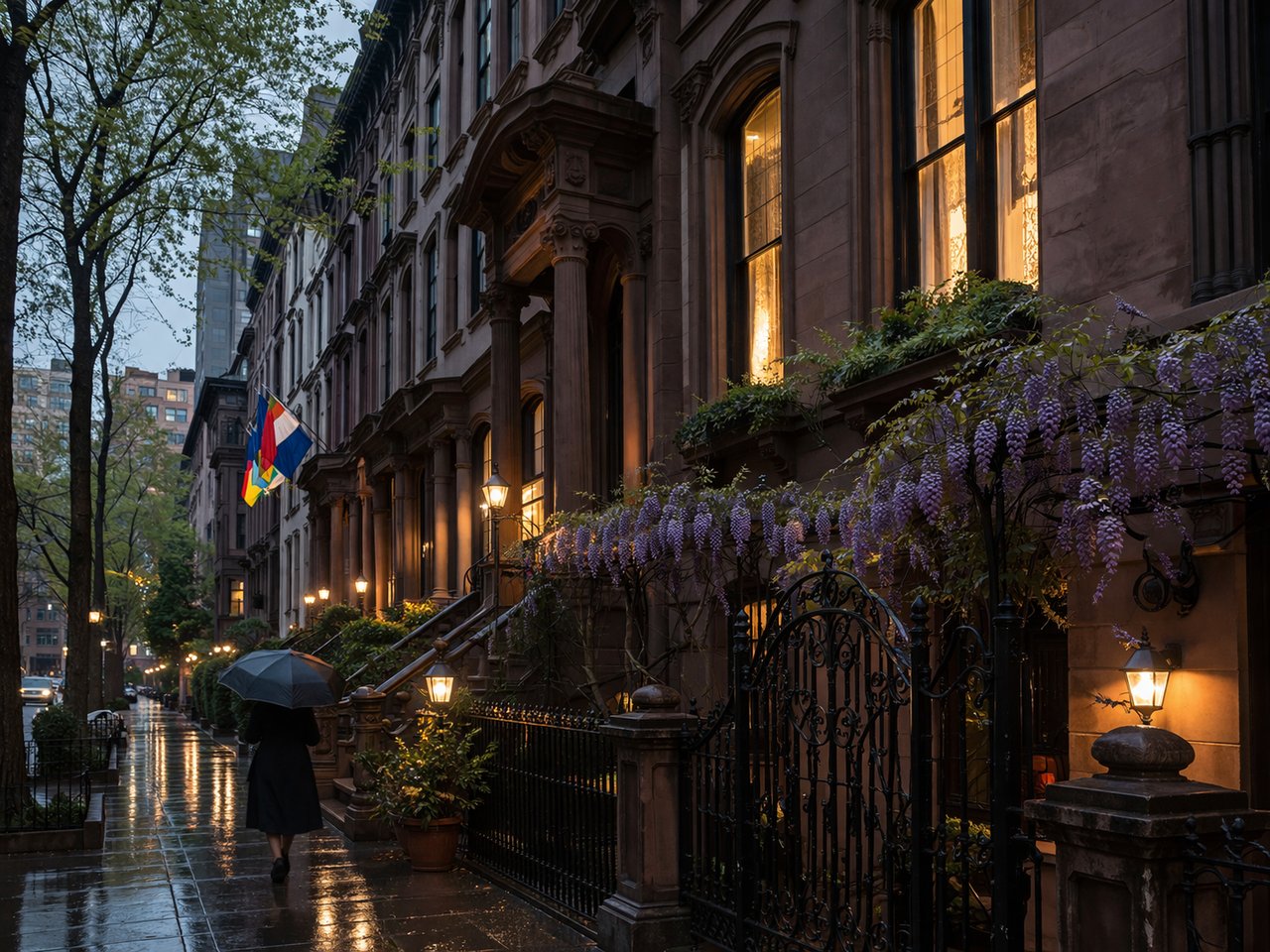
TURTLE BAY: THE DIPLOMATIC BUYER COMMUNITY
Between East 42nd and 53rd Streets, from Lexington Avenue east to the river, Turtle Bay occupies a position in Manhattan that no other residential neighborhood can claim. It is defined not by a park or a cultural institution but by the United Nations — a complex of international governance that anchors the neighborhood's eastern edge and has shaped its buyer community, its building stock, and its residential character for more than seven decades.
For buyers, Turtle Bay's proximity to the UN creates a market dynamic that is genuinely unique. The diplomatic missions, consulates, and international organizations that cluster around First Avenue generate a buyer pool that is global in composition, financially sophisticated, and drawn to a neighborhood that offers something Midtown's commercial corridors cannot: residential calm within walking distance of the world's most prominent diplomatic address.
THE NEIGHBORHOOD: HISTORY AND CHARACTER
Turtle Bay's residential identity predates the United Nations by decades. In 1918, Charlotte Hunnewell Sorchan purchased twenty dilapidated rowhouses on 48th and 49th Streets between Second and Third Avenues, renovated them, created a communal garden from their adjoining rear lots, and sold the restored homes to friends and cultural figures. The resulting enclave — Turtle Bay Gardens — became one of Manhattan's most distinctive residential enclaves, home over the years to E.B. White, Katharine Hepburn, and Stephen Sondheim, among others.
The neighborhood's transformation accelerated after World War II, when the site of decaying slaughterhouses and industrial buildings along First Avenue was cleared for the United Nations Headquarters, completed in 1952. The UN's modernist campus — designed by Wallace K. Harrison — replaced the industrial waterfront with plazas, gardens, and glass towers, and drew diplomatic missions and international residences to the surrounding streets.
Today, Turtle Bay is a neighborhood where restored nineteenth-century brownstones coexist with postwar co-ops, contemporary glass towers, and the flags of dozens of nations. The NYC Landmarks Preservation Commission's designation reports page provides documentation on individually landmarked buildings within and adjacent to the neighborhood, including the Turtle Bay Gardens Historic District listed on the National Register of Historic Places since 1966.
THE DIPLOMATIC BUYER: WHO PURCHASES IN TURTLE BAY
Turtle Bay's buyer pool is unlike any other in Manhattan. The neighborhood attracts three distinct but overlapping segments.
The first is the diplomatic and international community — staff of UN missions, consulates, and international organizations who seek residential proximity to their workplace. These buyers often require condo ownership for its flexibility: no board approval, accommodation of foreign national purchases, and the ability to use LLCs or trusts for ownership structuring. The New York State Attorney General's guidance on co-op and condo purchases provides the regulatory framework governing these transactions.
The second is the Midtown professional — buyers who work in the commercial corridors west of Lexington Avenue and value the short commute, the transit access of Grand Central Terminal (4, 5, 6, 7, and S trains), and the residential quiet that Turtle Bay provides relative to its Midtown surroundings.
The third, and increasingly significant, is the buyer drawn to Turtle Bay's value proposition. On a per-square-foot basis, Turtle Bay pricing runs meaningfully below comparable Midtown East product — a discount that reflects the neighborhood's lower commercial profile rather than any deficiency in building quality or location fundamentals.
Buyers sometimes ask: Does the UN presence affect property values positively or negatively? The answer depends on the metric. The UN generates consistent institutional demand for residential space — a structural floor under pricing that few other neighborhoods enjoy. It also creates periodic inconvenience during General Assembly sessions, when security perimeters expand and traffic patterns shift. For buyers who value the international character and institutional stability the UN provides, these trade-offs are easily absorbed.
THE BUILDING STOCK: WHAT EXISTS
Turtle Bay's residential inventory spans a wider range than most buyers expect.
The historic core — Turtle Bay Gardens and the surrounding brownstone blocks — offers restored nineteenth-century townhouses and low-rise co-ops with the character and proportions of a residential district that predates the high-rise era. These properties are rare, tightly held, and trade infrequently.
The postwar co-op inventory, concentrated along First and Second Avenues and the cross streets in between, provides the bulk of Turtle Bay's residential supply. These buildings offer solid construction, doorman service, and the financial benefits of co-op ownership, including avoidance of the NYC Mortgage Recording Tax.
The contemporary condo inventory has grown significantly in the past two decades. Buildings including 50 United Nations Plaza (designed by Norman Foster), the Sutton (at 959 First Avenue), and newer towers along Second Avenue have introduced high-specification finishes, full amenity packages, and the ownership flexibility that the international buyer pool requires. These buildings trade at $1,400 to $2,200 per square foot depending on floor, views, and vintage.
Transaction history is searchable through the NYC Department of Finance's ACRIS system. Building compliance is verifiable through the NYC Department of Buildings, and housing maintenance records are available through HPD Online.
THE VALUE PROPOSITION
Turtle Bay offers a pricing advantage that informed buyers recognize. A renovated two-bedroom condo with eastern exposure in a modern Turtle Bay building may trade between $1.3 million and $2.2 million — pricing that would be unachievable for comparable product in Sutton Place, the Upper East Side, or the Midtown West towers along Billionaires' Row.
The discount reflects perception, not fundamentals. Turtle Bay lacks the restaurant and retail density of neighborhoods like Gramercy or the West Village, and its commercial blocks along Lexington and Third Avenues serve a weekday office population that thins on evenings and weekends. But the residential blocks east of Second Avenue — the tree-lined streets, the pocket parks, the brownstone rows — offer a quality of daily life that is competitive with any neighborhood on the East Side.
All buyers should confirm whether their building has filed for the Cooperative and Condominium Property Tax Abatement, which reduces annual property taxes by up to 28 percent for eligible primary-residence owners. The NYC Department of Finance's Property Tax Benefits page details all available exemptions and programs.
The buyer's guide at danielblatman.com provides the financial modeling framework for evaluating Turtle Bay purchases against competing East Side neighborhoods.
TRANSIT AND LOCATION
Turtle Bay's transit access is among the strongest in Manhattan. Grand Central Terminal — a five- to ten-minute walk west — provides access to the 4, 5, 6, 7, and S subway lines as well as Metro-North commuter rail. The E and M trains at Lexington Avenue–53rd Street add further connectivity. The M15 bus runs along First and Second Avenues, and the M42 crosstown bus connects the neighborhood to Times Square and the West Side.
For buyers who work in Midtown, the Financial District, or the medical corridor along York Avenue, Turtle Bay delivers a commute measured in minutes. For international buyers who travel frequently, the neighborhood's proximity to both airports — via Grand Central's transit connections — adds practical value.
THE BOTTOM LINE
Turtle Bay is a neighborhood whose identity is shaped by an institution of global significance, whose buyer pool is international in composition, and whose pricing reflects a value opportunity that the rest of Midtown East does not offer. For buyers who value residential calm, diplomatic-community character, transit access, and a per-square-foot advantage over comparable East Side addresses, Turtle Bay delivers a combination that rewards the buyer who takes the time to understand what this neighborhood actually is — rather than what it appears to be from Lexington Avenue.
For Turtle Bay buying strategy, Daniel Blatman provides the neighborhood expertise, building-level intelligence, and negotiation discipline that this market rewards. The neighborhood profiles at danielblatman.com provide current data and strategic context.