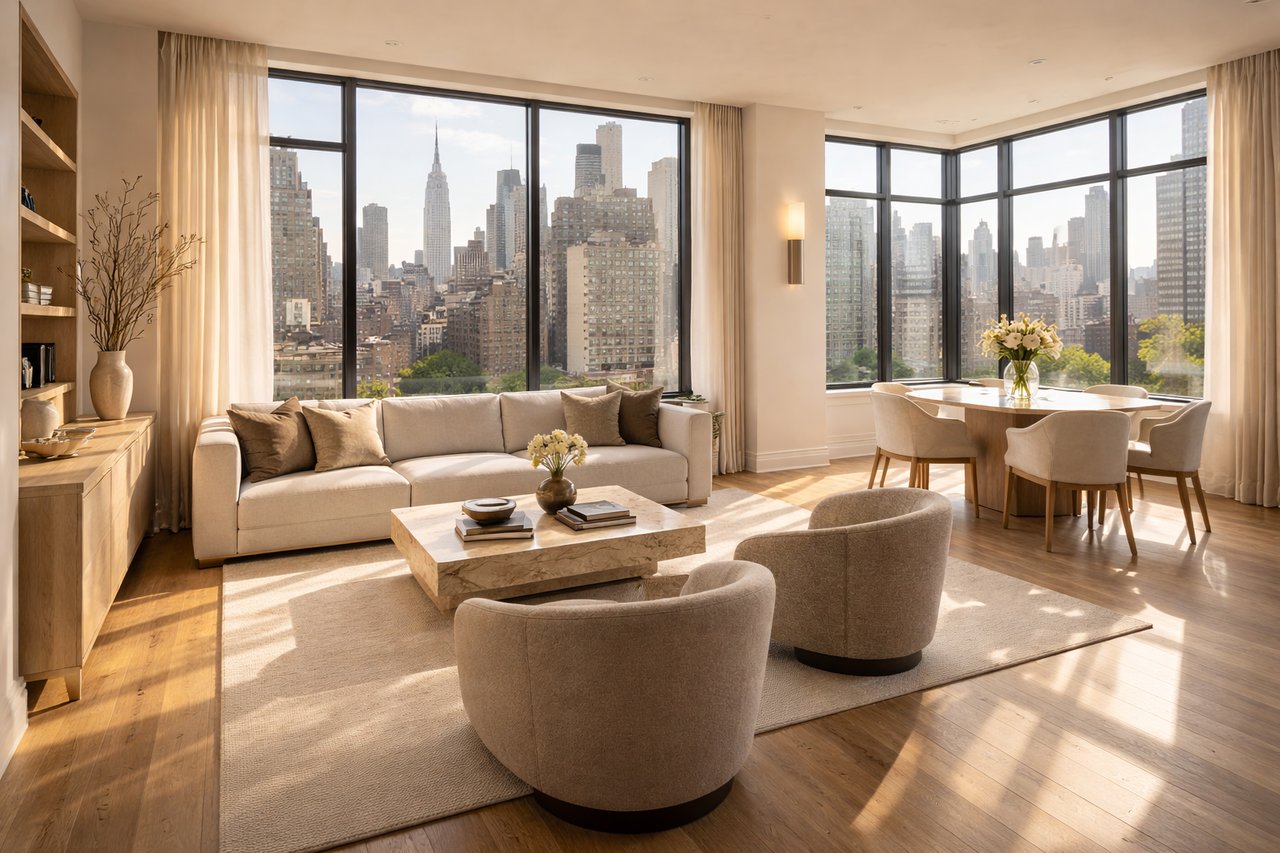
UNDERSTANDING LIGHT, EXPOSURE, AND ORIENTATION IN MANHATTAN REAL ESTATE
WHY LIGHT AND ORIENTATION DIRECTLY IMPACT VALUE
In Manhattan real estate, light is not a secondary feature. It is a primary driver of value, influencing everything from pricing to buyer demand and resale performance. In neighborhoods such as the Upper East Side, Midtown East, and Battery Park City, two otherwise similar apartments can trade at significantly different prices based solely on exposure and orientation.
Buyers frequently ask why natural light carries such weight in New York City. The answer lies in density and vertical living. With surrounding buildings often limiting visibility and sunlight, units with strong exposure feel more expansive, more livable, and ultimately more desirable. Reviewing active listings through Daniel Blatman’s Manhattan property search makes clear that well-lit homes consistently command premium pricing and faster sales.
UNDERSTANDING DIRECTIONAL EXPOSURE IN NYC APARTMENTS
Directional exposure refers to the orientation of a unit in relation to the sun. South-facing apartments are widely considered the most desirable, offering consistent sunlight throughout the day. East-facing units benefit from bright morning light, while west-facing homes capture afternoon and sunset views. North-facing units tend to receive softer, indirect light, which can appeal to buyers seeking consistent illumination without glare.
A common question is whether north-facing units are inherently less valuable. While they often trade at a discount, they can be highly desirable in specific contexts, particularly for art collectors or design-focused buyers who prefer even, shadow-free light. Buyers can reference zoning and building density considerations through the NYC Department of City Planning, which helps explain how surrounding structures may impact long-term light access.
UPPER EAST SIDE: CLASSIC LAYOUTS AND VARIABLE LIGHT
On the Upper East Side, many prewar buildings feature traditional layouts that can create a mix of exposures within a single apartment. Living rooms may face the street with strong southern or eastern light, while bedrooms face interior courtyards with quieter, softer exposure.
Buyers often ask how to evaluate light in older buildings. The key is to assess window size, ceiling height, and distance from neighboring structures. Even a north-facing room can feel bright if ceilings are high and obstructions are minimal. For those comparing options, Daniel Blatman’s Upper East Side listings provide insight into how layout and exposure interact across different property types.
MIDTOWN EAST: DENSITY, VIEWS, AND LIGHT TRADE-OFFS
Midtown East presents a more complex relationship with light due to its concentration of high-rise buildings. Units on higher floors often benefit from unobstructed exposure and sweeping city views, while lower-floor apartments may experience limited direct sunlight.
A frequent concern among buyers is whether views can compensate for reduced light. In many cases, they can. A high-floor apartment with partial exposure but open skyline views may outperform a lower unit with better directional light but limited outlook. Proximity to major commercial corridors also influences building spacing, which can be explored through the New York City Department of Buildings for insights into development patterns and height regulations.
BATTERY PARK CITY: WATERFRONT LIGHT AND OPEN EXPOSURE
Battery Park City offers a distinct advantage when it comes to light and orientation. Its waterfront positioning creates wider sightlines and greater access to natural light, particularly for units facing the Hudson River. South and west exposures in this neighborhood are especially prized, offering both sunlight and unobstructed water views.
Buyers often ask whether waterfront exposure guarantees long-term value. While market conditions always play a role, properties with protected views and strong natural light tend to maintain consistent demand. The neighborhood’s planned layout, overseen in part by the Battery Park City Authority, helps preserve open space and view corridors, reinforcing long-term appeal.
HOW TO EVALUATE LIGHT WHEN BUYING OR INVESTING
Evaluating light requires more than checking compass direction. Buyers should visit properties at different times of day, observe how light moves through the space, and consider seasonal variations. Window placement, floor height, and surrounding buildings all influence the experience of light within a home.
A common question is whether light materially affects resale value. Market data consistently indicates that it does. Well-lit apartments not only attract more interest but also tend to sell faster and closer to asking price. For investors, this translates into stronger liquidity and reduced holding time.
For those navigating the Manhattan market, understanding light, exposure, and orientation is essential to making informed decisions. Through Daniel Blatman’s NYC real estate expertise, buyers and investors can identify properties where these factors align, ensuring both immediate livability and long-term value in some of the city’s most competitive neighborhoods.