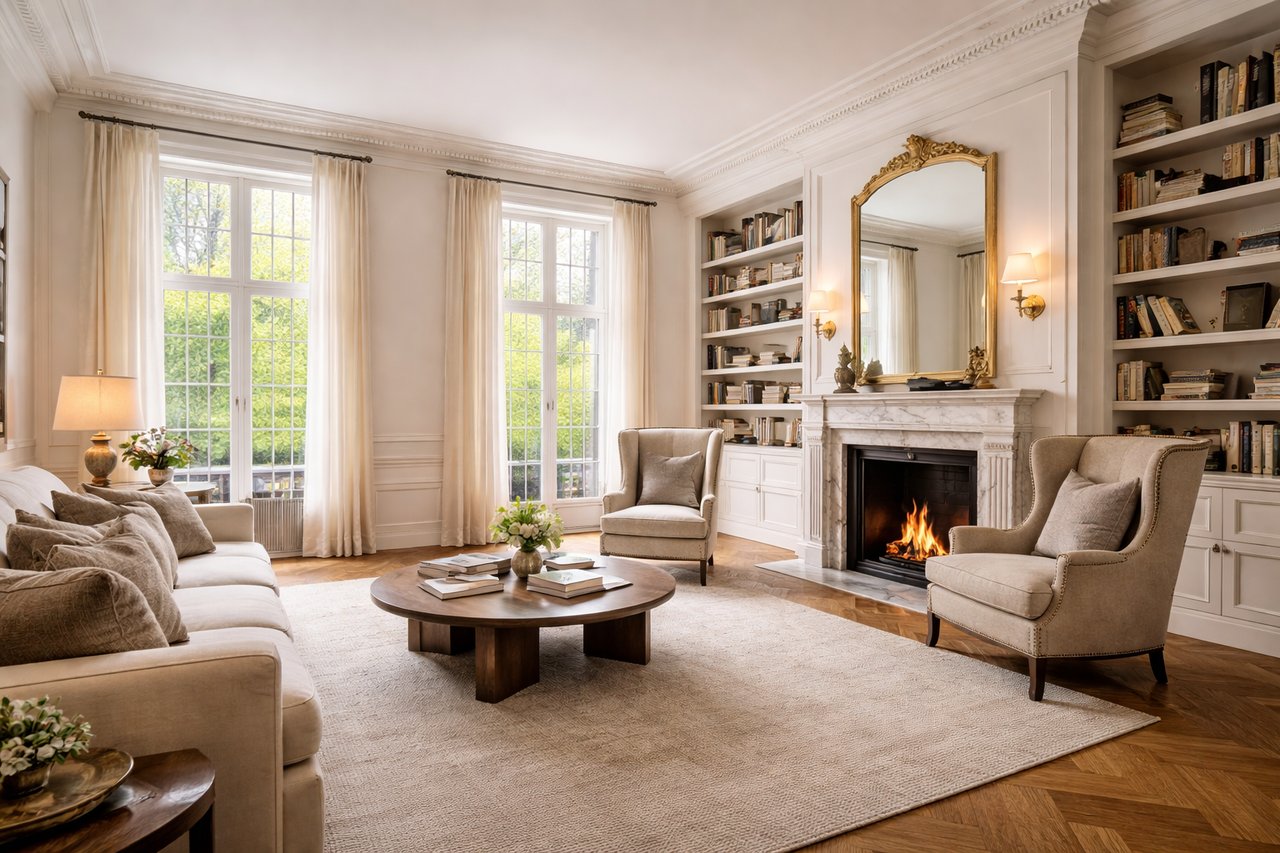
UPPER EAST SIDE: CLASSIC SIX VS. NEW DEVELOPMENT
The Upper East Side offers buyers a choice that crystallizes one of Manhattan's most enduring residential debates: the prewar classic six — a co-op apartment built to proportions and standards that have not been replicated since — or a new-development condominium designed with the technology, amenities, and ownership flexibility that contemporary buyers increasingly demand. Both product types are found in extraordinary concentrations within the same neighborhood, sometimes on the same block. Yet they deliver fundamentally different ownership experiences, financial profiles, and long-term value trajectories.
This guide examines both paths with the specificity that a serious Upper East Side purchase requires.
THE CLASSIC SIX: WHAT YOU ARE ACTUALLY BUYING
The term "classic six" refers to a specific apartment configuration that became standard in Upper East Side prewar construction: a living room, a dining room, a kitchen, two bedrooms, and a maid's room, typically arranged around a central foyer with a separate service entrance. These apartments were built primarily between the 1910s and 1940s in buildings designed by architects who understood that residential space should be generous, well-proportioned, and designed for formal living.
The physical characteristics are distinctive and, critically, unreproducible. Ceiling heights of 9 to 10 feet are standard. Rooms are proportioned for furniture and gathering, not merely occupancy. Solid plaster walls, hardwood floors, windowed kitchens, deep closets, and architectural detailing — crown moldings, wainscoting, herringbone parquet — define the vocabulary of these apartments in ways that post-war and contemporary construction simply do not attempt.
Much of the Upper East Side's prewar stock sits within the Upper East Side Historic District, designated by the NYC Landmarks Preservation Commission in 1981 and expanded in 2010. This designation preserves the architectural character that makes the neighborhood distinctive and ensures that the streetscape will not be compromised by incompatible development.
Buyers frequently ask: Is a classic six large enough for a family? In most cases, yes — and more comfortably than the square footage suggests. The room proportions, separated kitchen, and distinct service areas provide functional separation that open-plan condos of comparable square footage often cannot match. The maid's room functions as a home office, nursery, or guest room depending on the household's needs.
THE CO-OP FRAMEWORK
Classic sixes on the Upper East Side are almost universally co-ops. This means board approval is required for purchase, minimum down payments typically range from 25 to 50 percent, and subletting is restricted or prohibited depending on the building. The New York State Attorney General's guidance on co-op and condo purchases outlines the disclosure requirements and legal framework that govern these transactions.
The financial trade-off is meaningful. Co-op buyers avoid the NYC Mortgage Recording Tax — a saving of 1.8 to 1.925 percent of the loan amount — and typically pay lower monthly carrying costs than condo owners. The trade-off is reduced liquidity: co-op shares are harder to finance, slower to sell, and subject to board discretion that condos do not impose.
Buyers should confirm whether the building has filed for the Cooperative and Condominium Property Tax Abatement, which can reduce annual property taxes by up to 28 percent for eligible primary-residence owners.
NEW DEVELOPMENT: WHAT THE CONTEMPORARY MARKET OFFERS
The Upper East Side's new-development condo inventory has expanded significantly over the past decade, with ground-up projects along Second and Third Avenues and conversion projects throughout the neighborhood. These buildings deliver the amenity infrastructure that prewar co-ops were never designed to accommodate: attended lobbies with concierge service, fitness centers with dedicated studios, residents' lounges, children's playrooms, cold storage, bike rooms, and private parking.
The physical product is engineered for contemporary life. Floor-to-ceiling windows with high-performance glass, central HVAC, in-unit washer/dryers, smart home systems, and chef-grade kitchen specifications are standard. Ceiling heights range from 9 to 10.5 feet — generous, though typically lower than the best prewar stock.
Condo ownership eliminates the board approval process, permits subletting without restriction, accommodates corporate and trust ownership structures, and provides fee-simple title. For buyers who need flexibility — international purchasers, investors, pied-à-terre users, or those who may relocate — these structural advantages can outweigh the premium pricing.
COMPARING THE FINANCIALS
The financial comparison between a classic six-co-op and a new-development condo requires modeling the total cost of ownership, not just the the purchase price.
A classic six-co-op on a prime Upper East Side block may trade between $2 million and $4 million,, depending on condition, floor, and exposure. A comparable new-development condo — similar bedroom count, less square footage in many cases — may trade between $3.5 million and $7 million or more. The gap reflects the structural advantages of condo ownership, the modern amenity package, and the premium the market assigns to new construction.
Monthly carrying costs diverge as well. Co-op maintenance — which includes property taxes — may run $3,000 to $5,000 per month for a classic six. Condo common charges, which exclude property taxes billed separately, may run $2,500 to $4,500, with property taxes adding $2,000 to $4,000 more. The all-in monthly cost for a condo is frequently 30 to 50 percent higher than for a comparable co-op.
Transaction history for individual properties is searchable through the NYC Department of Finance's ACRIS system. An agent who models these comparisons, building by building, provides the financial clarity this decision demands. The buyer's guide at danielblatman.com is structured around precisely this kind of analysis.
RENOVATION: WHERE THE CLASSIC SIX HAS THE EDGE
For buyers willing to invest in renovation, the classic six offers a canvas that new development cannot match. The solid construction, generous room dimensions, and high ceilings of prewar buildings accommodate transformative renovations — gut kitchen and bathroom reconfigurations, opening walls between rooms, and restoring original architectural details — that can produce a finished product that combines prewar character with modern performance.
New-development condos, by contrast, are delivered finished. While customization is possible, particularly in sponsor units during the pre-construction phase, the scope for transformative renovation is inherently limited by the building's structural system and the developer's design framework.
Buyers considering renovation should factor LPC permit requirements for any exterior work in landmarked buildings, as well as the co-op board's approval process for interior renovations, which varies by building.
THE BOTTOM LINE
The Upper East Side does not ask buyers to choose between quality and convenience. It asks them to decide which form of quality they value most — the irreplaceable proportions and architectural character of a prewar classic six, or the engineered performance and modern amenity infrastructure of a new-development condo. Both are available at the highest level in this neighborhood. The right choice depends on how you live, how long you plan to own, and whether the financial structure of a co-op or condo better serves your priorities.
For buyers navigating this decision, Daniel Blatman provides the building-level intelligence, financial modeling, and negotiation expertise that Upper East Side purchases demand.