Upper West Side vs. Harlem: Which Fits Your Buyer Profile?
Quick take: Should you buy on the Upper West Side or in Harlem? The Upper West Side suits buyers who want established, family-oriented living between two parks with prewar prestige and top cultural institutions, while Harlem suits buyers who want more space and value for the money, rich cultural character, and a booming, historic neighborhood on the rise. They sit next to each other in Upper Manhattan but differ sharply on price and pace, so the choice comes down to whether you are paying for establishment or buying into momentum.
Where Are the Upper West Side and Harlem?
They are Upper Manhattan neighbors divided roughly at 110th Street. The Upper West Side runs from around 59th Street up to 110th, bounded by Central Park on the east and Riverside Park on the Hudson, an established residential district known for prewar apartment houses and cultural anchors like Lincoln Center and the American Museum of Natural History. Harlem sits above it, stretching from 110th Street up to about 155th, from Fifth Avenue to the Hudson, a historically significant neighborhood of brownstones and prewar buildings that is the birthplace of the Harlem Renaissance. Morningside Heights and Columbia sit between them, giving the border area a distinctly academic character.
What Kind of Buildings Does Each Have?
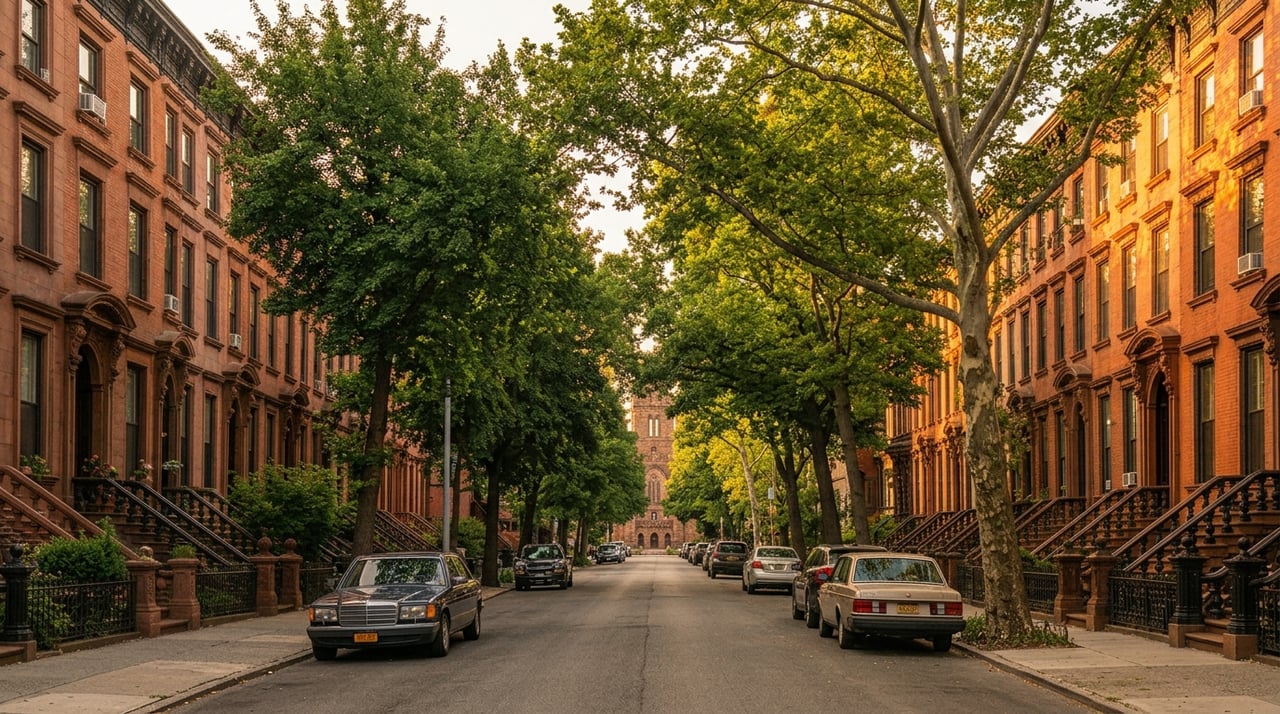
Upper West Side real estate is dominated by prewar co-ops and grand apartment houses, alongside a supply of condos, which means buyers frequently encounter co-op board approval and the financial scrutiny that comes with it. Harlem real estate is anchored by its landmarked brownstones, including celebrated blocks like Striver's Row and the Mount Morris Park Historic District, plus prewar apartment buildings and a wave of newer condo development. In practice, Harlem offers more opportunity to own a townhouse or a newer condo per dollar, while the Upper West Side skews toward established co-op living at a higher price point.
Which Is More Affordable, the Upper West Side or Harlem?
Harlem, clearly, and that is a large part of its appeal. As a rule, a buyer's budget stretches further in Harlem, whether toward a brownstone, a larger apartment, or newer construction, than it does on the Upper West Side, where proximity to the parks and cultural core commands an established premium. Harlem has also seen a booming, increasingly competitive market as more buyers discover that value, so the gap has been narrowing even as it remains meaningful. The Upper West Side, by contrast, offers the stability and liquidity of a long-established prime neighborhood, which some buyers value enough to pay for.
Who Should Buy on the Upper West Side vs Harlem?
Fit comes down to how you want to live. The Upper West Side rewards buyers who value established residential calm, top schools, and immediate access to Central Park, Riverside Park, and cultural institutions, which is why it appeals strongly to families and buyers seeking permanence. Harlem rewards buyers who value cultural richness, architectural character, community, and getting more home for their budget, which draws first-time buyers, brownstone seekers, and those who want to be part of a neighborhood with momentum. A rough test: if you want a settled prime neighborhood and will pay for it, the Upper West Side fits; if you want space, character, and value on an upward trajectory, Harlem does.
How Does Each Affect Closing and Carrying Costs?
Neighborhood choice quietly shapes your costs. On the Upper West Side, higher prices mean more purchases cross the mansion-tax threshold at one million dollars and up, which the New York State Department of Taxation and Finance explains for transfer-related taxes, and the prevalence of co-ops means board financing caps and post-closing liquidity requirements often shape what you can buy. In Harlem, more attainable price points and a larger share of condos and townhouses can mean a more flexible path, though a townhouse purchase brings its own due diligence around condition, permits, and the certificate of occupancy. Weigh these alongside the asking price when comparing the two.
How Do You Choose Between Them?
Lead with your profile, then test it against real inventory. Rank what matters most, whether that is price, space, schools, character, or long-term stability, and let that ordering point you toward one neighborhood. Our Upper West Side neighborhood guide is a useful place to study that area's building stock and pace before you tour, and it helps frame what Harlem offers by contrast just to the north. When you are ready to compare options, browsing active and coming-soon listings across both will show you how your budget behaves in each, and our guidance for Manhattan buyers covers how to translate a profile into a focused search.
Common Missteps
Watch for choosing a neighborhood on reputation rather than on how you actually live, comparing asking prices without accounting for the different closing and carrying costs each area carries, and assuming Harlem is uniformly cheaper or the Upper West Side uniformly better, since specific blocks, buildings, and apartments vary widely in both. Each is easy to avoid by leading with your own priorities and confirming the numbers with your agent and attorney.
There is no better neighborhood here, only the one that fits your budget, your priorities, and your stage of life. If you are weighing the two, see how we approach buying a condo in Manhattan, follow Manhattan real estate market trends to understand where each area sits today, and learn more about Daniel Blatman's NYC real estate expertise and how it helps buyers match a neighborhood to their profile.