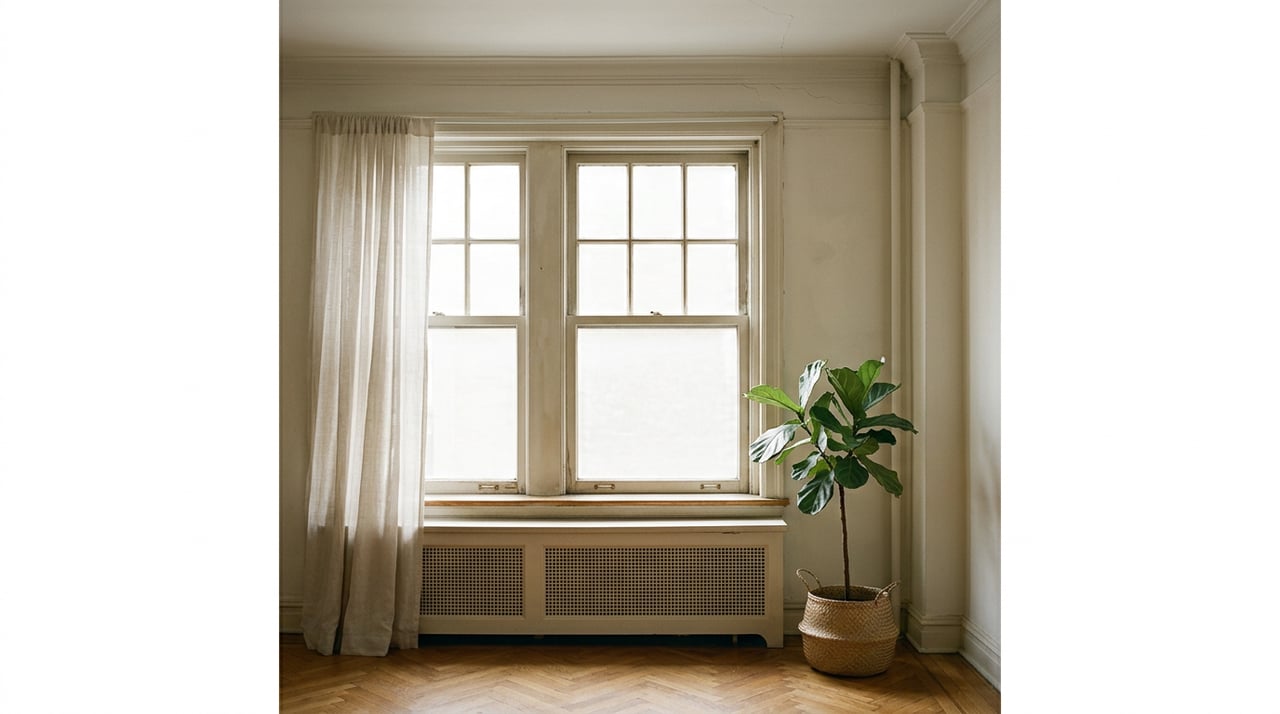
Why does a classic seven on West End Avenue sell for less than a nearly identical layout two blocks east on Central Park West, when both buildings went up in the same decade, sometimes designed by the same architect? Buyers touring the Upper West Side hit this question fast, usually right after their agent points out that the West End Avenue apartment has the same high ceilings, the same separate service entrance, the same prewar bones. The instinct is to assume something is wrong with the building. Nothing is. The discount is real, and it has nothing to do with construction quality.
As of Q2 2026, the median sale price across the Upper West Side sat around $1.5 million, up roughly 10.7 percent year over year. That headline number is useful for orientation and almost useless for decision-making, because it blends a handful of very different products into one figure. A family buyer comparing West End Avenue to Central Park West needs to know what's actually driving the gap between them, and what's quietly distorting each corridor's own number from the inside.
What the Discount Is Actually Pricing In
Central Park West earned its premium the way most Manhattan corridors do: by facing the park. The stretch from Columbus Circle to 110th Street carries the city's most recognizable prewar skyline, built by the same handful of firms working the same design language. Emery Roth gave the corridor its twin towers at the San Remo and the Eldorado. Irwin Chanin did the Majestic and the Century. Henry Hardenbergh's Dakota, from 1884, anchors the southern end, and Robert A.M. Stern's 15 Central Park West, completed in 2008, is the newest significant entry, and one of the only condos on a corridor still dominated by cooperatives. The whole stretch between 61st and 97th Streets has been a designated historic district since 1982, which locks the skyline in place as much as any market force does.
West End Avenue, one long block west, was built by many of the same names. Candela, Roth, and Schwartz and Gross all have lines on the avenue, and the result is a corridor of family-sized classic sixes, sevens, and full-floor apartments with the same high ceilings and prewar detail buyers pay for on Central Park West. The Apthorp, at 79th Street, is one of the most architecturally significant apartment complexes in the city, full stop, not just on its own block. The corridor runs from 59th Street north to Straus Park at 107th, threading past the West End Collegiate Church and School at 77th Street, and it stays almost entirely residential the whole way, with none of the retail or nightlife that fills Broadway or Columbus two blocks east.
The apartments are comparable. The frontage is not. That's the entire mechanism. A Central Park West buyer is paying for a direct sightline over the park itself, the specific light that falls across Sheep Meadow in the morning, a view that can't be replicated from any other address. A West End Avenue buyer gets the same architectural pedigree and a one to two block walk to Riverside Park's promenades and dog runs, without paying the frontage premium that Riverside Drive itself commands for sitting directly on the park. It's proximity without the toll, and for a lot of family buyers, that trade is the whole point of choosing the avenue.
Same Architects, Different Frontage
| Central Park West | West End Avenue | |
|---|---|---|
| Signature buildings | Dakota, San Remo, Eldorado, Majestic, Century, 15 CPW | Apthorp, prewar Candela and Roth lines |
| Architectural register | Beaux-Arts and Art Deco towers, landmarked 1982 | Prewar cooperative, same-era detail, no landmark towers |
| What sets the price | Direct park frontage, unobstructed sightlines | One to two block proximity to Riverside Park, no direct frontage |
| Building stock | Overwhelmingly co-op, fewer than ten condos on the whole corridor | Overwhelmingly prewar co-op |
| Street character | Two-way traffic, becomes Eighth Avenue south of 59th | No retail spine, no subway on the avenue itself, quieter than Broadway |
The Median That's Lying to You
The Upper West Side has a second distortion sitting underneath the first one, and it matters just as much if you're comparing corridors on price alone. The neighborhood's co-op median and its condo median sit far apart, largely because a handful of new-development towers, 15 Central Park West and 200 Amsterdam among them, pull the condo figure up on their own. A buyer shopping the classic prewar co-op stock that makes up most of both West End Avenue and Central Park West is looking at a very different number than the blended headline suggests, because that headline is doing double duty for two different products.
West End Avenue has its own version of this problem, and it's specific enough that it's worth naming directly: Lincoln Towers. The complex at the avenue's southern end started life under a master plan drafted by I.M. Pei for the developer Webb and Knapp, though Pei's design was ultimately value-engineered out on cost grounds and the executed buildings came from S.J. Kessler and Sons instead. All eight buildings converted from rental to cooperative on the same day, May 1, 1987, under a condop structure where each building is technically an independent condominium whose residential portion is owned by a co-op corporation, so shares still trade with full board approval. The complex sits on roughly 20 acres of private, landscaped campus, many of its maintenance lines include utilities, and its unit counts run far larger than anything in the avenue's prewar buildings to the north.
That's not a knock on Lincoln Towers. It's a different asset class, built for a different reason, priced on its own terms. But if you're averaging "West End Avenue" prices across a data set that includes both a Kessler-built 1960s condop campus and a Candela prewar classic seven, you're averaging two products that don't share a buyer profile, a maintenance structure, or a board process. The discount you're seeing against Central Park West might be real. It might also just be Lincoln Towers pulling the number down.
What $2 to $3 Million Actually Buys
For a family buyer working a $2 to $3 million budget, the practical version of all this is simple. On Central Park West, that range gets you into the co-op stock below the handful of trophy units, likely without direct park frontage on your specific line, but with the address and the architecture. On West End Avenue, north of 72nd Street, the same budget reaches further into full classic sevens with separate staff quarters and high ceilings, because you're not paying the park-view tax. If Lincoln Towers is in the mix, the calculation changes again: you're weighing a larger unit and utilities-inclusive maintenance against a building style and board culture that has almost nothing in common with the prewar corporations to the north.
Board timelines are the other piece that doesn't show up in any listing price. Once an offer is accepted, co-op board packages typically add another one to four months before closing, an industry-wide pattern on both corridors rather than something specific to either one. If you're weighing a pied-a-terre purchase, that timeline matters even more, because many Upper West Side co-ops restrict pied-a-terre use, entity ownership, and non-resident buyers outright. The corridor's newer condominiums and its more flexible cooperatives tend to be the more workable path for that kind of purchase, and it's worth confirming a building's policy before you fall for a specific line.
Two Questions Worth Asking Before You Widen the Search
Does the West End Avenue discount mean the buildings are lower quality than Central Park West? No. The architectural pedigree runs through both corridors, often from the same firms. The price gap tracks park frontage and view exposure, not construction or design.
Is Lincoln Towers a bargain compared to the rest of West End Avenue? It's a different product, not a discount on the same one. The condop structure, the utilities-inclusive maintenance, and the scale of the campus put it in its own category, and comparing its price per square foot directly to a Candela prewar co-op will give you a misleading number in either direction.
If you're comparing these two corridors with a specific budget and a specific list of must-haves, the fastest way to get past the headline numbers is a conversation about the actual buildings on your list. The Blatman Team can walk through which lines on West End Avenue and Central Park West fit what you're trying to buy, and what each board's approval process looks like before you write an offer. Schedule a personalized consultation to start that conversation.