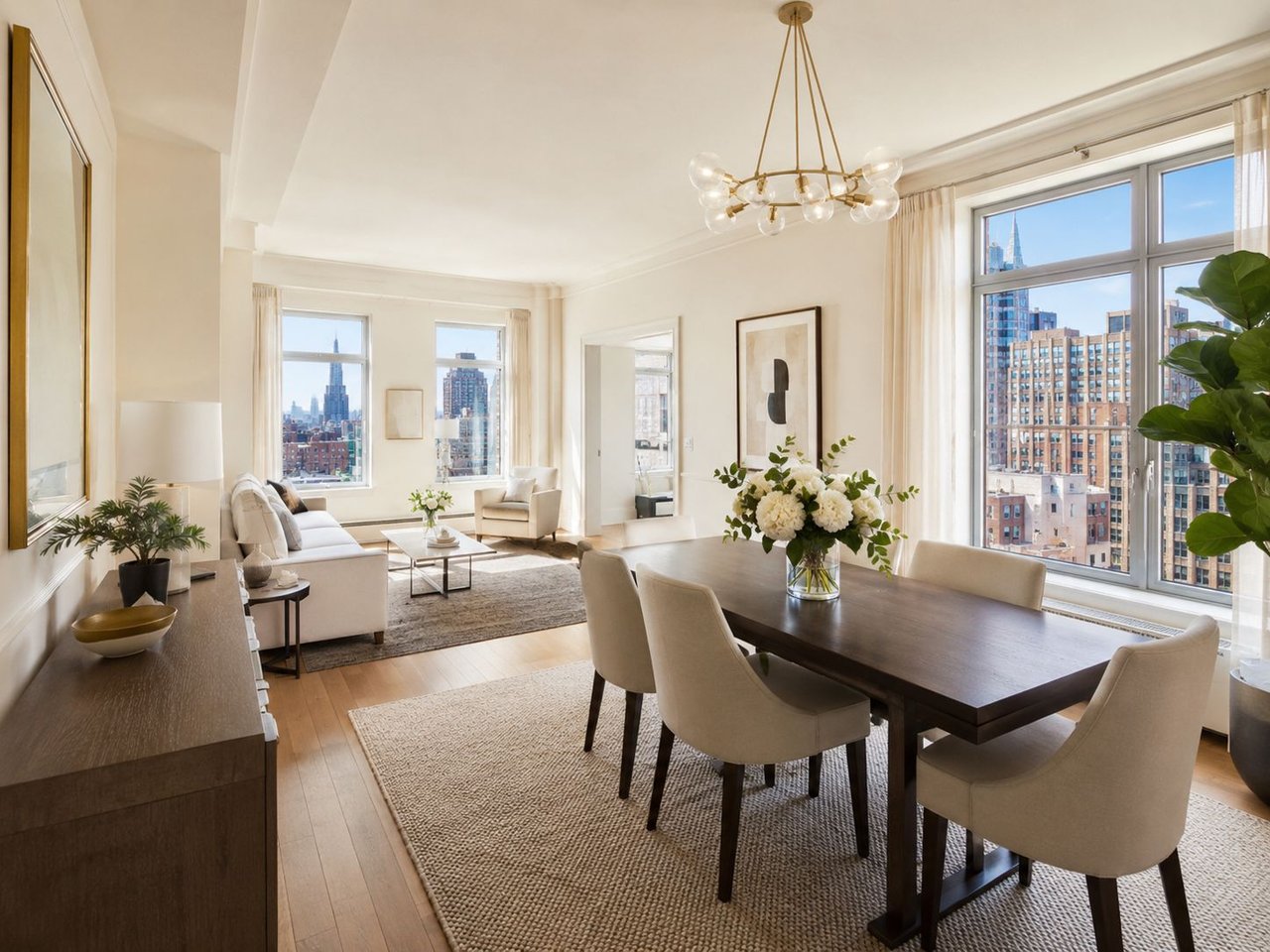
WHAT MAKES AN EFFECTIVE OPEN HOUSE?
WHY THE OPEN HOUSE REMAINS A CRITICAL TOOL IN MANHATTAN REAL ESTATE
In an era of digital listings, virtual tours, and remote buyer activity, the open house retains a significance in Manhattan real estate that no digital substitute has fully replaced. The reason is simple: the experience of being physically inside a property, reading its light and scale, sensing its proportions, and imagining life within it, is categorically different from viewing it on a screen. An open house is the moment when all of that becomes real for a buyer, and how that moment is engineered determines whether they leave as a serious prospect or a casual observer.
An effective open house is not simply an unlocked door and a broker with a sign-in sheet. It is a curated experience designed to present the property at its absolute best, engage buyers at an emotional level, and create the conditions under which serious interest converts into showing requests, offer conversations, and ultimately, contracts. The difference between an open house that generates momentum and one that generates foot traffic without follow-through is preparation, execution, and attention to detail at every stage.
Sellers who approach the open house with the same strategic discipline they apply to pricing and media consistently generate stronger buyer engagement from each showing event. Reviewing current listing activity through Daniel Blatman's Manhattan property search makes clear that the most competitive listings are those where every buyer touchpoint, including the open house, has been treated as a deliberate investment in the outcome rather than a routine administrative step.
PREPARATION: WHAT MUST HAPPEN BEFORE THE FIRST BUYER ARRIVES
Everything that determines the quality of an open house happens before the first buyer walks through the door. Preparation is not a single task. It is a sequence of actions that collectively determine whether buyers experience the property at its best or encounter it in a state that raises questions rather than enthusiasm.
The property must be in flawless physical condition for every open house. This means more than clean surfaces. It means every light bulb is functioning, every door opens and closes smoothly, every drawer glides without resistance, and every visible detail has been attended to with care. Buyers who encounter minor maintenance issues during an open house, a sticking lock, a scuffed wall, a missing fixture cover, extrapolate those details into assumptions about the property's broader condition. Eliminating those distractions is the seller's responsibility before the showing begins.
Sellers often ask how much time is needed to prepare a property adequately for an open house. For a well-maintained property that is already staged, two to three hours of cleaning, organizing, and detail work on the morning of the open house is typically sufficient. For properties that have been occupied during the listing period, a professional cleaning the day before combined with a focused detail pass on the morning of the event is the standard approach. The goal is to present the property in a condition that would photograph beautifully if a camera arrived with the buyers.
STAGING AND SCENT: THE SENSORY ENVIRONMENT BUYERS RESPOND TO
The visual presentation of an open house has been covered extensively in discussions of staging and photography, but the full sensory environment of a property during a showing goes beyond what the eye registers. Temperature, scent, sound, and even the quality of natural versus artificial light all contribute to the impression buyers form during an open house and influence how positively they remember the experience afterward.
A common question is whether staging a property differently for an open house than for photography produces a meaningful difference. In some cases it does. Subtle additions that do not photograph well but enhance the live experience, fresh flowers, the smell of quality coffee, soft background music at a low volume, can make a property feel more alive and welcoming during an in-person visit without affecting the listing imagery. These touches are not about deception. They are about hospitality, and they signal to buyers that the property has been cared for and presented with intention.
Temperature is a frequently overlooked element. A property that is uncomfortably warm or cool during an open house creates a physical discomfort that buyers associate with the property itself rather than the weather outside. Setting a comfortable temperature before buyers arrive and maintaining it throughout the event is a simple act with a disproportionate effect on visitor experience.
TIMING THE OPEN HOUSE FOR MAXIMUM ATTENDANCE
The timing of an open house within the week and within the listing cycle has a direct effect on attendance and the quality of engagement it generates. In Manhattan, Sunday open houses between eleven in the morning and one in the afternoon represent the highest-traffic window for residential showings. Buyers who are actively searching typically reserve Sunday mornings for open house visits, and brokers coordinate their tour schedules around this convention.
Buyers often ask whether attending the first open house after a listing goes live is meaningfully different from attending a later one. The first open house is almost always the most important event in a listing's life. It concentrates the buyer pool that has been accumulating since the listing appeared online, often including buyers who have been waiting for a property matching the listing's criteria to appear. Sellers who ensure that the property is in its very best condition for this first event are positioned to capture that concentrated demand. Sellers who treat the first open house as a test run and plan to improve for subsequent events have already spent the moment that mattered most.
Scheduling the listing launch to ensure the first open house falls in a high-attendance window, rather than on a holiday weekend, the first day after a major market event, or in competition with multiple similar listings that launched the same week, is part of the launch timing discipline that experienced sellers and brokers apply as a matter of course. Understanding the broader Manhattan real estate market trends that shape buyer activity levels in any given week provides the context for making this timing decision well.
THE BROKER'S ROLE DURING THE OPEN HOUSE
An open house is not a passive event for the broker. The broker's behavior, presence, and engagement during the showing directly affects the experience buyers have and the quality of information the seller receives about buyer response. A broker who is distracted, disengaged, or focused primarily on administrative tasks during an open house is failing to perform one of the most important functions of the event.
The broker's primary responsibility during an open house is to facilitate buyer experience without overselling. Buyers who feel pressured or over-pitched during a showing retreat rather than engage. The most effective approach is to be present, knowledgeable, and genuinely helpful, answering questions accurately, offering context about the building and neighborhood that buyers cannot derive from the listing itself, and creating space for buyers to experience the property without narration unless invited.
A frequent question is whether sellers should be present during their own open houses. In most cases, the answer is no. The presence of the seller can inhibit buyers from expressing genuine reactions, having candid conversations with their own broker, or exploring the property at their own pace. It creates an awkwardness that works against the open, exploratory atmosphere that produces genuine buyer engagement. Sellers are almost always better served by leaving the property in the broker's hands for the duration of the event.
CAPTURING AND CONVERTING OPEN HOUSE INTEREST
An open house that generates strong attendance but no follow-through is a missed opportunity. Converting open house visitors into active prospects requires a systematic approach to capturing contact information, following up promptly, and understanding what each visitor's level of interest and buying position actually is.
Sign-in sheets are the most basic tool for capturing visitor information, but their value depends entirely on follow-up. Buyers who attended an open house and left without scheduling a private showing or initiating a conversation with their broker may have had genuine interest that was not fully activated during the event. A prompt, personalized follow-up from the listing broker within twenty-four hours of the open house, referencing specific features of the property and offering a private showing opportunity, can convert passive attendees into active conversations.
Sellers should ask their broker specifically what the follow-up process looks like for open house visitors and what metrics they track to assess engagement quality. The number of attendees is the least informative of those metrics. The number of visitors who requested a private showing, the number who asked substantive pricing questions, and the number whose brokers followed up directly are the indicators that reveal whether an open house generated genuine momentum or simply traffic.
WHAT AN OPEN HOUSE COMMUNICATES BEYOND THE PROPERTY
An effective open house communicates more than the property's physical characteristics. It communicates that the seller is serious, prepared, and operating at a professional standard. Buyers and their brokers draw conclusions about how a transaction will be conducted based on how a listing is managed, and the open house is a prominent data point in that assessment.
A property that is impeccably prepared, thoughtfully staged, and professionally managed during showings signals to buyers that the seller is engaged and that the transaction, if it proceeds, is likely to be handled with the same care. A property that is presented carelessly sends the opposite signal and can cause buyers to wonder what else about the transaction might be handled with equal carelessness.
This reputational dimension of the open house is most relevant in the context of selling a home in Manhattan, where buyers are making million-dollar decisions and every signal about the seller's professionalism and seriousness factors into their confidence in moving forward. An open house that reflects the highest standards of presentation and execution is not just good marketing. It is a form of credibility that supports every subsequent stage of the transaction.
OPEN HOUSES IN THE CONTEXT OF A BROADER MARKETING STRATEGY
An open house is most effective when it is embedded in a broader marketing campaign rather than treated as a standalone event. The open house should follow the listing launch by enough time to allow online visibility to build, should be promoted through the broker's digital channels and social media presence in advance, and should be coordinated with private showing activity so that buyer momentum from the event can be captured and sustained.
Sellers often ask how many open houses are appropriate during a listing campaign. There is no fixed answer, but weekly open houses throughout the active marketing period are standard in Manhattan for most listings. Buildings that restrict open houses to specific days or hours add a scheduling constraint that should be confirmed with the building's management before the listing launches. Building policies on access, guest conduct, and showing hours are subject to rules administered through each building's management structure and should be understood before committing to a showing schedule.
Sellers approaching the open house as part of a complete campaign, rather than as a series of isolated events, consistently generate the kind of sustained buyer engagement that produces competitive offers rather than a cycle of attendance without action.
Through Daniel Blatman's NYC real estate expertise, sellers benefit from open house execution that reflects the full discipline of a professional listing campaign. Every element of the open house, from the temperature in the room to the follow-up call placed twenty-four hours later, is part of a deliberate process designed to convert buyer interest into the outcome sellers are working toward.